
Infant
Infant care in Singapore: fees, waiting lists and how to choose
Infant care in Singapore is licensed care for babies from 2 months up to 18 months, full-day or half-day. At a centre…
Infant
Safe sleep for babies, the rules health bodies give for where and how a baby sleeps, comes down to a few habits you keep for every sleep, naps included, until your baby turns one. Lay your baby down on their back, on a firm, flat mattress with a fitted sheet and nothing else in the…
Safe sleep for babies, the rules health bodies give for where and how a baby sleeps, comes down to a few habits you keep for every sleep, naps included, until your baby turns one. Lay your baby down on their back, on a firm, flat mattress with a fitted sheet and nothing else in the cot. Keep the cot in your room, close to your bed, but not in it.
Add two more: do not let your baby get too warm, and keep your home smoke-free. In Singapore, these rules sit on HealthHub’s baby sleep page, written by the Health Promotion Board (HPB) and drawn from the American Academy of Pediatrics (AAP), the professional body for paediatricians in the United States. Families for Life, a parenting website, gives the same advice in a page it adapted from the health site HealthXchange.
Each rule aims to lower the risk of Sudden Infant Death Syndrome (SIDS), and each raises its own worry at home: a baby who rolls face down, a bedroom so small the bed is right there, a swaddle that has to stop, a warm flat at night. We take them in turn below.
SIDS is a baby’s sudden, unexpected death during sleep, sometimes called “cot death”. Families for Life’s page says babies under a year old are at greatest risk, and that the cause is not fully understood.
What researchers have found are risk factors, the things that make SIDS more likely. The page lists smoking in the home, putting a baby to sleep on the stomach, being born early or small, and too much bedding, clothing or soft toys in the cot. It adds that sharing a bed with your baby also raises the risk, and is best avoided.
The AAP is plain about the limit: there is no guaranteed way to prevent SIDS, but a safe place to sleep helps lower the risk. The AAP also counts a second danger in sleep, a baby being smothered or caught in soft bedding, and the cot rules below guard against both.
A few habits outside the cot help too. HealthHub asks you to breastfeed, or feed expressed breast milk, for at least six months if you can, and to keep your home, your car and your caregiver’s home free of smoke. The AAP adds a dummy (pacifier) at naps and bedtime, once breastfeeding is going well; if it falls out after your baby is asleep, you do not need to put it back.
Lay your baby down wholly on their back for every sleep, naps too, until their first birthday. That is HealthHub’s first rule, and Families for Life calls back sleeping one of the most effective ways to lower the risk of SIDS.
The side is not a middle way. The AAP says sleeping on the side is just as dangerous as the stomach, partly because a baby laid on their side rolls onto the tummy more easily.
If you worry that a baby on their back will choke, the AAP says they will not: the way a baby’s airway is built, and their gag reflex, keep that from happening. The same holds for babies with reflux, who should still sleep flat on their backs.
Once your baby starts rolling, you may find them face down in the night. Keep laying them down on their back at the start of every sleep. Once they can roll both ways by themselves, back to tummy and tummy to back, the AAP says you do not need to keep turning them back over.
What matters then is the cot. The AAP says to make sure it holds no blankets, pillows, soft toys or bumper pads, because a rolling baby could roll into any of them and have their air blocked.
Back sleeping can flatten the back of a young baby’s soft head a little. HealthHub says the head rounds out by itself by about 12 months, and that you can turn your baby’s head to alternate sides each time you lay them down. Give plenty of tummy time while your baby is awake and someone is watching.
Your baby sleeps in their own cot, in the room where you sleep, with the cot close to your bed. HealthHub says to keep it that way for at least six months, and preferably a year. Families for Life says having the cot in your room for at least the first six months has been shown to lower the risk of SIDS.
The AAP puts a size on it: room sharing can cut the risk of SIDS by as much as half, and it is much safer than sharing a bed. It also makes it easier to feed, comfort and keep an eye on your baby at night.
In a small HDB bedroom, the cot can stand right beside your bed. The bed itself is the line. The AAP advises against bed sharing in every case, twins and other multiples included, and Families for Life says bed sharing raises the risk of SIDS.
You can bring your baby into your bed to feed or comfort them. HealthHub’s rule is to put them back in their cot, on their back, when you are ready to sleep.
Tiredness is the risk here. If you might doze off with your baby in your bed, the AAP says to clear the pillows, blankets and sheets that could cover your baby’s face or make them too warm. If you do fall asleep, move your baby back to their cot as soon as you wake.
The AAP also says bed sharing is riskier still if you have been drinking alcohol or have taken medicine that makes it harder to wake, if you or your partner smokes or vapes, and if your baby is under four months old or was born early or small.
Babies fall asleep everywhere: in the car seat, the sling, on the sofa next to you. The graphic below sets out where to move them.
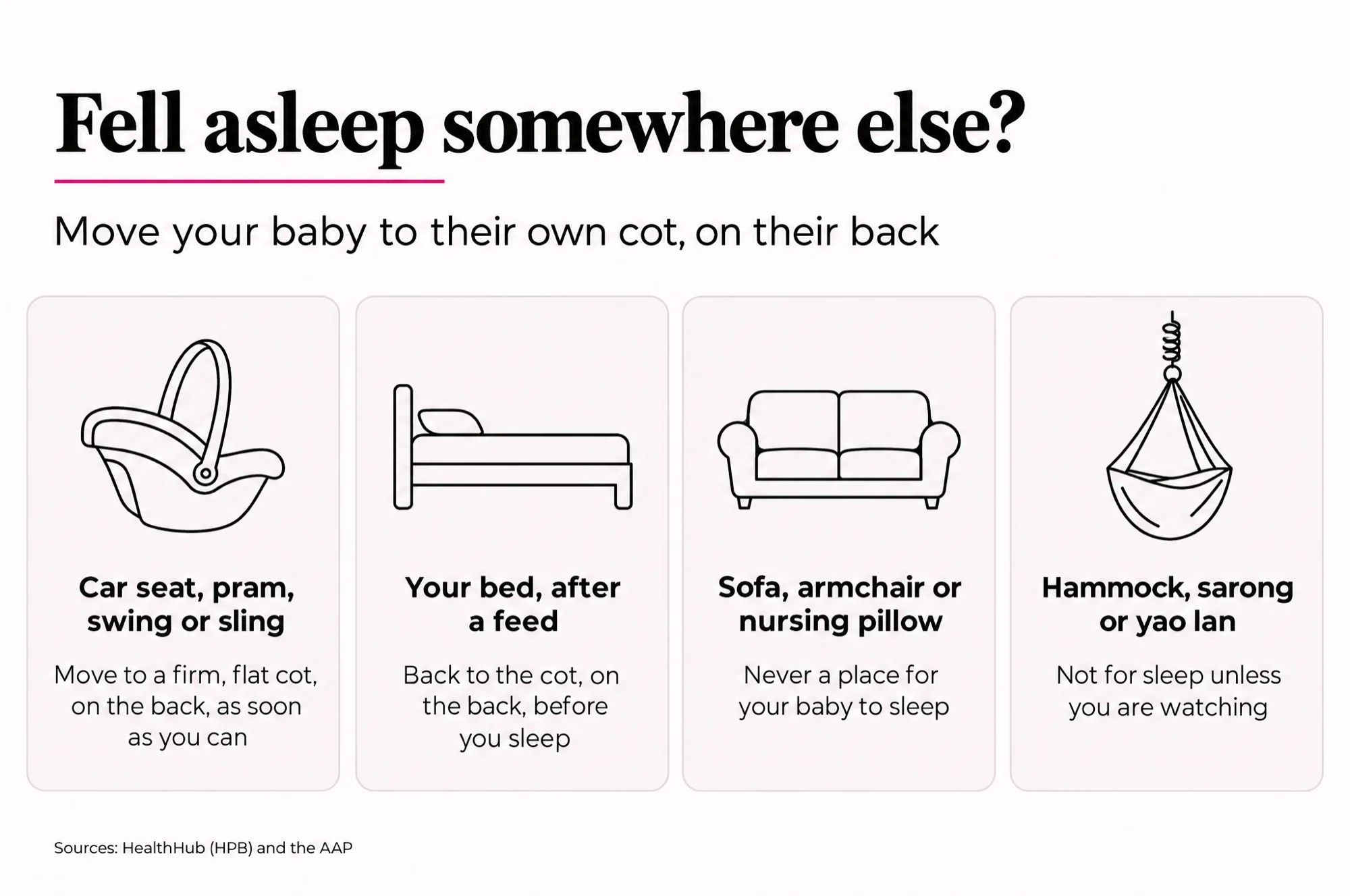
Fell asleep somewhere else? Move your baby to their own cot, on their back.
Sources: HealthHub (HPB) and the AAP.
A clear cot means a firm mattress, a fitted sheet, your baby, and nothing else. HealthHub says loose bedding, pillows, bumper pads and soft toys raise the risk of a baby being trapped, smothered or strangled. They may look cosy, but Families for Life says they are a suffocation risk for young babies.
| In the cot | Keep out of the cot |
|---|---|
| A firm, flat mattress that fits the cot snugly, with no gap at the sides | Pillows, cushions and nursing pillows |
| A fitted sheet that wraps around the mattress corners | Loose blankets, quilts and extra bedding |
| Your baby, on their back | Bumper pads and soft toys |
| A sleep bag (a wearable blanket) if your baby needs a layer | Weighted blankets, swaddles or sleepers |
Firm means the mattress does not dip when your baby lies on it, says the AAP. HealthHub says never to put a baby to sleep on a sofa, an armchair, a nursing pillow or a pillow-like lounging pad, because a baby can roll or turn their head into the soft fabric and block their airway. The CPSO adds adult beds, and any surface not made for a baby’s sleep.
If you do use a blanket, Families for Life’s rule is to lay your baby with their feet touching the foot of the cot, and tuck the blanket no higher than the chest, arms out. That way your baby cannot wriggle down under it. A sleep bag stays in place all night, which is why the same page calls it a safer choice.
If you would rather see a safe sleep set-up than read about one, this short video walks through it.
Watch on YouTube: The ABCD’s of Safe Sleep for Babies, by Johns Hopkins Medicine.
We chose it because it comes from a hospital, Johns Hopkins in the United States, and takes about five minutes; where it says crib, read cot.
The rules assume a cot that is safe to begin with, and not every cot is. In 2025 the Consumer Product Safety Office (CPSO), part of the Competition and Consumer Commission of Singapore (CCS), bought and tested 22 children’s products, mostly from Shopee and Lazada sellers. Seventeen failed Singapore’s safety rules, and baby cots were among them, with gaps that could trap a child’s fingers or head, parts that could catch clothing, and bases that could break.
In the same CCS release, KK Women’s and Children’s Hospital (KKH) said most children’s injuries from cots and strollers were head injuries from falls. Dr Ronald Tan, a senior consultant in its emergency department, said: “We have seen a rise in cot- and stroller-related injuries over the past five years.”
Here is what the CPSO asks you to check, before you buy and after you put the cot together:
When you shop, the CCS asks you to buy from authorised retailers or reputable brands, and to check the listing for the age range and safety instructions. Singapore’s rules require children’s products sold here to meet an international safety standard set by one of four standards bodies: ISO, IEC, EN or ASTM.
Swaddling, wrapping a baby snugly in a cloth or blanket, can help a young baby sleep. HealthHub cites research where swaddled babies startled less, woke less often and slept longer. It does not lower the risk of SIDS, the AAP adds, so treat it as a comfort only.
Stop swaddling once your baby can roll. HealthHub’s rule is to stop when your baby can flip or turn on their own; the AAP says to stop when your baby looks like they are trying to roll. A baby who rolls onto the tummy while swaddled is at higher risk of suffocation, says the AAP, and rolling usually starts at around 3 to 4 months, sometimes earlier.
Until then, HealthHub’s safety points for a swaddle are these:
Our guide to swaddling your baby covers how a snug wrap helps and how to swaddle safely.
Rocking a baby to sleep in a baby hammock, a sarong or a “yao lan”, a cloth cradle that swings, is a different matter. HealthHub says these are not safe for a baby to sleep in unsupervised, especially once a baby can roll.
If you have a swinging cradle with a lock, the CPSO says to make sure the lock is on once your baby has fallen asleep. For sleep on their own, through the night, the place is the cot.
Getting too hot raises the risk of SIDS, says Families for Life, so keep the room at a comfortable temperature and do not overdress your baby. For a warm, humid climate like ours, the same page suggests light, breathable fabrics such as cotton for sleepwear.
HealthHub’s guide for dressing is counted against you, so it fits any room: the same number of layers you are wearing, plus one more. That extra layer can be as light as a muslin or cotton wrap, or a sleep bag.
So in a warm room where you sleep in a T-shirt, your baby wears about that much plus a light wrap or sleep bag; in an air-conditioned room where you pull on a long-sleeved top, your baby wears a little more too. Never use a loose blanket for warmth, because it can cover your baby’s head and block their breathing.
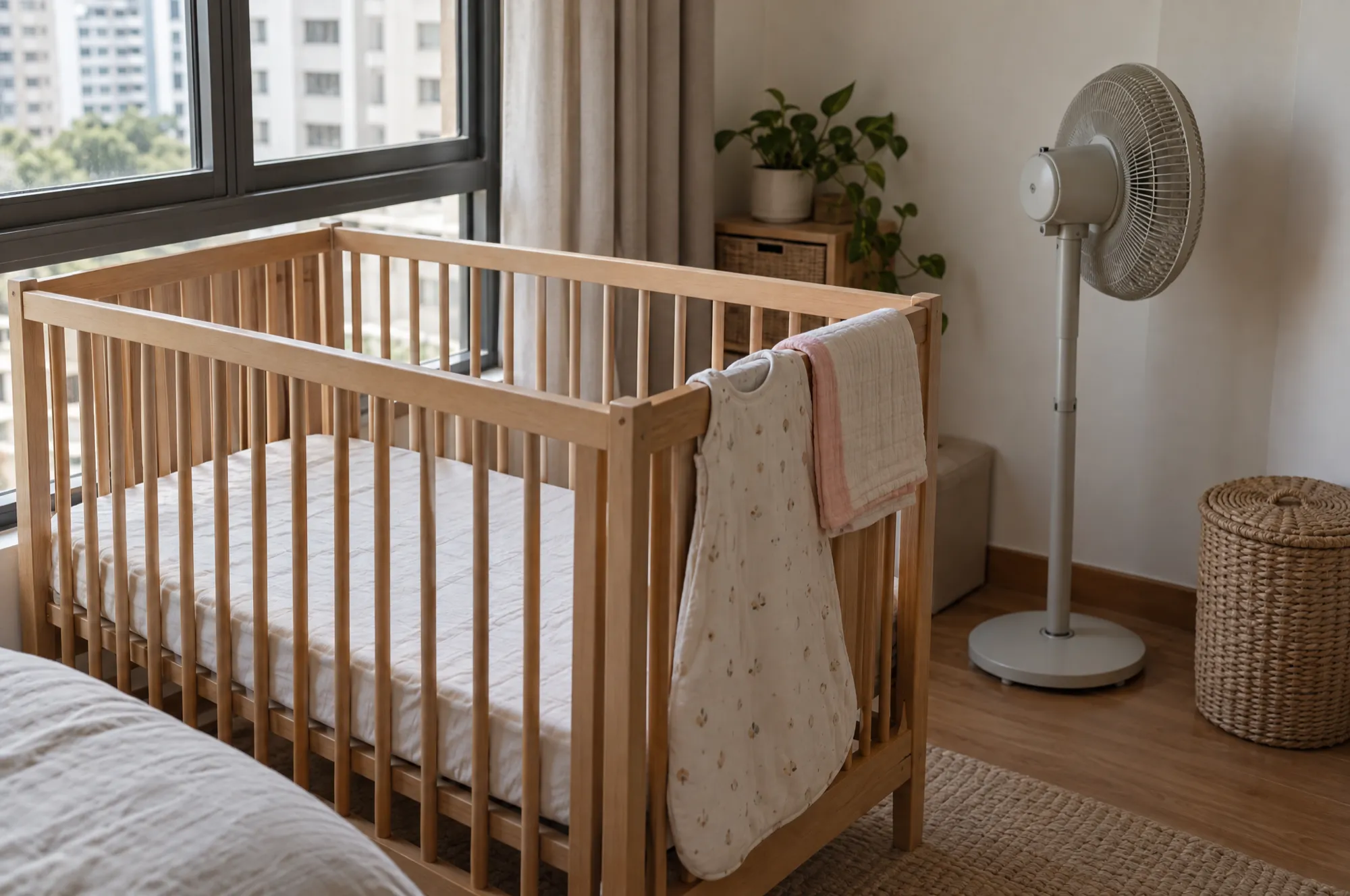
Neither HealthHub’s nor Families for Life’s safe sleep page gives a room temperature in degrees, and neither mentions aircon or a fan. The Lullaby Trust, a UK infant safety charity, recommends 16 to 20°C. That is UK advice, and the charity itself says a room that cool is hard to keep in warmer months.
For a hot room, the Lullaby Trust suggests lighter bedding and clothing, and a fan to cool the room, as long as it does not blow straight at your baby. Dress your baby for the room you have, then check them.
To check, feel your baby’s chest or the back of the neck, not the hands and feet, which are usually cooler, and that is normal. If the skin feels hot or sweaty, take off a layer. The AAP adds flushed skin to the signs of a baby who is too warm, and says no hat indoors once you are home from hospital.
For the aircon itself, such as where the vent points and how to keep the filter clean, see our guide to air conditioning and babies.
Babies are noisy sleepers. HealthHub says young babies move around and grunt in active sleep, and wake for a little while at the end of each sleep cycle. A few signs, though, are worth a doctor’s look.
For anything else, from rolling to the cot you have bought, the AAP says not to hesitate to ask your baby’s doctor. A regular check-up is a good time to bring it up.
With the where and the how settled, the next thing to know is how much sleep to expect. Our guide to baby sleep patterns picks up from there.
We do not give medical care at Mother & Baby Singapore, and this page does not replace your baby’s doctor.

Infant
Infant care in Singapore is licensed care for babies from 2 months up to 18 months, full-day or half-day. At a centre…
Infant
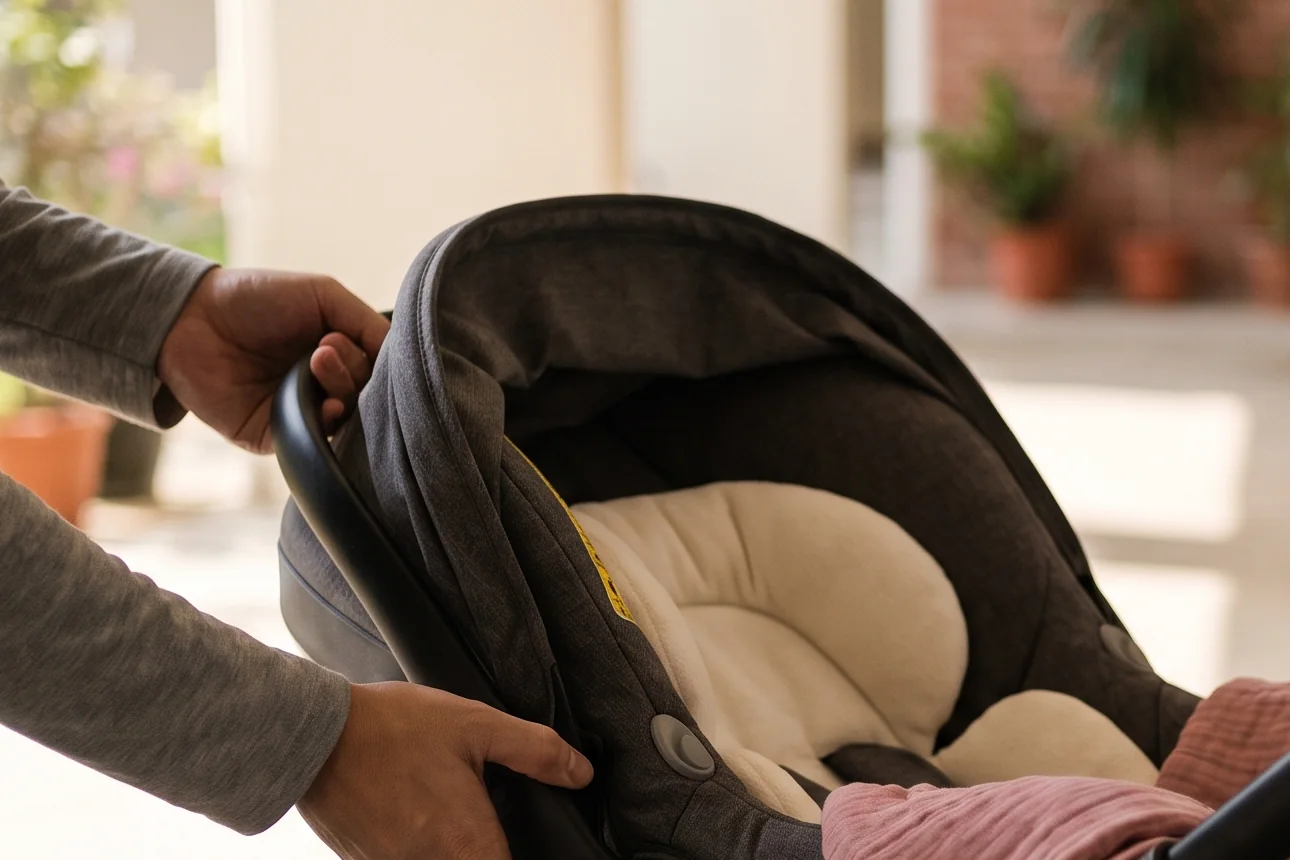
A travel system is an infant car seat paired with a stroller, so the seat lifts out of the car and clicks…
Infant
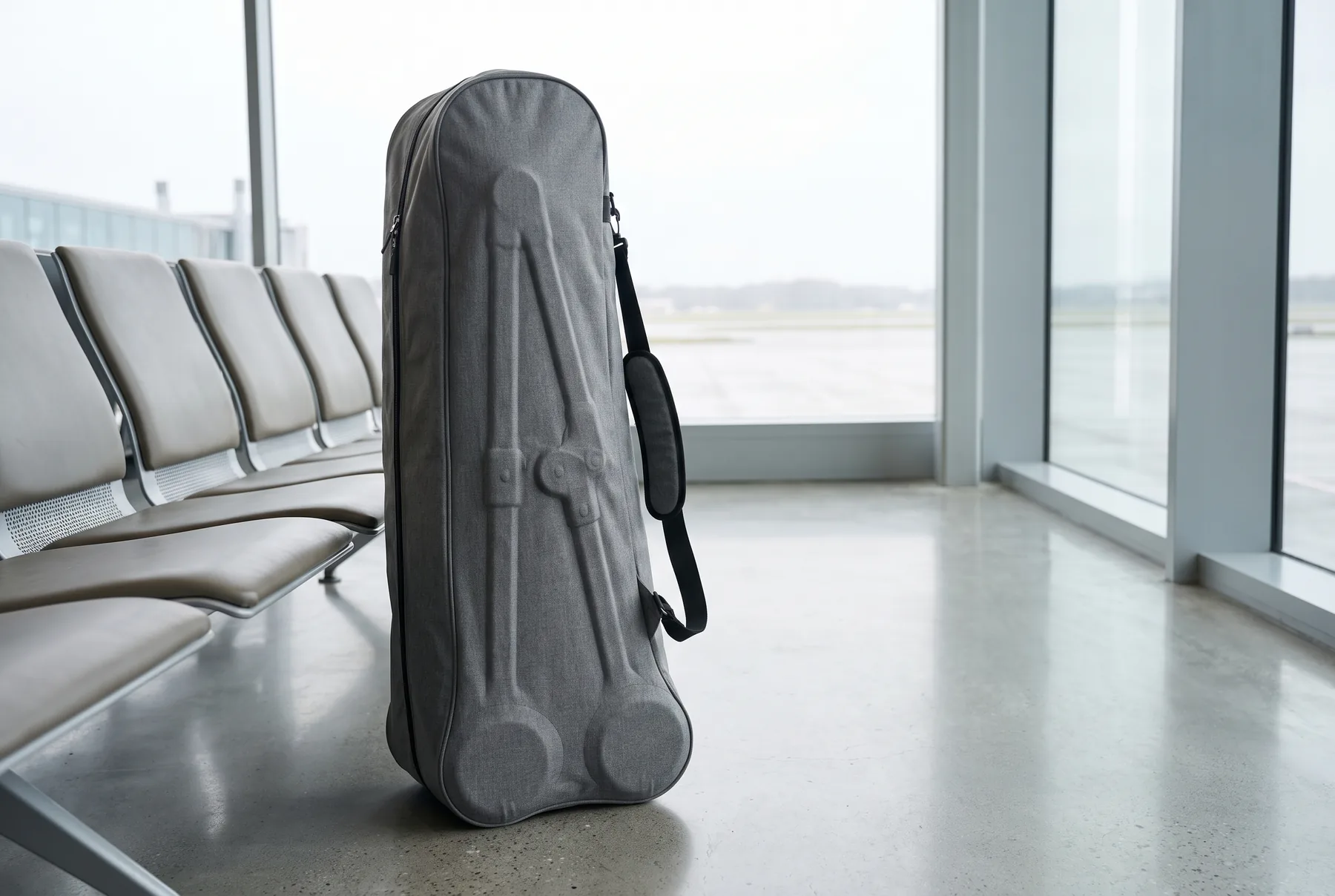
A stroller travels one of three ways: checked in at the counter with your bags, gate-tagged, meaning it is labelled at the…