
Pregnancy
Lanzones in pregnancy: how much to eat, the heaty question, and why you skip the seeds
You can eat fresh lanzones in pregnancy, in a normal fruit portion. In Singapore, lanzones goes by other names: NParks, the National…
Pregnancy
Pregnancy is counted as 40 weeks from the first day of your last period, not from the day you conceived. So in week 1 you are not pregnant yet. You usually ovulate, or release an egg, about two weeks later. KK Women's and Children's Hospital (KKH) splits pregnancy into three stages, called trimesters: weeks 1…
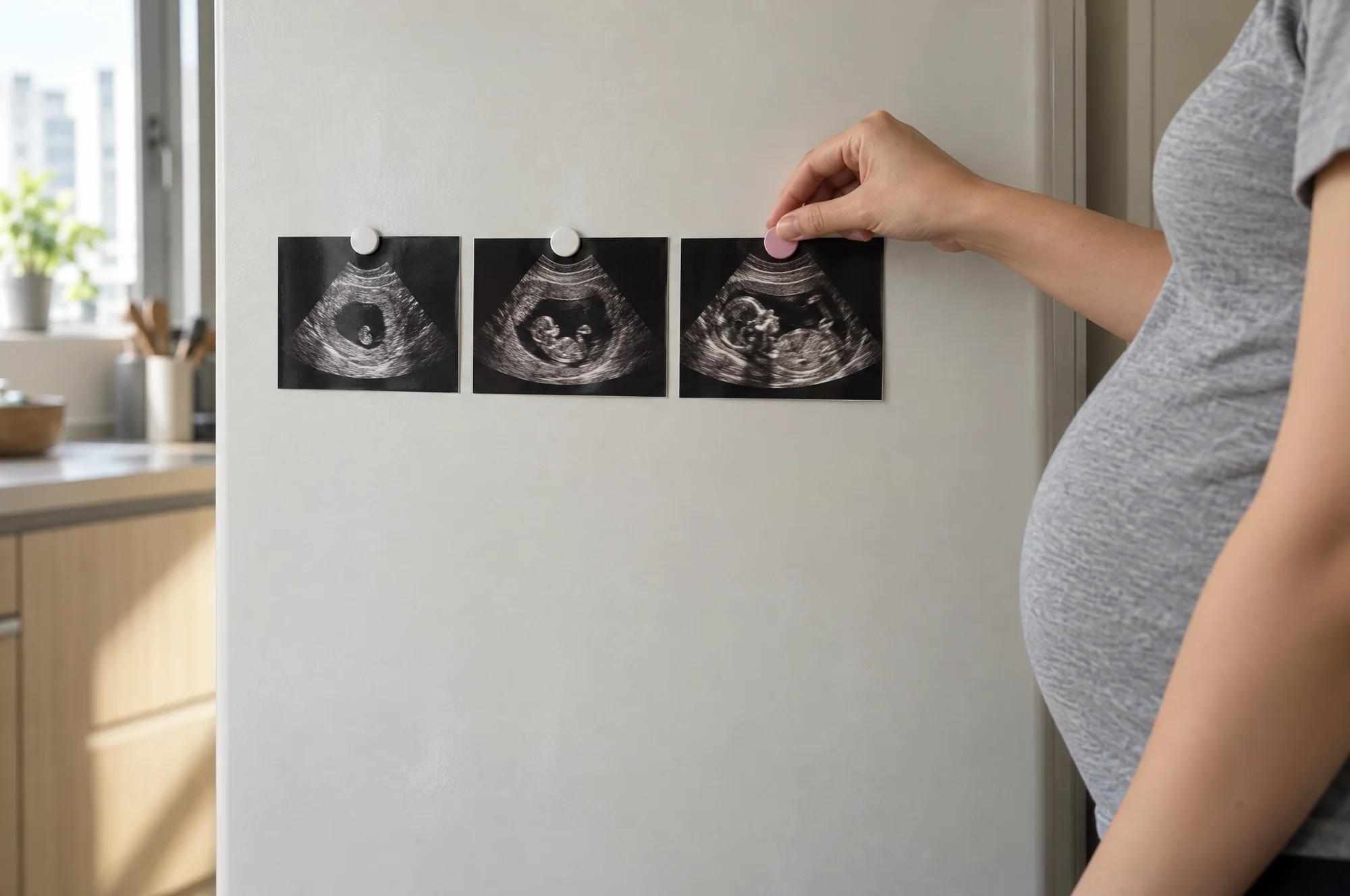
Pregnancy is counted as 40 weeks from the first day of your last period, not from the day you conceived. So in week 1 you are not pregnant yet. You usually ovulate, or release an egg, about two weeks later.
KK Women’s and Children’s Hospital (KKH) splits pregnancy into three stages, called trimesters: weeks 1 to 12, 13 to 28 and 29 to 40. National University Hospital (NUH) starts the third trimester two weeks earlier, at week 27. KKH counts a pregnancy as full term, the point when your baby is ready to be born, after week 37.
Below, we take your pregnancy week by week, in four-week stretches. Each one gives you three things: how big your baby is, what usually changes for you, and which Singapore check-up falls due. That way you can see what is coming next.
For symptoms and decisions beyond the calendar, start at our guides to pregnancy in Singapore.
From the first day of your last menstrual period (LMP). KKH explains why: the exact day you conceived is usually unknown, but the first day of your last period is a fixed date you know.
Counted from conception, a pregnancy lasts about 38 weeks on average, or 266 days. Add the two weeks before ovulation and you get the familiar 40. The date at the end is your estimated date of delivery (EDD), or due date.
Your first scan can move that date. It is called the dating scan, and it measures your baby to check how far along your pregnancy is. KKH says your EDD can be corrected after it, from about week 7.
Two Singapore public hospitals give different answers. KKH starts the second trimester at week 13 and the third at week 29. NUH starts its third trimester two weeks earlier, at week 27.
| Trimester | KKH | NUH |
|---|---|---|
| First | Weeks 1 to 12 | Weeks 1 to 12 |
| Second | Weeks 13 to 28 | Weeks 13 to 26 |
| Third | Weeks 29 to 40 | Weeks 27 to 40 |
KKH’s check-up timeline even puts week 28 in both the second and the third trimester. So if you have asked when the third trimester starts and found three answers, that is why.
The label matters less than the week number. Every check-up below falls due by week, not by trimester. The headings below use KKH’s weeks.
Here is KKH’s pregnancy check-up timeline in one table. Each test is explained in the week it falls due. The check-up weeks below follow KKH, NUH and HPB’s own pages, as of November 2026.
| Weeks | What is due |
|---|---|
| 8 to 12 | First visit with your doctor, dating scan, routine blood tests |
| 11 to 14 | First trimester screening (optional): a blood test and a scan for Down syndrome, a genetic condition that affects how a child grows and learns |
| 16 to 32 | Whooping cough (pertussis) vaccine |
| 18 to 21 | Detailed scan (the 20-week fetal anomaly scan): a head-to-toe check of your baby |
| 24 to 28 | Blood tests for anaemia (low red blood cells) and gestational diabetes (high blood sugar in pregnancy) |
| 28 | Rhogam (anti-D) injection, only if your blood group is Rhesus negative, which means your red blood cells lack the RhD protein |
| 28 to 32 | Growth scan, to check your baby’s size and well-being |
| 35 to 37 | Group B Streptococcus (GBS) swab, a check for a germ that can cause serious infection in your baby |
| After 37 | Full term |
The flu vaccine has no fixed week. KKH says it can be safely given at any point in pregnancy. Its timeline puts it with your first visit, in weeks 8 to 12.
The first 12 weeks are when your baby’s organs form and morning sickness usually starts. Our first trimester guide goes deeper on the symptoms and what to book.
Your baby. In week 1 there is no baby yet: your body is shedding the lining of your womb. By week 4, KKH says, the fertilised egg has grown into a ball of about a hundred cells, called a blastocyst. It burrows into the wall of your womb in the second half of week 4, about 12 days after fertilisation.
Your body. Once it implants, the blastocyst starts to make human chorionic gonadotrophin (HCG), the pregnancy hormone that a home test picks up in your urine.
Check-up due. Nothing is booked yet. If your test is positive, KKH advises you to contact a doctor at a polyclinic (a public clinic), a family clinic or KKH to arrange your first appointment.
KKH also advises folic acid, a B vitamin, from the time you start trying until you are 12 weeks pregnant. Our page on when to see a doctor to confirm a pregnancy has the details.
Your baby. By week 8 your baby is about 1.5 cm long from crown to rump (head to bottom), slightly smaller than a Singapore 5-cent coin, says KKH. Grooves on the tiny arm and leg buds will become fingers and toes. If you have your dating scan this week, you may hear the first beats of the heart.
Your body. Morning sickness, the nausea and vomiting that can come at any time of day, usually starts when you are 4 to 6 weeks pregnant. It can last into the second trimester, says HealthXchange, SingHealth’s health website. Our page on relieving morning sickness covers what helps and when to call a doctor.
Check-up due. Weeks 8 to 12: your first visit with the doctor and the dating scan, which estimates your due date. Routine blood tests are done then too. They screen for anaemia, thalassaemia (an inherited blood condition), your blood group, antibodies and infections.
Your baby. At week 10 your baby is about 3.1 cm long and weighs less than 15 g, much larger than a Singapore 50-cent coin. The webbed fingers and toes are separating and the face looks more human. After this week, KKH says, the major organs are all there in some form. Your baby is no longer called an embryo: from week 11 the word is fetus.
By week 12, your baby is about 5.1 cm, roughly the size of a lime, and the forming of the organs is complete.
Your body. Your womb is now about the size of a grapefruit, and your jeans may feel tighter. KKH notes that dizziness or fainting can happen in the first 20 weeks, because your blood pressure falls as your blood vessels relax. Get up slowly from sitting or lying down.
Check-up due. Weeks 11 to 14: first trimester screening. It is optional, and it combines a blood test with an ultrasound scan to check for Down syndrome. Only women found to be at high risk can have further tests, such as amniocentesis (a test of the fluid around the baby), usually in weeks 16 to 20, says KKH.
KKH calls this the trimester most women find the smoothest. It also holds the detailed scan and the glucose test. Our second trimester guide covers these months in more depth.
Your baby. At week 16 your baby is about the size of an avocado: close to 12 cm long and about 146 g. Hearing is working, so your baby can react to basic sounds from outside. Your baby is moving, too, though you probably cannot feel it yet. Until week 13 the head grew fastest; now, KKH says, the rest of the body catches up.
Your body. Many women feel more energetic from week 13. KKH adds that some still have nausea and tiredness up to the fifth month. By week 15 your bump is beginning to show, and you may feel warm much of the time, because pregnancy raises your body temperature.
Check-up due. From week 16, the window for the whooping cough (pertussis) vaccine opens. KKH advises it between 16 and 32 weeks, to help protect your baby, since whooping cough can kill newborns. On KKH’s check-up timeline, the jab comes in weeks 24 to 28, inside that window.
Your baby. At week 20 your baby weighs about 300 g and is about 16 cm long. KKH says your baby now sleeps about 18 hours a day and is awake for about 6, so kicks come stronger at some times than others.
Your body. Around week 18 you will start to feel your baby move. KKH says some women describe it as a wave of bubbles, or the twitch of a fish tail.
Week 20 is the halfway mark. It is also the week from which pre-eclampsia can develop: high blood pressure, with a reading above 140/90, and protein in the urine. KKH lists the signs to get help for at once, including severe headaches, blurred or disturbed vision, pain high on the right side of your tummy, and sudden swelling of the face, ankles or feet.
Check-up due. Weeks 18 to 21: the detailed scan, also known as the 20-week fetal anomaly scan. It looks at your baby from head to toe for problems in how the body has formed. It also checks for a low-lying placenta, where the placenta, the organ that feeds your baby, sits low in the womb.
NUH does its detailed scan at 20 weeks. KKH notes that the scan does not catch everything: detection rates are not always 100%. Your baby’s sex can often be seen on this scan, if your baby lies the right way.
Your baby. From the second trimester, KKH says, babies grow at different rates. So every size on this page is an average, not a target. The next size comes at week 28.
Your body. By week 24 the top of your womb is above your belly button, about the size of a soccer ball. The “pregnancy glow” people mention is real, KKH says: more blood is flowing under your skin.
Check-up due. Around weeks 24 to 28, pregnant women are screened for gestational diabetes (GDM), high blood sugar that develops in pregnancy. Only women already known to have diabetes skip it. The test is the oral glucose tolerance test (OGTT): a sugar drink, then blood tests to see how your body handles it. The Health Promotion Board (HPB) sets out the steps:
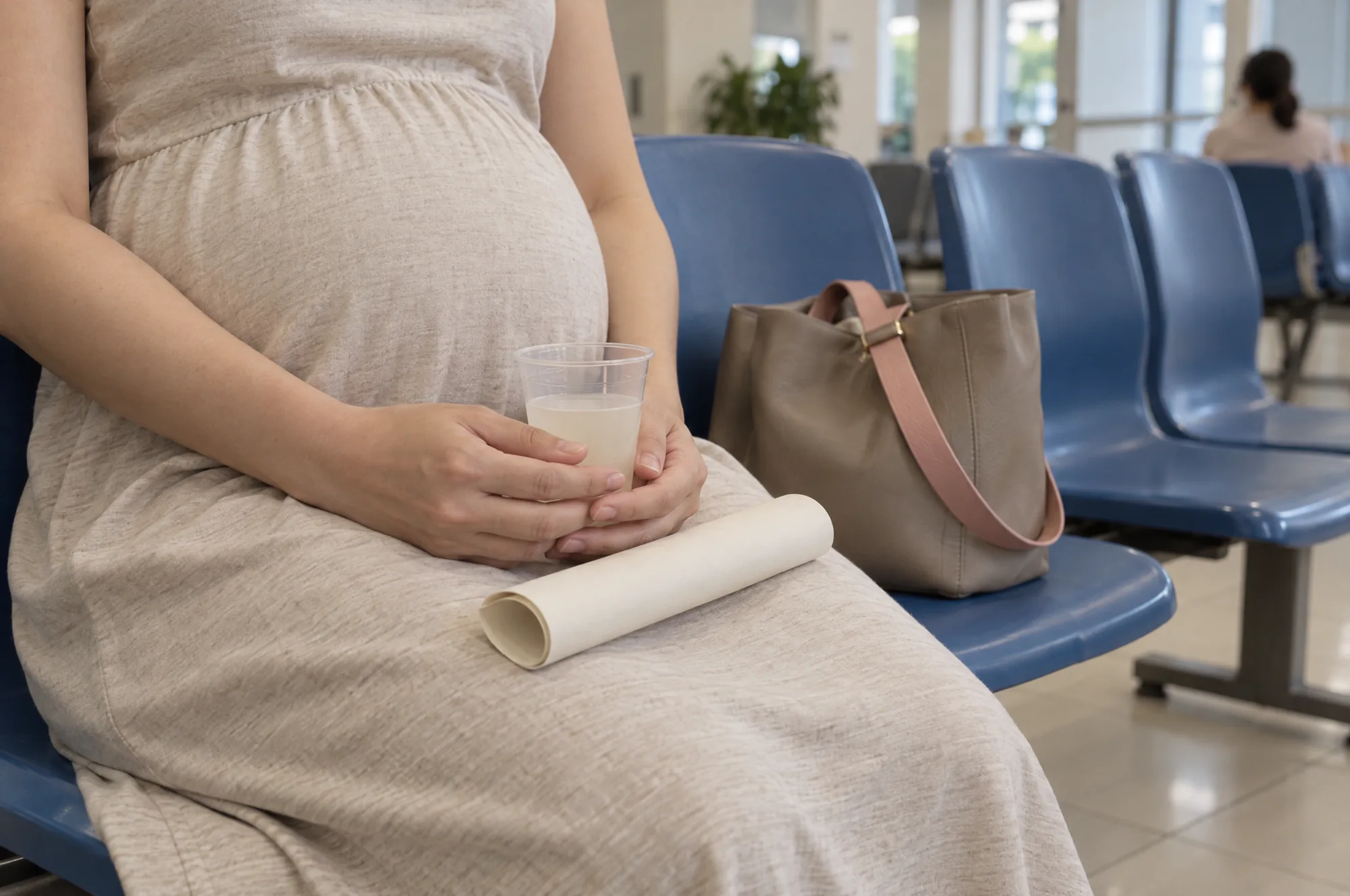
Plan for 2 to 3 hours in all. HPB says the test is safe for you and your baby; the drink can make you feel sick or dizzy.
Some women are at higher risk, for example if they had GDM before or a parent or sibling has diabetes. They usually have a shorter test earlier in pregnancy, the 2-point OGTT, with two blood tests instead of three. If that one is normal, the full test follows at 24 to 28 weeks.
Your baby. In weeks 25 to 27 the lungs, eyes, brain and hearing keep developing. The lungs cannot yet work on their own, but your baby takes “practice breaths” in the fluid around it as the nostrils begin to open. By week 28, about seven months, your baby weighs about 1 kg and is about 37 cm long. KKH says the lungs are now mature enough to breathe air, and a baby born now has a good chance of survival.
Your body. You may feel Braxton Hicks contractions: painless tightenings that do not bring on labour, sometimes called false labour pains. KKH says about 1 in 10 women go into early labour. Labour before week 37 is called preterm. HealthXchange says regular, painful contractions that grow stronger and closer together are not normal before then, and may be labour: see a doctor.
Check-up due. If your blood group is Rhesus negative, KKH gives a Rhogam injection at week 28. It can stop your body from making antibodies that could attack the red blood cells of a later baby who is Rhesus positive, SingHealth explains.
Your Rhesus D (RhD) status is checked in the first-trimester blood tests, so your doctor will tell you if this applies to you. The growth scan window also opens this week, below.
KKH says fewer new changes happen in these weeks. The work now is growth: your baby’s lungs and kidneys mature, and the weight goes on. Our third trimester guide covers the last stretch in full.
Your baby. From week 30 your baby puts on the most weight, an average of about 200 g a week, says KKH. By week 32 your baby averages about 2 kg and 42 cm. KKH adds that your baby can now make tears, and has the rapid eye movement (REM) sleep linked to dreaming.
| Week of pregnancy | Average weight of the baby (kg) |
|---|---|
| Week 20 | 0.3 kg |
| Week 28 | 1 kg |
| Week 32 | 2 kg |
| Week 36 | 2.5 kg |
| Week 40 | 3 kg |
Your body. Leg cramps and trips to the toilet tend to increase. Some women also get piles (haemorrhoids), varicose veins (swollen veins, often in the legs) or numb hands, though not everyone does. Hot flushes are common at night and tend to peak at around 30 weeks, HealthXchange says.
From now on you can count your baby’s kicks. HealthXchange says a baby should generally move every hour, or about 10 times a day.
Check-up due. Weeks 28 to 32: a growth scan to check your baby’s size and well-being. KKH and NUH both name week 32 for it. Week 32 is also the last week of KKH’s whooping cough vaccine window, so ask about it now if you have not had it.
Your baby. At week 36 your baby is about 47 cm long and weighs about 2.5 kg, says KKH.
Your body. You may feel breathless as your baby presses up on your diaphragm, the muscle under your lungs. Backache is common too, because pregnancy hormones loosen the tissue that holds the bones of your pelvis. Swollen legs are usually worst at the end of the day.
Check-up due. Weeks 35 to 37: a swab from the vagina and rectum checks whether you carry Group B Streptococcus (GBS), a bacteria that can cause serious infection in a newborn.
KKH also suggests deciding now on cord blood donation or banking, and starting to think about birth control after the birth. Cord blood is the blood left in the placenta and umbilical cord after your baby is born. You can donate it, or store it for your family.
Your baby. At week 40 your baby is about 50 cm long and weighs about 3 kg. KKH says an average Singaporean baby at full term weighs 2.5 kg to 3.5 kg.
Your body. After week 37, KKH counts your pregnancy as full term. If week 40 comes and goes, KKH says any time before 42 weeks is acceptable, and first babies tend to arrive later. KKH’s signs of labour are strong, regular contractions; a “show”, mucus streaked with blood; and your waters breaking, as a sudden gush or a steady trickle of clear fluid.
Check-up due. KKH lists no new test for these weeks. Its advice for these weeks is to pack your hospital bag. Our hospital bag checklist covers what to bring for you and your baby.
KKH and NUH, two public hospitals, put the detailed scan and the growth scan in the same weeks. If you see a private obstetrician, a doctor who specialises in pregnancy and birth, ask at your first visit which week each test falls in at that clinic, and who books it. Our page on public versus private maternity care compares the two routes and their costs.
KKH lists these as reasons to get medical help, whatever week you are in:
At KKH, go to the Delivery Suite (Level 2, Women’s Tower) if you are 22 weeks or more. Under 22 weeks, go to the Urgent O&G Centre (Basement 1, Women’s Tower); O&G stands for obstetrics and gynaecology, the care of pregnancy and women’s health. If you are booked elsewhere, keep your own hospital’s number in your phone.
Not sure which week you are in? Start with our due date calculator. Enter the first day of your last period, then come back to your week above.

Pregnancy
You can eat fresh lanzones in pregnancy, in a normal fruit portion. In Singapore, lanzones goes by other names: NParks, the National…

Pregnancy
Fresh longan fruit (Dimocarpus longan, to give it its botanical name) is counted as an ordinary fruit in Singapore's health guidance, so…

Pregnancy
In Singapore, being pregnant does not stop an employer from ever letting you go. But the law protects the maternity pay you…