
Pregnancy
Longan fruit for pregnancy: how many to eat, and what the heaty rule rests on
Fresh longan fruit (Dimocarpus longan, to give it its botanical name) is counted as an ordinary fruit in Singapore's health guidance, so…
Pregnancy
You can eat fresh lanzones in pregnancy, in a normal fruit portion. In Singapore, lanzones goes by other names: NParks, the National Parks Board, lists it as Langsat and Duku. Lanzones, also spelt lansones, is its name in the Philippines. Singapore General Hospital (SGH) says 2 servings of fruit a day are required in pregnancy,…
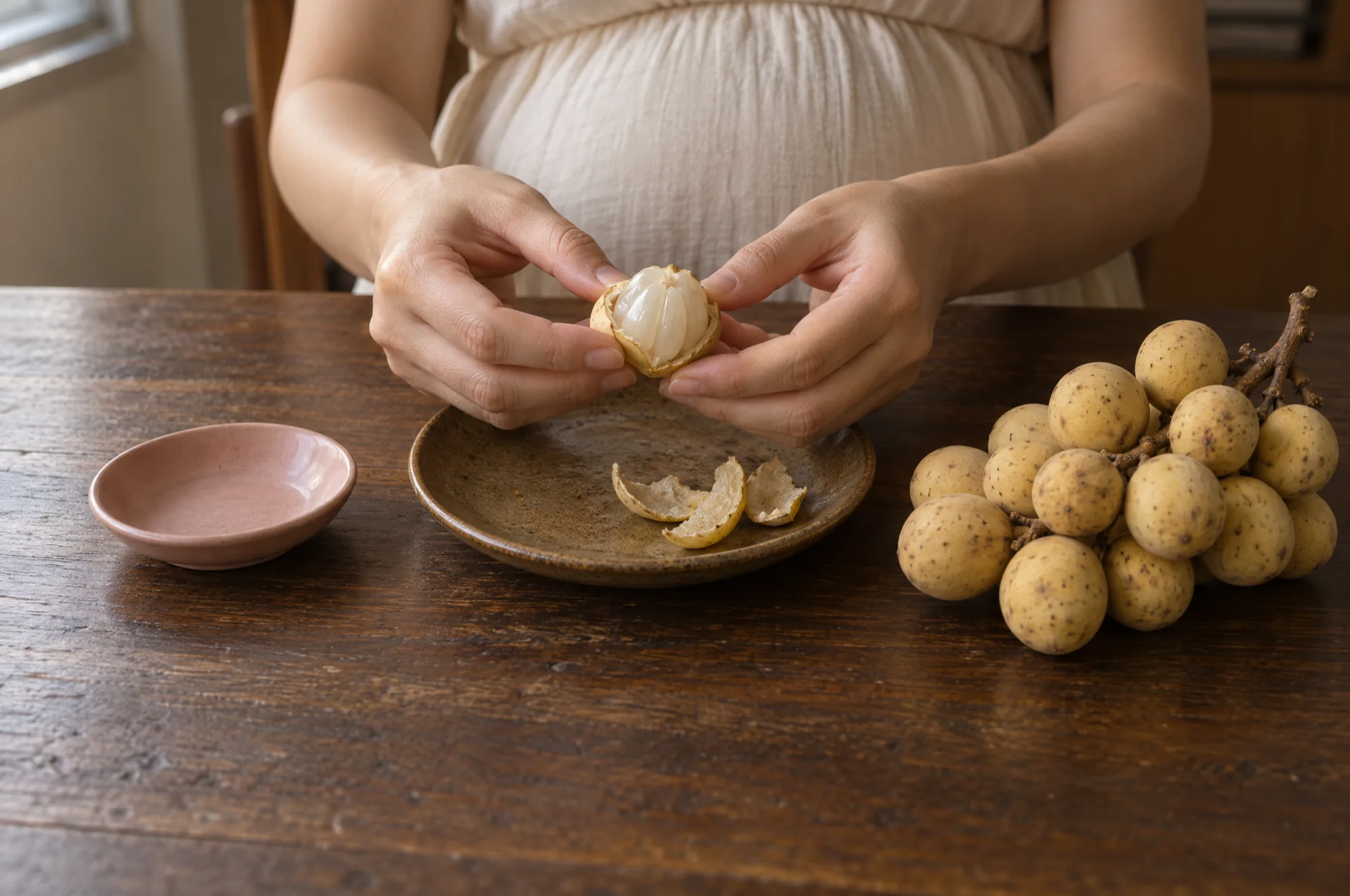
You can eat fresh lanzones in pregnancy, in a normal fruit portion. In Singapore, lanzones goes by other names: NParks, the National Parks Board, lists it as Langsat and Duku. Lanzones, also spelt lansones, is its name in the Philippines.
Singapore General Hospital (SGH) says 2 servings of fruit a day are required in pregnancy, on a diet page written by the dietitians of KK Women’s and Children’s Hospital (KKH). That advice is for fruit in general, so lanzones counts like any other fruit. We’d count about 50 g of peeled lanzones as one of the two servings, and make the other a different fruit.
The “heaty” warning you may hear at home comes from Traditional Chinese medicine (TCM), an old system that sorts foods by the effect it believes they have on the body. HealthHub, Singapore’s public health information site, puts lanzones on neither its heaty nor its cooling list. The one real caution is the seed: it is very bitter and holds toxic substances, so eat the flesh and leave the seeds.
If you have gestational diabetes, which is high blood sugar that develops during pregnancy, the amount matters more. Ask your dietitian how a portion fits your day before you make it a habit.
Lanzones, duku and langsat are one species. Its botanical name, the Latin name scientists use for a plant, is Lansium domesticum on NParks’ record, and you may also see Lansium parasiticum. The names on the label shift from place to place: Plant Resources of South-East Asia (PROSEA), the region’s reference handbook on useful plants, says the same name is applied to different forms in different regions.
PROSEA still draws a fairly clear line between the two main kinds of lanzones. Langsat fruit is oval and thin-skinned, it gives out latex, a milky, sticky sap, until it is fully ripe, and it tastes sour to slightly sour and refreshing. Duku fruit is larger and rounder, with a thick skin up to 6 mm and relatively little latex, and it is generally sweet.
Longkong, from southern Thailand, is a third kind: nearly seedless, with a brittle skin. The nutrient figures further down are for lanzones as a whole, so the sweeter duku has no sugar figure of its own. For sticky langsat, the World Agroforestry Centre’s tree reference database suggests dipping it in boiling water before peeling, to get rid of the gumminess.
In TCM, “heaty” and “cooling” sort foods by their effect on the body. They are not a medical diagnosis. HealthHub’s explainer on what heaty and cooling mean calls them a classification system, built up over more than 2,000 years of observation in TCM.
That page gives its own examples. Its heaty foods are red meat, baked and deep fried foods, durian, chocolate and curry; its cooling foods are green tea, salads, mangosteens and watermelons. Lanzones is on neither list, under any of its names, so we would not call it one or the other.
The same page quotes an acupuncturist, a practitioner who treats with fine needles, at Tan Tock Seng Hospital. He says neither heaty nor cooling food is better than the other. He also says heaty and cooling are “not meaningful or relevant” in Western medicine, because TCM starts from very different principles.
Singapore’s hospital dietitians have answered the related fear about “cooling” fruit. A KKH dietitian wrote an article busting 17 pregnancy food myths for HealthXchange, the health site of SingHealth, the hospital group KKH belongs to. The dietitian says there is no documented case of miscarriage from eating cooling foods such as papaya, pineapple and citrus fruit.
If your family still asks you to go easy, a single portion is already going easy. The same dietitian says there is no harm in avoiding one or two foods in pregnancy.
We’d start with about 50 g of peeled lanzones a day, as one of your two fruit servings. Weigh it rather than count it: PROSEA puts a lanzones at up to 2 to 4 cm long, sometimes 7 cm, and duku runs larger than langsat, so the number in 50 g changes from bunch to bunch.
The 50 g comes from HealthHub’s guide to building a healthy meal plan, which sets a fruit serving by example. Lanzones is not one of the examples; they run from 10 grapes or longans, at 50 g, to 1 small apple, orange, pear or mango, at 130 g. Of those, 10 grapes or longans are the closest match: small fruits you eat one at a time.
SGH’s diet during pregnancy page gives the reason for two servings: fruits are good sources of vitamins and minerals, as well as dietary fibre. Make the second serving a different fruit, since the same page asks you to eat a variety of foods. The 50 g is our suggestion, not a rule.
It is good in the way most fruit is: it counts towards your two servings a day. PROSEA’s record, from its 1991 handbook on edible fruits, gives the figures below for 100 g of the flesh you eat, which it puts at 68% of a whole lanzones by weight.
| In 100 g of flesh | Amount |
|---|---|
| Water | 84 g |
| Carbohydrate, mainly sugars, mostly glucose | 14.2 g |
| Fibre | 0.8 g |
| Potassium | 275 mg |
| Calcium | 19 mg |
| Vitamin C | little |
| Energy | 238 kilojoules (kJ), about 57 calories (kcal) |
So it is mostly water and natural sugar, most of it glucose, the same sugar your blood carries. The benefits of lanzones for a pregnant woman are the plain ones in the table: water, energy from that sugar, a little fibre and potassium. If you have heard that lanzones is rich in vitamin C, PROSEA says the opposite, so we’d eat it because you enjoy it, not for a nutrient.
PubMed, the US index of medical research papers, has no results for Lansium domesticum and pregnancy, as of October 2026. So no study there shows that lanzones harms a pregnancy, and none shows that it does a pregnancy special good.
Treat them as not for eating: eat the flesh and leave the seeds. NParks’ record says some segments of a lanzones hold a seed, and PROSEA counts 1 to 3 seeds in each one. The World Agroforestry Centre’s species profile for lanzones describes the seeds as green, about 2 to 2.5 cm long and very bitter.
If a segment tastes bitter, the seed may be why: the profile says flesh that clings tightly to a seed can take on some of its bitterness.
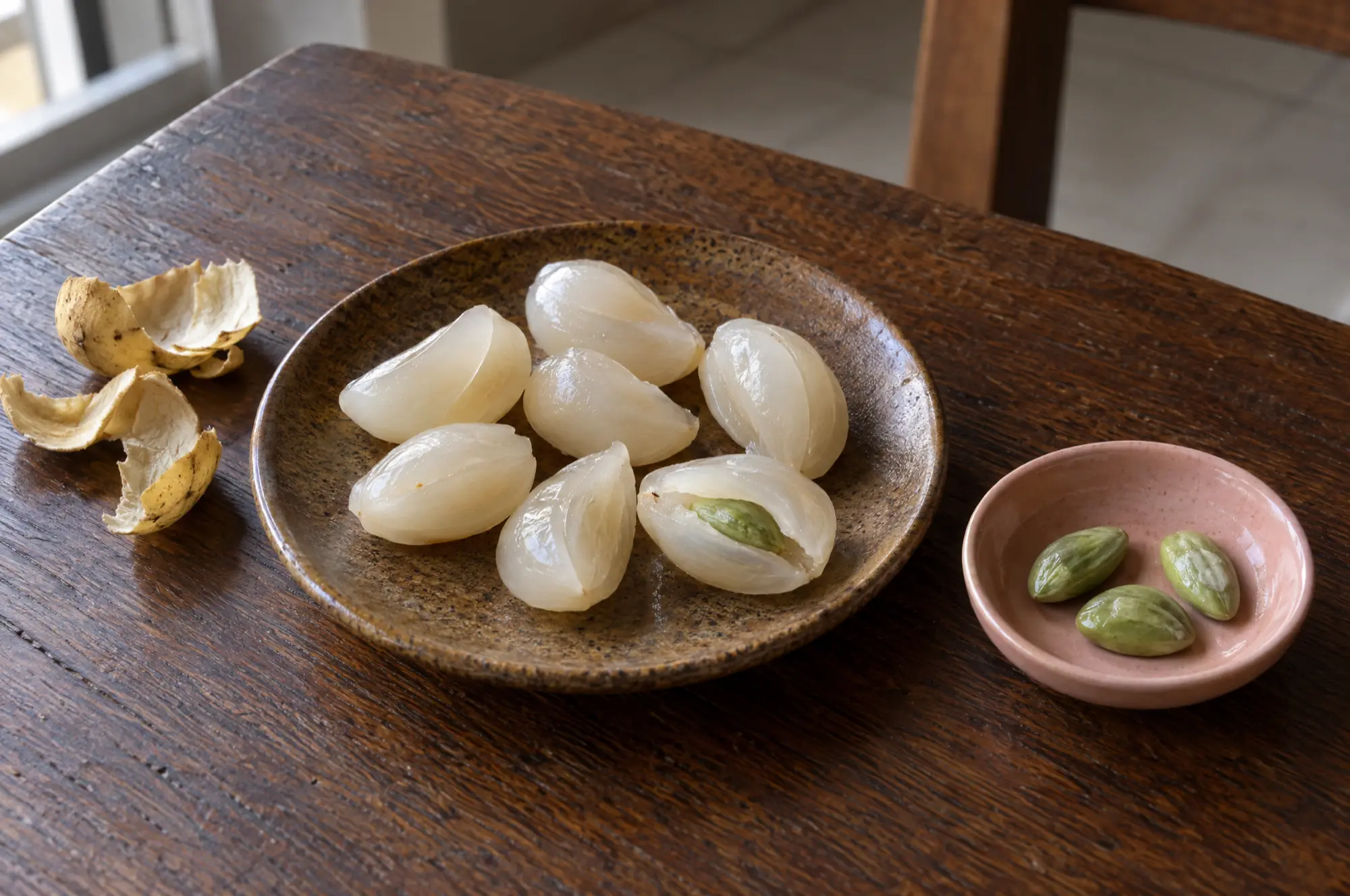
The same profile says the seed holds a tiny amount of an alkaloid, a natural plant chemical, and two bitter, toxic substances. Dr Godofredo Stuart’s compilation of Philippine medicinal plants lists the same. So open each segment gently, take the seed out and put it aside.
Leave the skin out too: the profile names a toxic substance, lansium acid, in lanzones peel and the tree’s bark. If you swallow a seed by accident and then feel unwell, call the doctor or clinic that looks after your pregnancy.
Gestational diabetes mellitus (GDM) means your blood sugar runs high during pregnancy. KKH’s diet page for gestational diabetes says managing what and how much you eat helps keep your blood sugar from being too high. Whether lanzones fits your day, and how much, is for your dietitian to work out with you.
Most of the carbohydrate in lanzones, the part of food that turns into blood sugar, is sugar: PROSEA’s figure is 14.2 g in 100 g of flesh, mainly glucose. By that figure, the 50 g we suggest holds about 7 g of carbohydrate. That number is for your dietitian to place in your day, not a target.
KKH sets out the steps. After its three GDM videos, it asks you to book a dietitian, who goes through a meal plan made for you. If you are a KKH patient with no dietitian appointment yet, KKH says to get a referral from your KKH doctor, and you can contact its Nutrition and Dietetics Department on 6394 1641 or at [email protected] (as of October 2026).
No: SGH’s pregnancy diet page asks for 2 fruit servings a day with no change by trimester, one of the three stages of pregnancy. The one first-trimester food limit it gives is on liver, because of its vitamin A. For the rest of the first 12 weeks, our guide to the first trimester covers what to expect.
No. The World Agroforestry profile says peeled lanzones is canned in syrup or sometimes candied, and the syrup brings sugar that fresh ones do not have. The SGH page asks you to limit sugary foods such as sweets and sweetened drinks, so we’d treat lanzones from a can or a candied pack as a sweet, not as a fruit serving.
For today, peel about 50 g of fresh lanzones, take out the seeds, and have it as one of your two fruit servings. If you have gestational diabetes, first ask your antenatal dietitian or doctor, the people who look after your pregnancy, how lanzones fits your daily carbohydrate plan. If longan is also on your table, our longan in pregnancy answer covers that fruit the same way. For the second serving, and the other fruits people ask about in pregnancy, our guide to healthy pregnancy fruit in Singapore goes through them one by one.

Pregnancy
Fresh longan fruit (Dimocarpus longan, to give it its botanical name) is counted as an ordinary fruit in Singapore's health guidance, so…

Pregnancy
In Singapore, being pregnant does not stop an employer from ever letting you go. But the law protects the maternity pay you…

Pregnancy
One fresh cycle of in vitro fertilisation (IVF) at a public hospital in Singapore costs about S$12,000 to S$18,000 before government help,…