
Pregnancy
How many IVF cycles does it take to get pregnant? What MOH's figures show
Among women in Singapore who had a baby through in vitro fertilisation (IVF), most needed one or two cycles. The Ministry of…
Pregnancy
One fresh cycle of in vitro fertilisation (IVF) at a public hospital in Singapore costs about S$12,000 to S$18,000 before government help, on the hospitals' own estimates. IVF is the treatment where eggs are collected, fertilised with sperm in a laboratory, and an embryo is placed in the womb. KK Women's and Children's Hospital (KKH)…
One fresh cycle of in vitro fertilisation (IVF) at a public hospital in Singapore costs about S$12,000 to S$18,000 before government help, on the hospitals’ own estimates. IVF is the treatment where eggs are collected, fertilised with sperm in a laboratory, and an embryo is placed in the womb.
KK Women’s and Children’s Hospital (KKH) puts a fresh cycle for a Singapore Citizen at S$12,000 to S$16,000 (as stated in May 2024). Singapore General Hospital (SGH) prints S$15,000 to S$18,000 on its own page (as of October 2026).
For a couple who are both Singapore Citizens, the government co-funds 75% of a fresh cycle at a public centre, up to S$7,700. MediSave can then pay up to S$6,000 more on the first cycle. On KKH’s range, that leaves S$0 to S$2,300 to pay in cash.
Private clinics get no co-funding, though MediSave still works there. Here is the bill stage by stage, what each kind of couple gets, and the sums worked through.
Singapore has three public assisted reproduction (AR) centres, the hospital units licensed to carry out IVF: National University Hospital (NUH), SGH and KKH. Government IVF co-funding applies only at these three.
| Centre | Estimate | What the figure covers | Where and when it was stated |
|---|---|---|---|
| KKH, KKIVF Centre | S$12,000 to S$16,000 | A single fresh IVF cycle for a Singapore Citizen | The centre’s director, to The Straits Times, 11 May 2024 |
| SGH, Centre for Assisted Reproduction | S$15,000 to S$18,000 | Printed under SGH’s heading for IVF and frozen embryo transfer. SGH adds that different rates apply for foreigners and non-residents | SGH’s regulatory and funding page, as of October 2026 |
The KKIVF Centre’s director told The Straits Times that most Singaporean couples pay little of that themselves, because the bulk can be claimed from MediSave and government co-funding. KKH describes its KKIVF Centre, set up in 1993, as Singapore’s largest IVF centre.
A fresh cycle and a frozen cycle are priced differently because they hold different stages. The Ministry of Health (MOH) says a frozen cycle costs less because a fresh cycle “requires the whole ART process like egg stimulation, egg retrieval and fertilisation”. ART, or assisted reproduction technology, is MOH’s umbrella term for IVF and its variations.
| Stage | What happens | Fresh cycle | Frozen cycle |
|---|---|---|---|
| Egg stimulation | Medicine helps the ovaries grow eggs | Yes | No |
| Egg retrieval | The eggs are collected | Yes | No |
| Fertilisation in the laboratory | Eggs and sperm are joined in the lab, with or without ICSI, where a single sperm is injected into an egg | Yes | No |
| Embryo transfer | An embryo is placed in the womb | Yes | Yes, using an embryo frozen from an earlier fresh cycle |
Before the first cycle comes the work-up. MOH says the tests that show whether a couple meets the clinical criteria for treatment may take up to three months, and SGH says IVF counselling is mandatory under MOH guidelines. MOH adds that standard preparatory treatment done before IVF starts can be considered for co-funding.
Some couples also have their embryos tested. Preimplantation genetic testing (PGT-M and PGT-SR) checks embryos when a couple is at risk of passing on a serious condition caused by a single faulty gene or a rearranged chromosome. It has its own co-funding on MOH’s page, separate from the IVF caps below.
Both hospitals quote the cycle as one figure. The split by stage is the question to take to your first consult.
If you would rather see the treatment explained than read about it, SGH has a video on how IVF differs from natural conception.
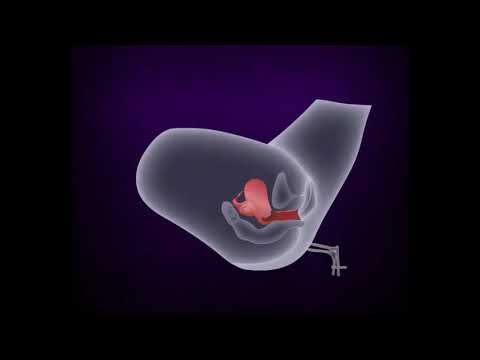
Watch on YouTube: SGH IVF CARE 1 2 3, How IVF is different from natural conception, by Singapore General Hospital.
It comes from one of the three public centres and explains the treatment itself rather than a price, so it sits well beside the stage table.
The Assisted Reproduction Technology (ART) co-funding scheme pays part of each cycle at a public centre. The share depends on the couple’s citizenship. There is no form to fill in: MOH applies it automatically to couples who qualify.
| Cycle type | Two Singapore Citizens | Citizen and permanent resident (PR) | Citizen and foreigner |
|---|---|---|---|
| Fresh ART cycle | 75%, up to S$7,700 | 55%, up to S$5,700 | 35%, up to S$3,600 |
| Frozen ART cycle | 75%, up to S$2,200 | 55%, up to S$1,600 | 35%, up to S$1,000 |
| IUI | 75%, up to S$1,000 | 55%, up to S$700 | 35%, up to S$500 |
ART co-funding covers up to three fresh and three frozen cycles. IUI, intra-uterine insemination, is an artificial insemination procedure rather than IVF, and it is co-funded for up to three cycles of its own.
The percentage matters less than it looks. On any fresh-cycle bill of S$10,400 or more, 75%, 55% or 35% of the bill is already above the cap, so every couple type gets its full cap. Both public estimates above start higher than that.
The cap does not shrink as you go. MOH told Parliament in 2019 that the amount of co-funding “does not decrease with each successive ART attempt”.
On MOH’s scheme page, you qualify for ART co-funding at a public centre when all four of these are true:
The three-and-three split can bend a little. MOH told Parliament in January 2021 that a couple who has used one fresh and three frozen cycles can ask MOH to co-fund a fourth frozen cycle out of an unused fresh one, capped at the frozen-cycle limit.
MediSave, your CPF healthcare savings account, can pay for assisted conception procedures (ACPs), MOH’s term for treatments that include IVF and IUI. MOH sets these limits (as of October 2026):
The money can come from the patient’s own MediSave or the spouse’s. The patient is the person having the treatment, so the lifetime limit follows her, whichever account pays.
The three cycle limits add up to exactly S$15,000. A couple who use the full limit on cycles one, two and three have reached the lifetime cap, so a fourth cycle is paid without MediSave. MOH said in January 2021 that couples facing an unexpectedly large bill, for example from complications, may appeal to use MediSave beyond the limits, case by case.
Two more rules from MOH. MediSave can be used at both public and private AR centres. And if a cycle is not completed for non-medical reasons, MediSave cannot pay for it.
Put co-funding and MediSave together and most of a public-centre bill is covered. These sums use the hospitals’ own estimates for a couple who are both Singapore Citizens, with co-funding at its S$7,700 cap and MediSave up to its S$6,000 first-cycle limit.
| Estimate used | Bill | Co-funding | MediSave | Left to pay in cash |
|---|---|---|---|---|
| KKH, low end | S$12,000 | S$7,700 | S$4,300 | S$0 |
| KKH, high end | S$16,000 | S$7,700 | S$6,000 | S$2,300 |
| SGH, low end | S$15,000 | S$7,700 | S$6,000 | S$1,300 |
| SGH, high end | S$18,000 | S$7,700 | S$6,000 | S$4,300 |
MediSave can only pay what is in the account, so check your balance, and your spouse’s, before you count on the full S$6,000.
MOH has a figure of its own. It told Parliament in January 2021 that after co-funding and MediSave on the first cycle, 8 in 10 eligible citizen couples would pay nothing out of pocket, and 9 in 10 could expect to pay no more than S$500. That fits the low end of KKH’s range better than SGH’s range, and it is from 2021, so plan on your own centre’s written estimate.
The cash share grows with each cycle, because the co-funding cap stays the same while the MediSave limit drops. If every cycle billed KKH’s top figure of S$16,000, a citizen couple would pay S$2,300 in cash on the first, S$3,300 on the second and S$4,300 on the third.
| Cycle | Left to pay in cash |
|---|---|
| First fresh cycle | S$2,300 |
| Second fresh cycle | S$3,300 |
| Third fresh cycle | S$4,300 |
A couple with one citizen and one PR, or one citizen and one foreigner, gets a lower cap. The most help on a first fresh cycle, co-funding plus MediSave, is S$13,700 for two citizens, S$11,700 for a citizen and a PR, and S$9,600 for a citizen and a foreigner.
SGH says different rates apply for foreigners and non-residents. If one of you is not a citizen, ask the centre for the estimate that applies to you rather than adjusting the figures above.
Co-funding expects you to be below 40 at the start of each cycle. Since 1 January 2020, up to two of the six co-funded cycles can take place at 40 or over, as long as you attempted assisted reproduction or IUI before 40.
So a woman who began treatment before 40 can still use up to two co-funded cycles after turning 40. One who first tries at 40 or later gets no co-funding.
MOH ties the rule to clinical evidence. It told Parliament in January 2021 that the success rate for ART after 40 “decreases significantly”, and on 8 October 2026 that a woman’s age and medical history drive the success rate more than the number of cycles does.
Singapore had 13 licensed AR centres in May 2024, and 10 of them were private, The Straits Times reported. Co-funding applies only at the three public ones.
MediSave works at a private centre on the same limits, so on a private bill it is the only help from the schemes on this page. If a private centre quoted S$16,000, the same as KKH’s top figure, a citizen couple’s first cycle would leave S$10,000 to pay in cash, against S$2,300 at KKH.
Ask each private centre for a written quote split by stage, and set it beside the public estimates above.
A frozen embryo transfer (FET) uses an embryo frozen from an earlier fresh cycle, so it skips egg stimulation, egg retrieval and fertilisation. MOH says that is why a frozen cycle costs less than a fresh one.
Neither public estimate above gives a separate price for a frozen cycle, so ask your centre for it. For two citizens, co-funding pays 75% of a frozen cycle up to S$2,200, which is the full cap on any frozen-cycle bill of S$2,934 or more.
Every price here is an estimate or a cap. The number to plan on is the one your centre puts in writing, and four steps get it.
If you are still trying on your own, our guide to getting pregnant covers the basics first. When a pregnancy comes, the next big bill is the birth, and we have priced the cost of giving birth in Singapore hospital by hospital. The Pregnancy hub picks up from there.
Co-funding and MediSave limits change, and MOH is reviewing them now, so open MOH’s page before you commit to a figure.

Pregnancy
Among women in Singapore who had a baby through in vitro fertilisation (IVF), most needed one or two cycles. The Ministry of…

Pregnancy
A preconception check up, which hospitals call preconception health screening, is a visit to a doctor before you start trying for a…
Pregnancy
Midwifery in Singapore is the care a registered midwife (RMW) gives you through pregnancy, labour and the weeks after birth. The Singapore…