

Newborn
How to hire a confinement nanny in Singapore: the MOM permit, dates and costs
To hire a confinement nanny from Malaysia, you apply to Singapore's Ministry of Manpower (MOM) for a Work Permit for confinement nanny….
Newborn
Colostrum is the thick yellow first milk. Why small amounts are all a newborn needs, when your milk comes in, and how long a colostrum syringe keeps.
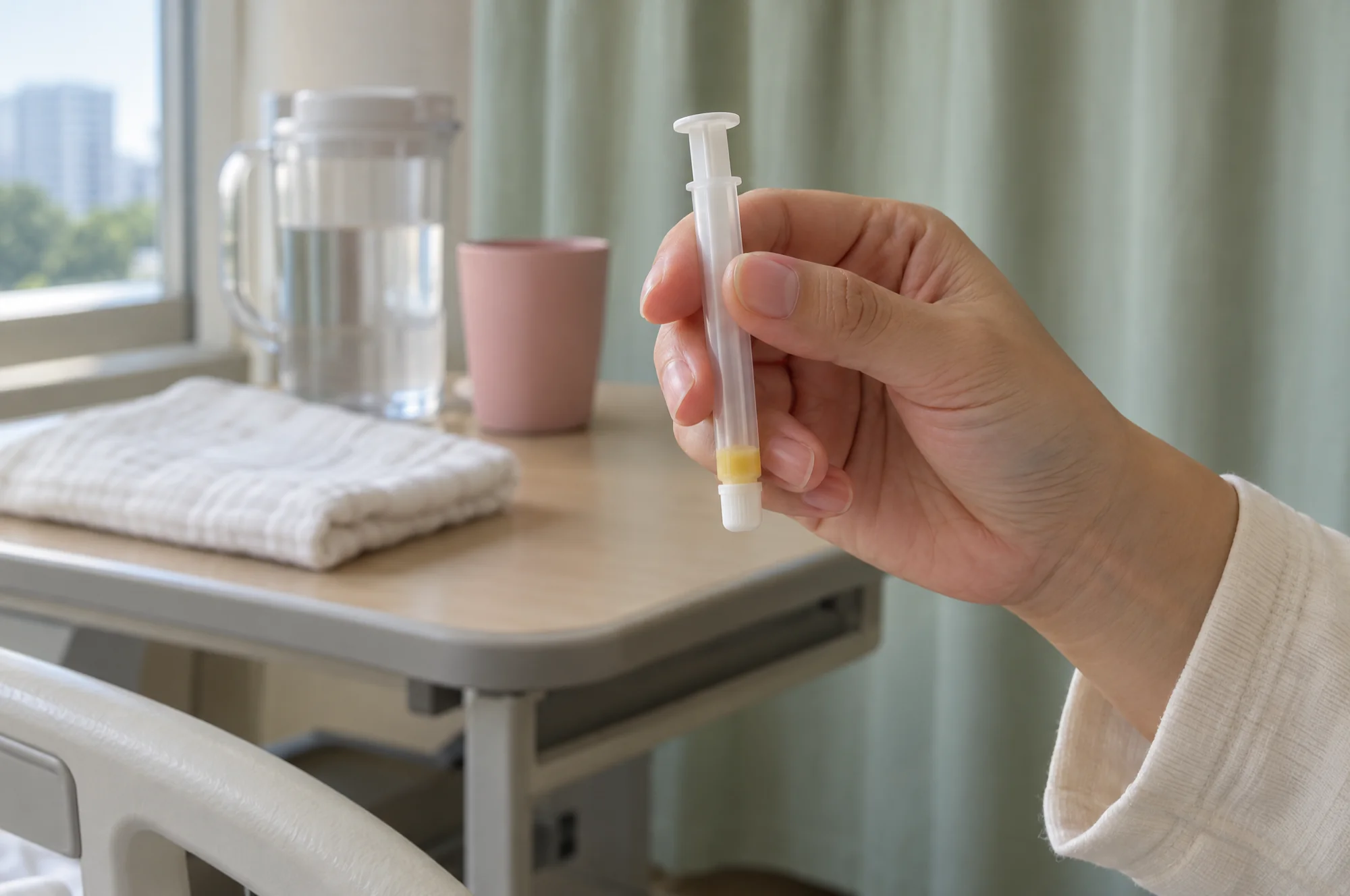
Yes, a few drops are enough. Colostrum is the first milk your breasts make: thick, yellow and sticky, and small in amount.
The Health Promotion Board (HPB) writes health advice for HealthHub, the Ministry of Health’s website. Its breastfeeding guide says that small amount is all your baby needs in the first few days.
Your newborn’s stomach is small too. A review of six studies put it at about 20 millilitres (ml) at birth, around four teaspoons. Small feeds, often, fill it.
More milk tends to “come in”, meaning your breasts start to make much more, between the third and fourth day after delivery. So says the breastfeeding guide of SingHealth, the public healthcare group that Singapore General Hospital (SGH) belongs to.
Some babies need help to feed at first. Yours may be sleepy, slow to latch on to the breast, or in the hospital’s special care unit for babies who need extra help. You can then collect colostrum by hand into a small syringe.
This page covers how to do that, when a doctor may suggest starting before birth, and how long a syringe keeps in the fridge or freezer.
Colostrum is made before your baby arrives. A leaflet from the Royal United Hospitals Bath, a hospital in the UK’s public National Health Service (NHS), says you will have some in your breasts from about 20 weeks of pregnancy, around halfway through. If a few yellow drops leak late in pregnancy, that is colostrum.
After the birth, it is your baby’s food for the first few days. SingHealth’s guide says colostrum is very different from mature breast milk, the milk your breasts make from a few weeks after birth.
It has more protein, and much of that protein is antibodies, the proteins that help protect your baby against infection. It is also rich in minerals and in vitamins A and D.
The main antibody in breast milk has a long name: secretory immunoglobulin A, or sIgA for short. A 2026 review in the journal Vaccines says the antibodies a baby gets through breast milk are “primarily secretory IgA”, the same sIgA. In plain words, your colostrum passes some of your own defences against germs to your baby.
The small amount of colostrum matches the baby. HPB’s breastfeeding guide answers the worry head on: colostrum is small in quantity, “but that is all your baby needs in the first few days.”
A 2013 review in Acta Paediatrica, a journal on children’s health, searched for studies that measured a newborn’s stomach and found six. Together they suggest a stomach that holds about 20 ml at birth. The author argues that a stomach that size suits feeds about an hour apart.
That does not mean you feed by the clock. SingHealth’s guide calls breastfeeding “on demand” very important: you start a feed when your baby shows hunger cues (signs of wanting to feed) and go on until your baby is satisfied. It says 8 to 12 feeds a day is common.
A sleepy baby is the exception. SingHealth notes that very young, premature (born early), jaundiced (with yellow skin) or sick babies may not wake to ask for a feed, and says to wake your baby at least once every three hours to feed.
If you are still worried your baby is not getting enough, say so to the ward nurse before you go home. After you leave hospital, a lactation consultant, a specialist in breastfeeding problems, can watch a feed with you. Our guide to lactation consultants in Singapore lists where to find one.
Usually on day 3 or 4. SingHealth says a mother’s milk tends to “come in” between the third and fourth day after delivery. The timing also depends on the milk being drained regularly, by feeding and by expressing.
SGH’s neonatal team, its doctors for newborn babies, says the same about expressing. The first amounts you express are small, but they increase dramatically within 72 hours, or three days.
The change is gradual. HPB says breast milk moves from colostrum to transitional milk, an in-between stage, and then to mature milk by about two to four weeks after birth. Our page on how milk is produced in the breast walks through how the breast makes milk in the first place.
Hand expression means squeezing milk out with your fingers instead of a pump. A midwife or ward nurse can show you once, and it is worth asking. The steps below follow the Bath leaflet and SGH’s neonatal team on HealthXchange, SingHealth’s health site.
Expect only drops of colostrum at first. That is normal. The Bath leaflet says some women find it easier just after a warm bath or shower.
Only if your obstetrician (your pregnancy doctor) or midwife agrees. Expressing in late pregnancy is called antenatal expressing. The point is to have some of your own colostrum stored for a baby who may need extra while you learn to breastfeed.
The Bath leaflet names two cases where that helps: a baby at higher risk of low blood sugar after birth, and a mother who expects breastfeeding to be hard, for example after breast reduction surgery.
Diabetes in pregnancy is the first case. That includes gestational diabetes, which KK Women’s and Children’s Hospital (KKH) describes as high blood sugar that develops during pregnancy.
Babies of mothers with diabetes are at higher risk of low blood sugar in their first 24 hours, says the published plan, or protocol, of an Australian trial on this question. The same paper notes that milk tends to come in later for these mothers.
That trial is called DAME, short for Diabetes and Antenatal Milk Expressing. It enrolled 635 women in six hospitals in Victoria, Australia.
All had diabetes in pregnancy but were otherwise at low risk of complications. Half were advised to express twice a day from 36 weeks of pregnancy.
The results, published in the medical journal The Lancet in 2017, found “no harm in advising” these women to express from 36 weeks. A later paper from the trial adds that their babies were more likely to have only breast milk during the hospital stay.
Two limits matter. The trial took only women at low risk of complications, so it says nothing about a pregnancy with other risks. And the Bath leaflet asks women to start at 36 weeks, not before, unless they have been specifically advised to.
These are overseas sources, so ask your own doctor whether expressing suits your pregnancy, and from which week. A breastfeeding class before the birth is a good place to ask about it.
It depends on whose rule you follow and what you are storing. The table puts the times side by side, each with its source and the case it covers. Where your own hospital gives you a different rule, follow your hospital.
| What you are storing | Fridge | Freezer | Source |
|---|---|---|---|
| Colostrum in one syringe that you add to between sessions | Up to 48 hours at 2 to 4°C, counted from the first collection | After that, into the freezer at -18°C. No time limit given | Royal United Hospitals Bath, UK (October 2023) |
| Freshly expressed breast milk | 48 hours at 4°C | 3 to 6 months in a two-door fridge freezer (-5 to -15°C); 6 to 12 months in a deep freezer (-20°C) | HPB on HealthHub (last reviewed June 2026) |
| Freshly expressed breast milk, at home | No more than 72 hours, at the back where it is coldest | 2 weeks in a freezer box inside the fridge (-15°C); 3 to 6 months in a freezer with its own door (-18°C); 6 to 12 months in a deep freezer (-20°C) | SGH’s neonatal team on HealthXchange |
| Milk for a premature baby in SGH’s neonatal department | Thrown away after 24 hours, to lower the risk of infection | Freezing generally not encouraged while the baby is in hospital | SGH’s neonatal team on HealthXchange |
| Milk thawed in the fridge | 24 hours | Do not refreeze (SGH) | HPB and SGH |
Only the first row is written for colostrum. The Bath leaflet lets you keep adding to one syringe for 48 hours, as long as it goes back in the fridge between sessions.
SGH’s general rule is stricter: newly expressed milk should not be added to milk already stored. The two Singapore home tables also differ on the fridge, at 48 and 72 hours.
The shortest time is for the most fragile babies. SGH’s neonatal department throws milk away after 24 hours, a rule one of its senior doctors says lowers the risk of infection in premature babies. If your ward has given you syringes, ask which rule it uses.
How long is frozen colostrum good for? The Bath leaflet says to freeze it at -18°C but sets no limit. Until you have your hospital’s own answer, the freezer times in the two Singapore rows are the nearest guide, though they were written for breast milk in general.
Label every syringe or container with your name and the date and time you collected it. SGH says this matters most when the milk is going to the hospital, and that milk should go into the fridge as soon as you have expressed it.
Keep it cold on the way. SGH says to carry expressed milk in a cooler box with ice packs and move it into a fridge as soon as you arrive.
For frozen colostrum brought in for the birth, the Bath leaflet asks for a cool bag with your name on it, so it stays frozen until staff can put it in the ward freezer. Ask your own hospital before you pack it, so you know where it will be kept.
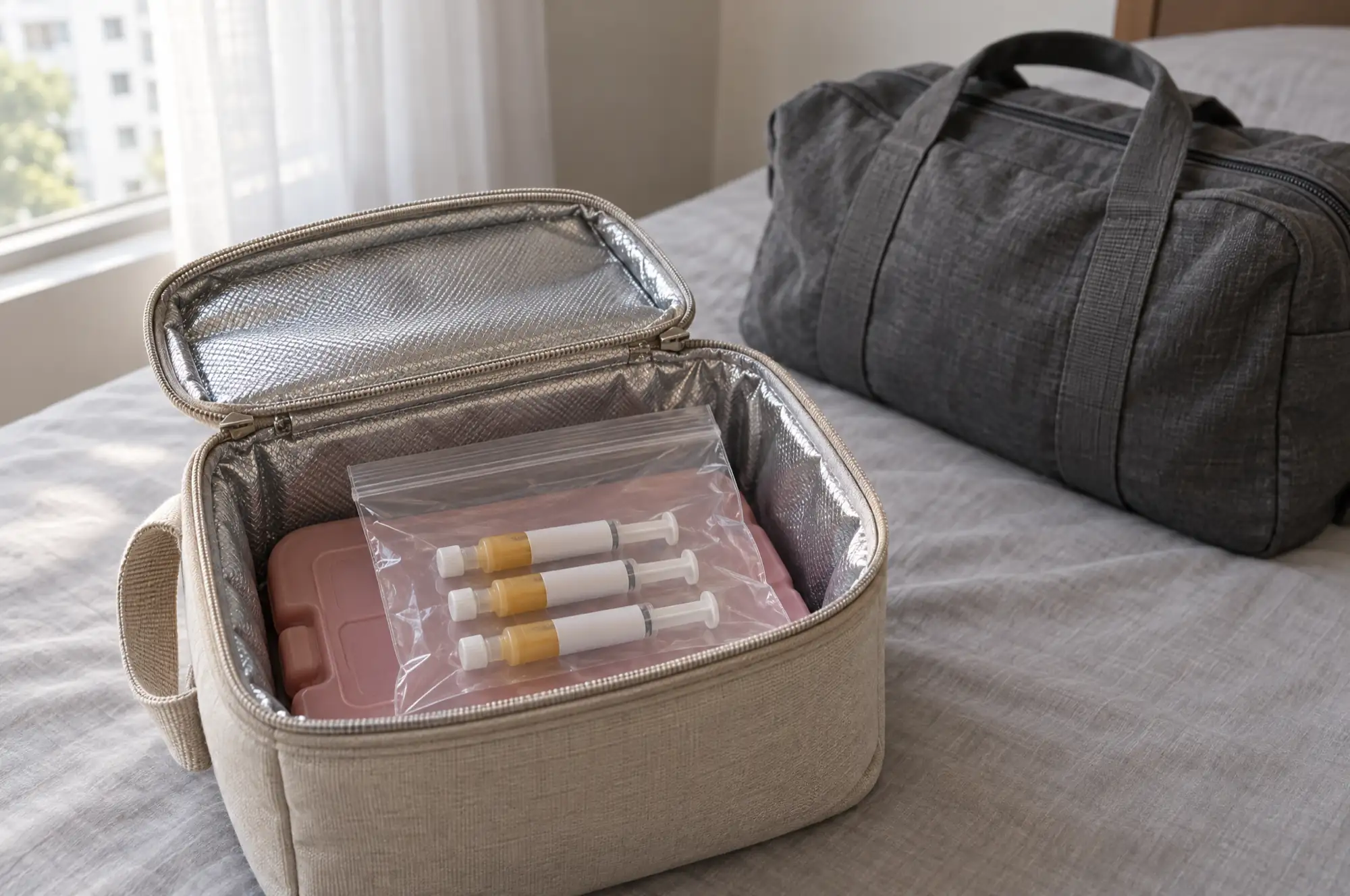
If your baby is premature and still in hospital, the neonatal unit’s rules for milk come first.
No. The colostrum sold as a supplement usually comes from cows. Bovine colostrum, the first milk a cow makes after giving birth, is the most widely used colostrum supplement, according to a 2025 review.
It is a different product from the colostrum your breasts make for your baby, and it does not replace it. Give your baby no supplement of any kind unless your doctor advises it.
Once your milk comes in, you may be storing more than a syringe at a time. Read our guide on how long you can keep frozen breast milk next. It sets out how long milk lasts in each type of freezer, for the weeks after your milk comes in.

Newborn
To hire a confinement nanny from Malaysia, you apply to Singapore's Ministry of Manpower (MOM) for a Work Permit for confinement nanny….

Newborn
The Baby Bonus Cash Gift is S$11,000 for a first or second child and S$13,000 for a third child onwards, for Singapore…

Newborn
Birth admin in Singapore starts with one legal deadline: register your baby's birth with the Immigration & Checkpoints Authority (ICA) within 42…