

Infant
Safe sleep for babies: where and how your baby should sleep
Safe sleep for babies, the rules health bodies give for where and how a baby sleeps, comes down to a few habits…
Infant
Starting from April 1, 2025, Singapore will introduce significant enhancements to the Shared Parental Leave framework, allowing greater flexibility for working parents.
Shared Parental Leave (SPL) in Singapore is an important part of the country’s parental leave benefits, created to help eligible working parents during the critical early months of their child’s life. This program allows both mothers and fathers to take time off work together, encouraging a fair approach to caregiving.

Exciting changes are coming soon. Starting from April 1, 2025, parents will see an increase in SPL, with more improvements planned for April 1, 2026. The shared parental leave scheme will undergo legislative changes to enhance parental leave provisions, providing additional weeks of paid leave and employment protections. These updates aim to provide even better support for families, making it crucial for parents to stay informed about their rights and options.
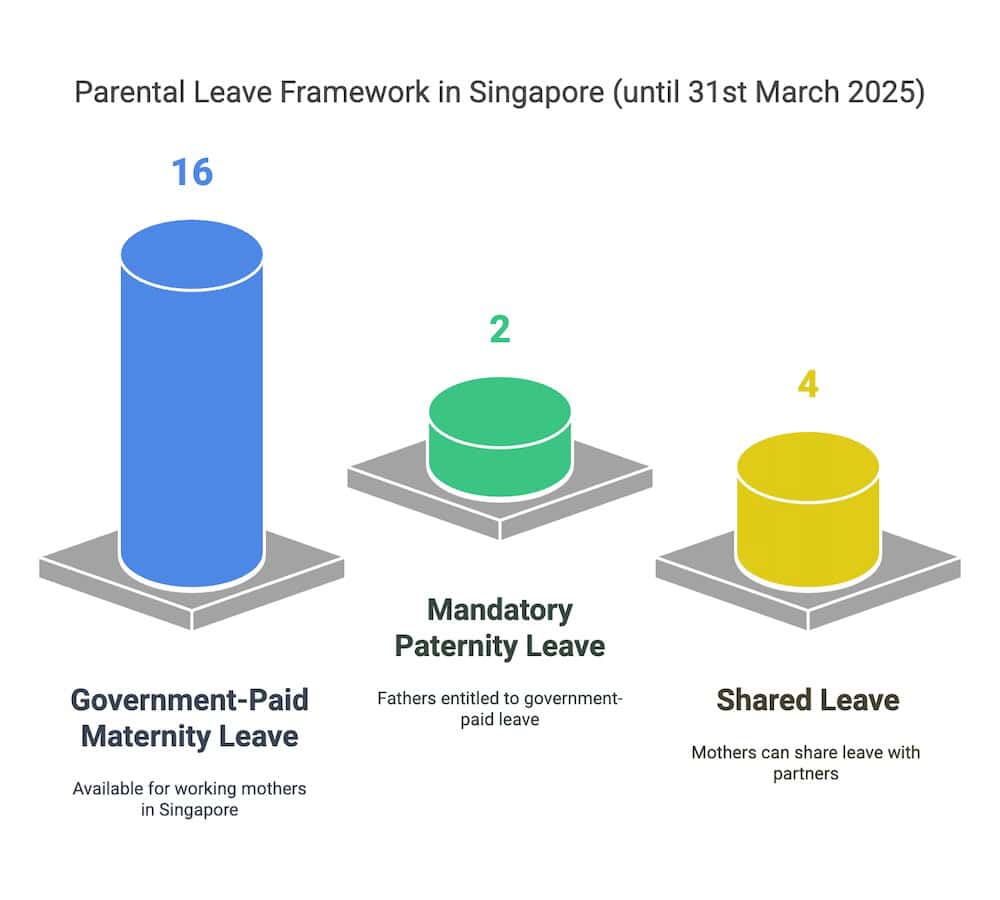
Singapore’s current parental leave framework provides essential support for working parents. This framework, effective until March 31, 2025, includes distinct provisions for maternity and paternity leave. It applies to parents of Singapore citizen children and includes provisions for self-employed individuals.
16 weeks of Government-Paid Maternity Leave (GPML) is available for working mothers.
The first two births are fully funded by the government. Eligibility for maternity leave is determined based on the estimated delivery date of the child.
For subsequent births, employers cover the first 8 weeks while the government funds the remaining period.
Fathers are entitled to 2 weeks of mandatory Government-Paid Paternity Leave.
An additional 2 weeks of mandatory paternity leave may be offered at the discretion of employers.
Mothers can share up to four weeks of maternity leave with their partners, allowing both parents to share caregiving responsibilities during this crucial time.
This existing framework sets the stage for upcoming enhancements that will further support families in Singapore.
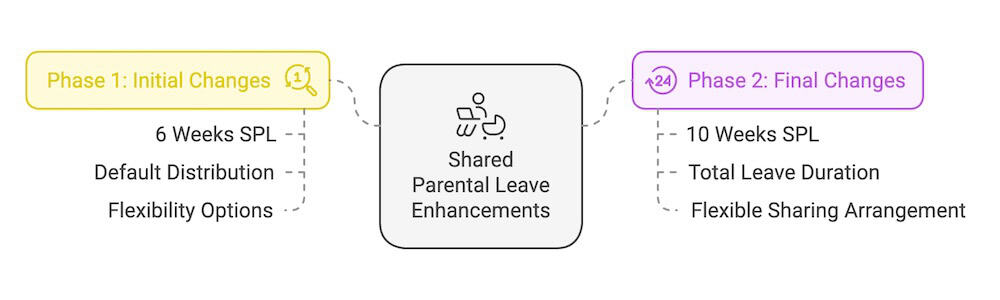
Starting April 1, 2025, Singapore will introduce significant enhancements to the Shared Parental Leave (SPL) framework. This enhancement aims to provide greater support for working parents during the critical early months of their child’s life. Key features of this initial phase include:
Introduction of 6 weeks SPL: Parents will now have access to a total of 6 weeks of paid parental leave that can be shared between them. This is an increase from the previous arrangement, where mothers could share only 4 weeks of maternity leave.
Default Distribution: The SPL will be automatically distributed equally between both parents, ensuring that both can actively participate in caregiving. This default split fosters an inclusive environment for family bonding.
Flexibility Options: While the default distribution is equal, parents have the option to adjust how they share the leave according to their specific needs. Changes must be made within four weeks of the child’s birth, allowing families to tailor their leave arrangements effectively. Any changes to the default distribution must be made with mutual agreement between the parents.
This new framework acknowledges the evolving roles of parents and empowers them to engage more fully in their children’s early development. As families adapt to these changes, they can look forward to a more supportive approach in balancing work and family life.
Starting from April 1, 2026, the Shared Parental Leave enhancement will introduce a significant increase to 10 weeks SPL for parents. This addition allows for greater flexibility in leave distribution. The leave must be taken within 12 months from the child’s date of birth.
Total Leave Duration: Parents will have access to a cumulative total of 30 weeks of leave.
16 weeks of Government-Paid Maternity Leave
4 weeks of Paternity Leave
10 weeks of Shared Parental Leave
The new leave options allow for a flexible sharing arrangement between parents
This two-phase enhancement plan for SPL, effective from April 1, 2025, and April 1, 2026, aims to support families in balancing work and caregiving responsibilities effectively.
The implementation of Shared Parental Leave (SPL) comes with several important features designed to support working parents effectively. Here are the key aspects to consider:
The leave can only be accessed by the father if he is married to the child’s mother.
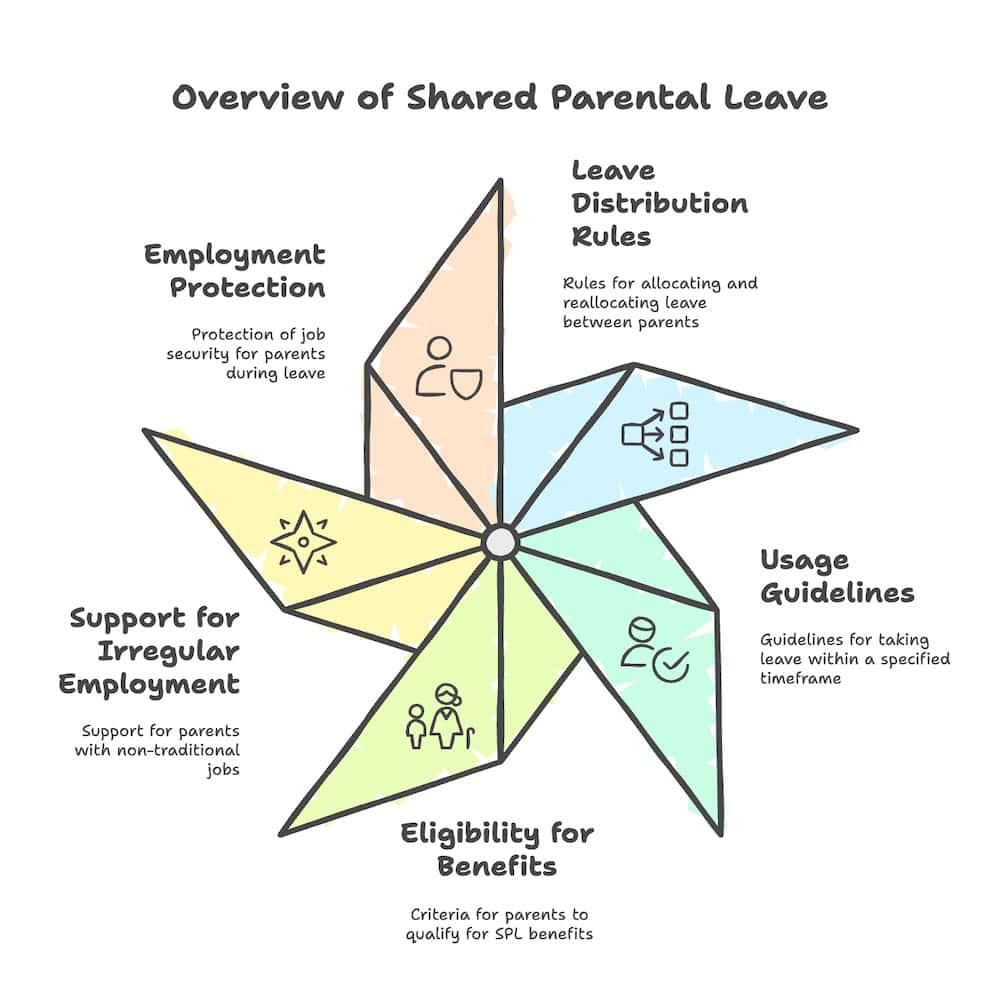
SPL is equally distributed between parents by default. However, parents can reallocate their leave portions according to their needs. Changes to the distribution must be made within four weeks of the child’s birth.
Parents are required to consume the leave within the first 12 months following their child’s birth. Additionally, a minimum notice period of four weeks is mandated before taking any parental leave.
The benefits apply specifically to parents of Singaporean children. This inclusivity ensures that many families can take advantage of the SPL framework.
Parents with non-traditional employment arrangements, such as those on short-term contracts, will also gain from the new Shared Parental Leave Benefit scheme. This feature broadens access and support for diverse family structures.
The SPL extends employment protection not only to fathers but also to adoptive parents, ensuring job security during this crucial time.
These features collectively enhance the support system available for families navigating parenthood while balancing work commitments.
Shared Parental Leave (SPL) is a significant step forward for working parents in Singapore. Understanding the importance of shared parental leave helps families balance their caregiving roles effectively. With the new enhancements coming in 2025 and 2026, parents will benefit from a total of 30 weeks of paid leave, allowing them to nurture their newborns without the stress of juggling work responsibilities.
Families are encouraged to take full advantage of these benefits:
Plan Ahead: Utilize the SPL flexibly as per your family’s needs.
Know Your Rights: Ensure you understand your eligibility and the application process.
Engagement: Both parents actively participating can strengthen family bonds.
For first-time mothers seeking more guidance, the Mother and Baby Singapore resource offers invaluable support. It provides practical advice on everything from pregnancy to parenting, ensuring you feel confident and informed during this journey.
Stay connected with us! Sign up for our newsletter to receive updates and tips that empower your family’s adventure into parenthood.

Infant
Safe sleep for babies, the rules health bodies give for where and how a baby sleeps, comes down to a few habits…

Infant
Infant care in Singapore is licensed care for babies from 2 months up to 18 months, full-day or half-day. At a centre…
Infant
A travel system is an infant car seat paired with a stroller, so the seat lifts out of the car and clicks…