
Infant
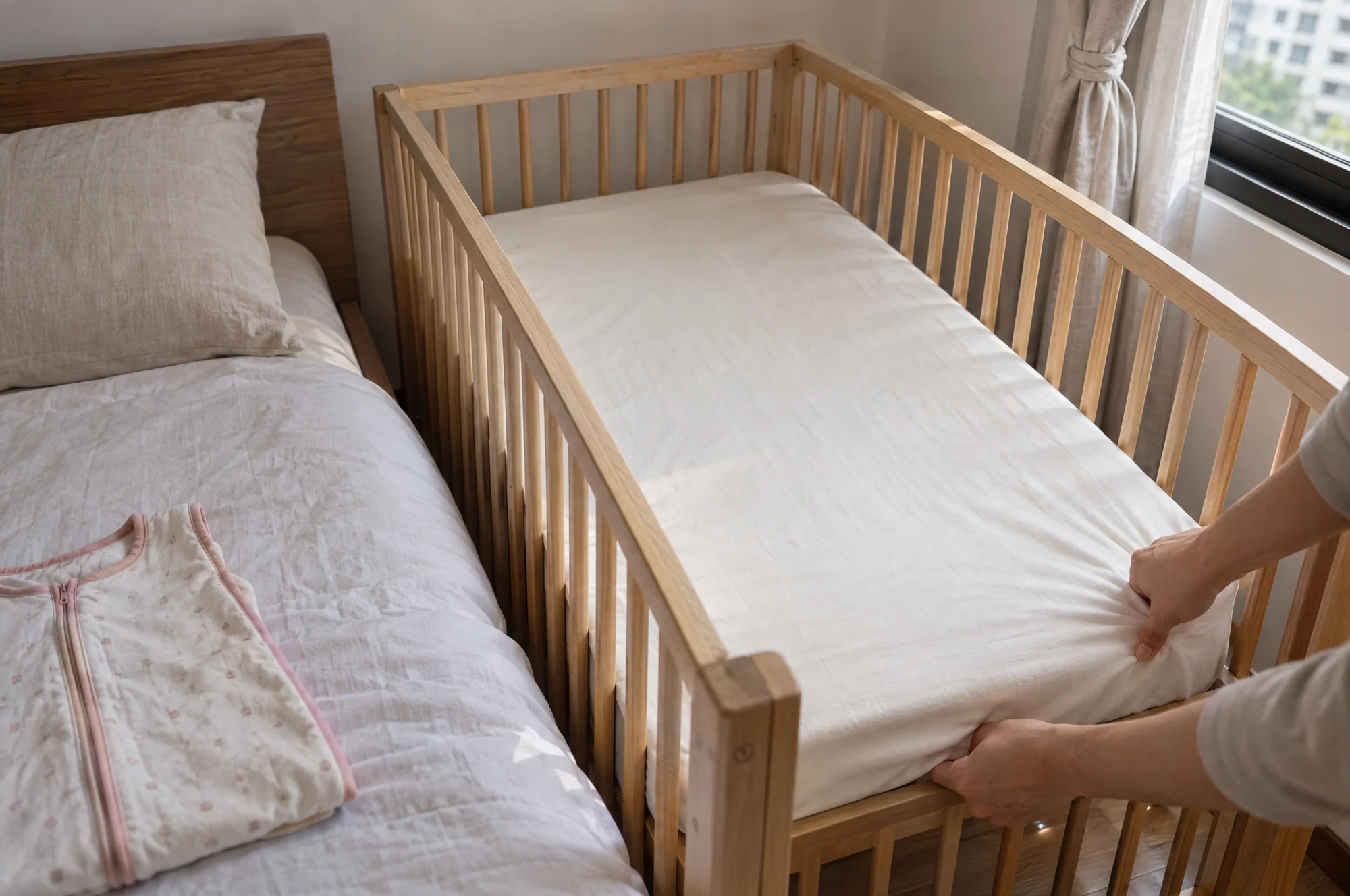
Safe sleep for babies: where and how your baby should sleep
Safe sleep for babies, the rules health bodies give for where and how a baby sleeps, comes down to a few habits…
Infant
Your C-section recovery will take 4-6 weeks, with abdominal pain being common. These C-section recovery tips focus on wound care, rest, and gentle movement. Learn essential steps to ensure proper healing and comfort during your postpartum journey.
Plan on at least six weeks. National University Hospital (NUH) says recovery from a caesarean section (C-section) takes at least that long. A C-section is the operation that delivers your baby through a cut in your tummy and into your womb, as KK Women’s and Children’s Hospital (KKH) explains it.
KKH gives you a postnatal check-up, a follow-up visit after the birth, at four to six weeks. A few things take longer. KKH says not to lift heavy objects for at least two months, and numbness around the scar may last several months.
If you are two weeks in and still sore, you are not behind. KKH says afterpains, the cramps of your womb shrinking back to its old size, can last up to four to six weeks. HealthHub, the Ministry of Health’s health information site, says the pain from a C-section wound goes away after some time.
The table below sets out each stage side by side: pain, walking, lifting, driving and exercise. The last column is about confinement, the rest period after a birth that many Singapore families keep, and puts each custom beside the hospital’s advice. Every fact in the table comes from a guide by KKH, NUH, Singapore General Hospital (SGH) or HealthHub. A cell that names no guide repeats a rule from another cell, or gives our own advice, such as asking at your check-up. Where hospitals differ, as they do on the hospital stay, the line under the table says so.
Read across the row for the week you are in. The weeks count from the day of your C-section, and your own doctor’s advice comes first wherever it differs from this table.
| Stage | Pain and bleeding | Walking | Lifting | Driving | Exercise | Confinement custom, and the hospital’s advice |
|---|---|---|---|---|---|---|
| In hospital, about two to four days | Regular painkillers. Wound pain, cramps and gas are the most common (KKH) | Bed rest for the first 12 to 24 hours (NUH). Most women walk the day after the C-section (KKH) | Nothing heavier than your baby (KKH) | No | Ankle pumps in bed (ankles up and down), 20 times every hour you are awake (SGH) | KKH’s ward menu includes confinement meals at lunch and dinner |
| Weeks 1 to 2, at home | Keep taking painkillers on time. Afterpains are strongest in the first few days (KKH) | Walk around at home: it helps the wound heal (SGH). Wear the compression stockings, tight stockings against blood clots, if you were given them (KKH) | Nothing heavier than your baby | No | Pelvic floor squeezes, for the muscles that hold urine in (KKH). No other exercise until full recovery (NUH) | Custom: no bathing, for fear of “wind” entering the body. Hospital: bathing cuts the risk of skin and wound infection (KKH) |
| Weeks 2 to 4 | Afterpains can last up to four to six weeks. Bleeding stops within three to four weeks for most mothers (KKH) | Gentle walks (HealthHub) | Still nothing heavier than your baby, so not the car seat with your baby in it | No | Walking and pelvic floor squeezes | Custom: no fan or air-conditioning. Hospital: no harm if it keeps you and your baby comfortable (KKH) |
| Weeks 4 to 6, the postnatal check-up | Some bleeding can go on to eight weeks (KKH) | As you feel able | Still no heavy objects (KKH) | Not yet: wait until after six weeks (NUH) | Ask at your check-up what you may start | Custom: Malay massage, the barut (a tight waist wrap) and salai (lying on a warmed frame). Hospital: wait a month after a C-section (KKH) |
| Six weeks to two months | Bleeding past six to eight weeks: call your doctor (KKH) | Walk as you feel able. The six weeks of compression stockings are done (KKH) | Still no heavy objects until two months (KKH) | Once the wound has fully healed and you can brake hard safely (NUH) | Moderate or harder exercise only once your gynaecologist, your pregnancy and birth specialist, clears you (HealthHub) | The longest confinement, 44 days for Malay families (HealthHub), ends in week seven |
| Two months and after | Numbness around the scar may last several months (KKH) | As you feel able | Two months is KKH’s earliest for heavy lifting. Ask your doctor | Yes, once your wound has fully healed (NUH) | Moderate or harder exercise still waits for your gynaecologist’s clearance (HealthHub) | All three confinement periods, 30, 40 and 44 days (HealthHub), are over |
Hospital stays differ too. KKH says about two to three days, NUH says three to four, and SGH says you should be going home two days after your C-section if you are well.
NUH, in its guide to C-section births, calls a C-section a major operation. For the first 12 to 24 hours you will usually be on bed rest, with strong pain relief.
A drip keeps you hydrated, and a urinary catheter, a thin tube into your bladder, keeps it empty. You may also wear special stockings that help stop blood clots forming in your legs.
Then the ward gets you moving. KKH says most women can get out of bed and walk the day after their C-section, and the catheter comes out once you are comfortable walking, usually that same day. Early walking helps you recover and lowers the risk of blood clots in the legs or lungs.
At KKH you are also given compression stockings and a daily injection of a blood-thinning medicine to prevent those clots. KKH asks you to keep wearing the stockings for six weeks after the birth.
SGH sets out the first days as a plan it calls Early Recovery After Surgery, a set of steps it says help you recover better after a C-section. Here they are in the order you do them.
On day two, SGH sends you home if you are well, with any wound dressing changed to a waterproof one first. If you are feeding your baby in these first days, SGH says to keep your back supported while you breastfeed.
Wound care differs between hospitals, so follow the discharge sheet your own hospital gave you. SGH says you may take the waterproof dressing off after three days and leave the wound open. From then on, wash it gently with soap and water when you bathe, and keep it dry afterwards.
KKH’s going-home guide says to keep the dressing clean and dry in the first week, and to have it changed at the nearest GP (family doctor) clinic or polyclinic, a government neighbourhood clinic, if it gets wet. The dressing comes off when the nurses or your doctor say so.
KKH says a C-section wound is usually closed with stitches that dissolve on their own, so there is nothing to remove. Keep it clean and dry until it has fully healed. Some numbness around the scar is normal and may last for several months.
Wound pain, cramps from the womb and gas are the most common kinds of pain after a C-section, says KKH’s guide to pain relief after a C-section. Most mothers have moderate pain, but one in five may have severe acute pain, the short-term pain in the first days after the C-section.
Take your painkillers regularly and on time. KKH says that if you wait until one dose has completely worn off, the next one may take longer to work.
KKH explains why you are given more than one kind. It names three groups: paracetamol; NSAIDs, painkillers that also bring down swelling, such as ibuprofen; and tramadol, a stronger painkiller for severe pain.
Taking medicines from different groups together, each at a lower dose, means fewer side effects from each. KKH says paracetamol and NSAIDs are safe for breastfeeding.
Walking helps with pain too. KKH says it helps your bowels move and lets out trapped gas, as well as helping the wound heal and stopping blood clots.
Holding your baby can hurt in these weeks. KKH says to keep taking your pain relief regularly and find a comfortable position to feed in.
You will still bleed after a C-section. This bleeding, called lochia, is heavy for the first couple of days and then gets lighter, changing from bright red to pink or brown. KKH says most mothers find it stops within three to four weeks, though for some it goes on for up to eight.
KKH gives two lifting rules, in two of its leaflets. Its leaflet on a planned C-section says not to lift anything heavier than your baby.
KKH’s guide to going home after the birth says not to lift heavy objects for at least two months. It also says to avoid hard activity that may cause injury or pain, so the wound can heal.
HealthHub says the same for the confinement month: avoid lifting heavy objects. Read together, the rules answer the car seat question.
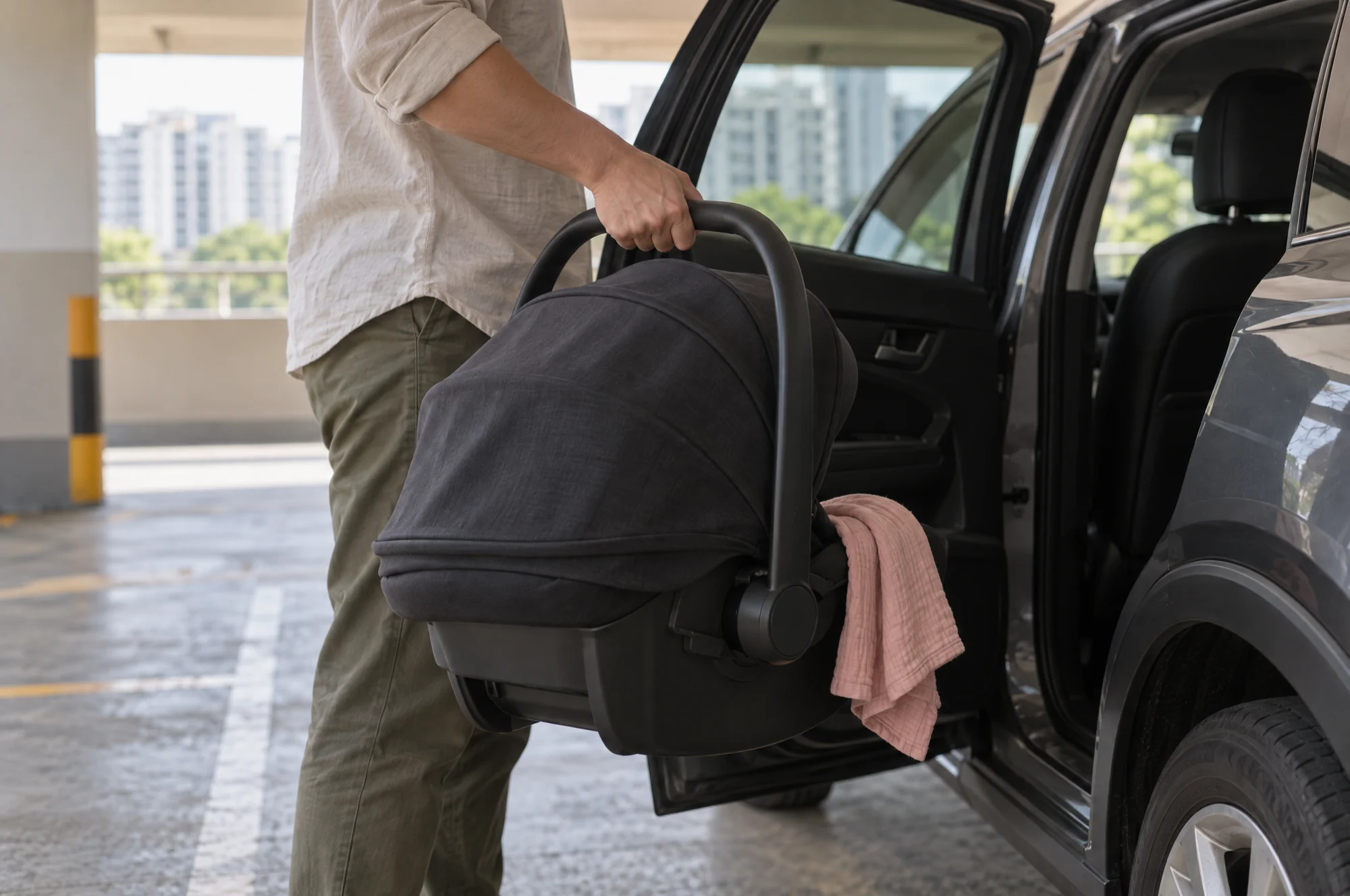
An infant car seat with your baby strapped in weighs more than your baby alone, so it breaks the first rule from day one. Treat it as a heavy object under the second rule until two months, and ask your doctor about it at your check-up.
We’d plan for this before the birth. KKH’s packing list for a planned C-section already includes a car seat for your baby, so let the person driving you home carry it, fit it and lift it out at the other end. You carry only your baby.
Driving waits for the wound. NUH says driving is not advised until after six weeks, because the wound needs to be fully healed before you can do an emergency stop safely.
KKH’s C-section leaflet puts it in its own words: no driving until you have fully recovered and the wound has completely healed, which may take up to six weeks. Until then, ride as a passenger.
NUH’s rule is short: no exercise until full recovery. Two kinds of movement start well before that. The first is walking, which KKH, NUH and SGH all ask you to begin in the first days.
The second is pelvic floor exercise, also called Kegels, for the muscles that hold urine in. KKH’s going-home guide, written for every new mother, says they strengthen those muscles and help stop leaks. Here is how it says to do them.
Anything harder waits for your doctor. HealthHub says to get clearance from your gynaecologist, the specialist who looks after your pregnancy and birth, before any exercise of moderate or vigorous intensity.
If Pilates is on your list, ask your doctor about diastasis recti first, the widening gap between the two halves of the tummy muscle. Our guide to postnatal Pilates and diastasis recti explains the check to ask for at your postnatal appointment before you book a class.
HealthHub’s guide to the first weeks with a baby at home says Chinese families keep confinement for 30 days, Malay families for 44 and Indian families for 40. So after a C-section, confinement covers most of the first six weeks in the table.
Rest is where custom and hospital agree. KKH’s going-home guide says to relax and rest during the confinement period and to sleep when your baby sleeps. Rest still includes walking: SGH says walking around at home helps the wound heal.
HealthHub suggests help from family or a confinement nanny, a carer who looks after you and your baby, for at least the first month. If you are still deciding who will help, our comparison of a confinement centre and a confinement nanny sets the two side by side.
A few customs work against a healing wound. KKH answers them in its list of confinement myths and facts on HealthXchange, SingHealth’s health site.
No bathing, for fear of “wind” entering the body. KKH says there is no basis for this, or for washing your hair only in water boiled with ginger. Bathing regularly keeps you clean and comfortable, and it lowers the risk of skin and wound infections. For the wound itself, SGH says to wash it gently with soap and water when you bathe, then keep it dry.
No fan or air-conditioning. KKH says there is no harm in switching either on if it keeps you and your baby comfortable. In our hot, humid weather, it may even help prevent heat rash.
No plain water. KKH advises drinking enough, especially if you are breastfeeding. Your kidneys make more urine in the first few weeks to clear the extra fluid built up in pregnancy.
Wine, sesame oil and herbs to drive the “wind” out. KKH says there is no medical reason behind it, and a little does no harm. In large amounts, alcohol and other substances in the herbs can pass into your breast milk and on to your baby.
Malay postnatal massage and heat. Traditional Malay care includes massage, the barut, a tight wrap round the waist, and salai, lying on a warmed wooden frame. KKH says that after a C-section these have to wait a month, so the healing wound is not disturbed.
NUH says most women cope very well with a C-section, but complications, problems that follow it, can sometimes happen. These are the signs the hospital and HealthHub guides list.
Call your doctor, rather than waiting for your check-up, if you notice any of these:
Watch your mood too. HealthHub says the postnatal blues, feeling tearful, irritable or anxious, usually start in the first week and last no more than two weeks. If they go on longer, or you have thoughts of harming yourself or your baby, speak to your doctor at once.
KKH gives you the appointment before you leave the hospital, for four to six weeks after the birth. Its going-home guide says the follow-up can be at its Women’s Specialist Clinic, a GP clinic or a polyclinic.
Bring your questions about the rows that are still hard. Sex is one of them: KKH says to wait until the wound has fully healed and to ask your doctor at the review first.
KKH’s C-section leaflet adds that you can get pregnant as soon as 21 days after the birth. So ask about birth control (contraception) at the same time, or before you leave the ward. If you plan another pregnancy later, our pregnancy guides for every trimester start with trying to conceive.
Before your check-up, go down the table above and note which rows still feel hard: the pain, the walking, the lifting. Take that list to the appointment, so your doctor answers for your recovery, not a general timetable. Then read our guide to the things to avoid after a C-section.

Infant
Safe sleep for babies, the rules health bodies give for where and how a baby sleeps, comes down to a few habits…
Infant
Infant care in Singapore is licensed care for babies from 2 months up to 18 months, full-day or half-day. At a centre…
Infant
A travel system is an infant car seat paired with a stroller, so the seat lifts out of the car and clicks…