

Are Baby Bottle Sterilisers Worth It?
What Singapore Parents Should Know About Washing, Sterilising & Drying Bottles
Review
In Singapore the child seat law is set by height, not by age. A passenger below 1.35 m has to be properly secured, and rule 8(1) of the Road Traffic (Motor Vehicles, Wearing of Seat Belts) Rules 2011 gives two ways to do it: an approved child restraint suited to that height and weight, or…
In Singapore the child seat law is set by height, not by age. A passenger below 1.35 m has to be properly secured, and rule 8(1) of the Road Traffic (Motor Vehicles, Wearing of Seat Belts) Rules 2011 gives two ways to do it: an approved child restraint suited to that height and weight, or the car’s lap-and-diagonal belt worn on a booster cushion or with an adjustable belt the Registrar has approved.
Miss it and the Traffic Police list the offence at 3 demerit points and a composition fine of S$150 in a car, which is a sum you pay to settle the matter without going to court. Prosecuted instead, rule 10 sets a maximum of S$1,000 or three months in prison.
The Land Transport Authority (LTA) did not make this rule, and its own offences page does not carry it.
In brief: The rule is rule 8, and it turns on height alone. A taxi is exempt only for a rear seat passenger. A private hire car is not exempt at all, and neither is a small bus taking children to school. Six standards are approved as of September 2026, and the British and Japanese entries stop being approved on 1 January 2031. The composition fine and the court maximum are two different numbers, and the second is much larger. For anything about your own seat, the Traffic Police is the authority to check, not LTA.
It is one rule, and it is short enough to read yourself. Rule 8(1) says that where a person below 1.35 m in height is a passenger of a motor vehicle the Rules apply to, nobody may use that vehicle unless the passenger is properly secured by:
“(a) an approved child restraint appropriate for a person of that height and weight; or (b) a body-restraining seat belt in the manner set out in rule 4(2) when seated on a booster seat cushion or when using a seat with an adjustable seat belt approved by the Registrar.”
Two paths, then. A proper child seat is path (a). A booster cushion that lifts your child so the adult belt crosses them correctly is path (b), and so is a built-in adjustable belt in the cars that have one.
The words in that rule have set meanings, and rule 2 gives them. An approved child restraint is “any child restraint of a type approved by the Deputy Commissioner of Police under section 76(1) of the Act”.
A booster seat cushion is “a device designed for a child to sit on in order to raise the height of such child to a level suitable for the proper fit of a seat belt”. A body-restraining seat belt is one “designed to provide restraint for both the upper and lower parts of the trunk”, which is the ordinary lap-and-diagonal belt rather than a lap belt alone.
Height is the only threshold anywhere in the Rules. The word age does not appear in them, so two children with the same birthday can sit on opposite sides of the line. Measure against 1.35 m and work from that.
Which vehicles are covered is rule 3, and the list is wide: motor cars, business service passenger vehicles, light goods vehicles, private hire cars and goods-cum-passengers vehicles registered on or after 1 January 1973, plus every taxi, ambulance, medical transport vehicle, fire engine, hearse, heavy goods vehicle and bus.
The Rules were made by the Minister for Home Affairs under section 75 of the Road Traffic Act, and the copy on Singapore Statutes Online is signed by the Permanent Secretary of the Ministry of Home Affairs. Three separate offices then sit behind the words in rule 8.
Now the Land Transport Authority. Its own LTA Offences and Fines page does not mention children, child restraints, seat belts or the 1.35 m height anywhere on it. The eight offence types that page does list are bus lane, ERP, illegal parking, illegal modifications, off-peak car, road tax, vehicle registration and active mobility, and it tells you plainly that for notices from the Traffic Police you should visit their website instead.
So when you want the current list of approved standards, or the fine, the Traffic Police is where to look. Sending a parent to LTA for this is sending them to the wrong counter.
What you are checking is the sticker on the seat, and what you are checking it against is a list of six. The Traffic Police reviewed and republished that list on 13 June 2025, and as of September 2026 it reads:
| Approved standard | Where it comes from | Status |
|---|---|---|
| FMVSS 213 | American | Approved |
| AS 1754-1975, including AS 1754.1-1989 Part 1, AS 1754.2-1989 Part 2 and AS 1754.4-1989 Part 4 | Australian | Approved |
| B.S. 3254: Part 2: 1988, B.S. AU 202a: 1988, or B.S. AU 185: 1983 | British | Approved until 31 December 2030 |
| ECE R44 | European | Approved |
| ECE R129 | European | Approved, added 13 June 2025 |
| JIS D0401-1990 | Japanese | Approved until 31 December 2030 |
Those names are codes rather than words, and the Traffic Police list does not gloss them. FMVSS 213 is American, one of the Federal Motor Vehicle Safety Standards. The rest carry their country of origin in the table above, which is as far as the source itself goes.
On the release page the list is published as a picture rather than as text, which is worth knowing if you go hunting for it. The release adds a footnote saying the approved standards are reflected in the Road Traffic (Approved Seat Belts) Notification 2024.
Two rows matter to a parent this year. ECE R129 was added with immediate effect on 13 June 2025, so a seat bearing it is on the current list. The British and Japanese entries are on a timer: the Traffic Police say they cease to be approved from 1 January 2031, that seats bearing them remain safe to use, and that drivers using one have until 31 December 2030 to switch.
A taxi and a private hire car are not treated the same here, and an app booking can bring you either one.
A private hire car is not exempt. Rule 3 names private hire cars registered on or after 1 January 1973 among the vehicles the Rules apply to, in the same list as motor cars and taxis, and rule 8 has no carve-out for them. LTA lists Gojek, Grab, Ryde and TADA among the ride-hail operators you book a taxi or a private hire car through, so where your booking arrives as a private hire car, rule 8 applies in the back of it exactly as it applies in your own car.
A taxi is exempt, but only partly. Rule 8(2) says the rule does not apply “in relation to any taxi, if the person below 1.35 metres in height is a rear seat passenger of the taxi”.
The other exemption in rule 8(2) covers buses, and it has its own exception: the rule does not apply to a bus, “other than a small bus that is used for the conveyance of any child to or from his school”. A small bus is defined in rule 2 as one with a maximum laden weight of not more than 3,500 kg and seats for not more than 15 people, excluding the driver. On a school bus of that size the rule is back on, and rule 9 puts the duty on the conductor or attendant when one is on board and on duty.
The Rules do not answer this one, and it is fairer to say so than to invent a rule. The phrase front seat appears nowhere in them.
What rule 8 turns on is the person and the vehicle, not the seat they sit in. A child below 1.35 m in the front of a vehicle the Rules cover still needs an approved restraint or the booster route. The taxi exemption above is the only place in the Rules where a seat position changes the answer.
The real limit on the front seat is the airbag, and it comes from the seat makers rather than from the law. The Britax One4Life and B-Safe Gen2 guides we host both carry the same warning, near enough word for word: “DO NOT place child seat REAR-facing in the front seat of a vehicle with a passenger air bag. DEATH or SERIOUS INJURY can occur.” Both add that “[t]he back seat is the safest place for children 12 and under”, and both send owners of cars with front passenger airbags to the vehicle’s own manual.
Your seat’s guide and your car’s handbook are the two documents that settle it for your car. We have written up what each one covers in our guide to installing a child car seat in Singapore.
There are two numbers here, and they are not the same thing.
The first is the composition fine, a sum the Traffic Police may offer you so the offence is settled without a court. On the Singapore Police Force’s penalties for traffic offences table the offence reads “Driver failing to ensure that a passenger below the height of 1.35 metres is properly secured by an approved child restraint or body-restraining seatbelt”. It carries 3 demerit points, with S$150 for a light vehicle and S$200 for a heavy one.
A family car is a light vehicle there. The table defines the class as 2B, 2A, 2, 3C, 3, 3CA and 3A, and gives motor cars as its first example.
The second is the court maximum in rule 10. Contravene rule 8(1) and you are liable on conviction to a fine not exceeding S$1,000 or up to three months in prison, and to S$2,000 or up to six months for a second or later offence.
| What is set | Composition fine | On conviction in court |
|---|---|---|
| Light vehicle, first offence | S$150 | Up to S$1,000, or up to 3 months in prison |
| Heavy vehicle, first offence | S$200 | Up to S$1,000, or up to 3 months in prison |
| Second or later offence | Not separately listed | Up to S$2,000, or up to 6 months in prison |
| Demerit points | 3 | Set by the court’s sentence |
| Published by | Singapore Police Force | Rule 10 of the Rules |
Demerit points are the Driver Improvement Points System, which the police may apply to a valid Singapore driving licence when a driver commits certain offences. The police page is explicit that being offered a composition fine does not remove the rest: a person who commits a traffic offence “is still liable to face the full punishment(s) that the offence carries”.
It depends on the standard printed on it, not on where you bought it. If the sticker carries one of the six entries in the table above, the standard is not what would make the seat unlawful here.
Three things still have to hold under rule 8(1). The restraint has to be of an approved type, it has to be appropriate for your child’s height and weight, and your child has to be properly secured in it.
The timer is the thing to watch on a secondhand or hand-me-down seat. A British or Japanese standard is approved today and stops being approved on 1 January 2031, so a seat on one of those has a short working life here, even though the Traffic Police say restraints bearing them remain safe to use.
The Traffic Police name three ways to check what a seat carries: look for the sticker bearing the standard, ask the retailer, or check the manufacturer’s own information about the restraint. The sticker is the fastest. Where the label has faded off a hand-me-down, the manual for that exact model is the next place to look, and our collection of Britax car seat manuals holds the ones we host.
At 1.35 m, and the Rules make the handover neatly. Rule 6 says rule 4, the ordinary seat belt rule, does not apply to a person below 1.35 m in height, because rule 8 covers them instead. Cross 1.35 m and rule 8 stops applying and rule 4 starts: every driver and passenger has to wear a body-restraining seat belt or a lap belt where one is available for their use.
That is the legal floor and not a fitting test. The Britax Skyline booster guide we host sets out what a correctly fitted belt looks like on a child in a booster, and its own checklist asks that the shoulder belt “lies across the center of the child’s chest and is positioned at or above the child’s shoulder” and that the lap part “rest low on the child’s upper thighs”. Measure first, then look at how the belt lies across your child before you retire the booster.
Once you know the seat is on the list, the next question is whether it is fitted correctly. Our guide to installing a child car seat in Singapore covers the belt path, the movement test and what the manuals actually instruct, and if you are choosing a car around the seat, cars with ISOFIX in Singapore is the companion piece.
The rest of our infant stage guides are here if you are still setting up.

What Singapore Parents Should Know About Washing, Sterilising & Drying Bottles
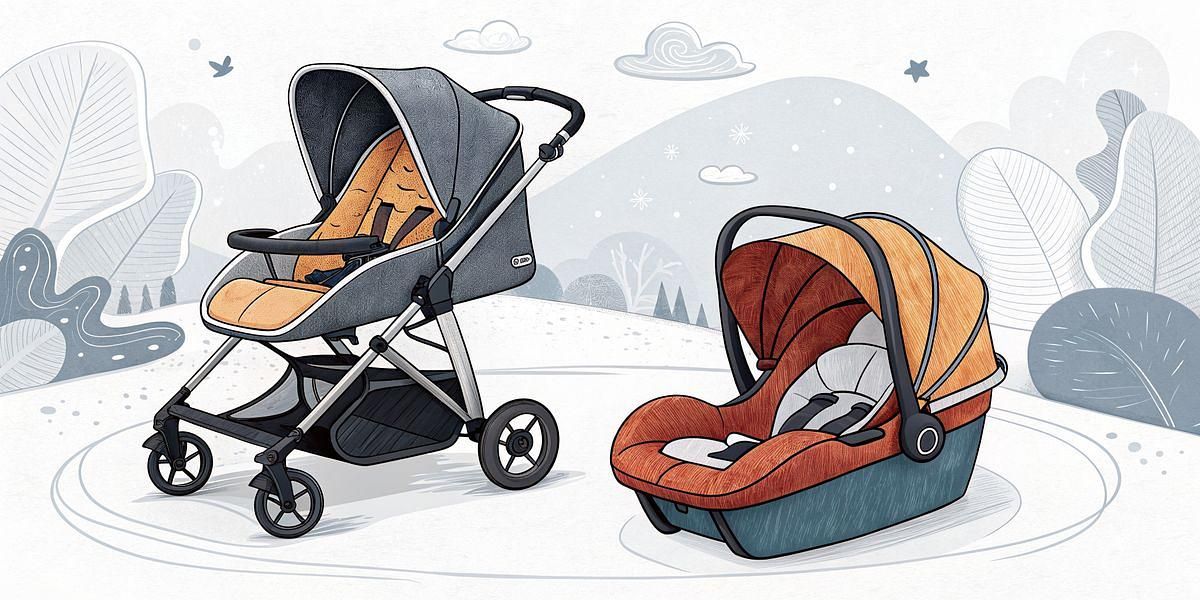
Six travel systems, sorted by the job each one does best. A travel system is a car seat and a stroller sold…
Six baby sunscreens sold in Singapore, sorted by the job: a compact mineral lotion for trips, a stick for quick top-ups, one…