What to buy before preschool starts in Singapore: the starter checklist
The starter list for a Singapore preschool is shorter than it looks: a small backpack your child can open alone, two or three sets of spare clothes, a labelled water bottle, a towel and a washcloth, indoor shoes and socks, and a comfort item if the centre allows one. Put your child's name on all…
By Wei Chun
Updated 7 Oct 2026
12 min read
The starter list for a Singapore preschool is shorter than it looks: a small backpack your child can open alone, two or three sets of spare clothes, a labelled water bottle, a towel and a washcloth, indoor shoes and socks, and a comfort item if the centre allows one. Put your child’s name on all of it.
The one item that is not shopping is the one that can hold up a first day. Every preschool licensed by the Early Childhood Development Agency (ECDA), the government agency that licenses and regulates preschools here, has to hold a copy of your child’s diphtheria and measles immunisation records, and the immunisation itself has to have happened before your child is enrolled. Sort that out before you buy a single thing.
In brief: Do it in this order. Ask the centre for its parent handbook and its own item list, because the handbook is the final word. Get the immunisation records, which ECDA’s Code of Practice requires the centre to hold. Then buy the short list above, and label it. Treat the centre’s uniform, school bag and mattress set as a separate decision: the Code says incidental charges must be optional for parents.
What do you actually need before the first day?
Three different things get bundled into one shopping list, and they behave completely differently. One is a condition of enrolment. One is already the centre’s job. The rest is genuinely your call.
What a Singapore preschool starter list is really made of. Rules read from ECDA’s Code of Practice for Early Childhood Development Centres, Fourth Edition (2025), on 18 August 2026.
Kind of item
What it covers
Where the rule comes from
Required for enrolment
Diphtheria and measles immunisation records
Code of Practice 6.1.1 and 6.1.3
The centre must provide it
Drinking water at all times; hand-washing liquid soap and hand-drying in the toilets; toilet paper children can reach
Code of Practice 6.4.1 and 6.5.9
Optional charges
Uniform and other attire, insurance, transport, field trips, concerts, photographs, online communication tools, enrichment, e-learning materials, and, depending on the licence class, a mattress and cover or school bags and stationery
Code of Practice 9.2.3 to 9.2.7
Your call
Bag, spare clothes, water bottle, towel and washcloth, shoes, comfort item
The centre’s own parent handbook
The Code of Practice is ECDA’s rulebook for licensed centres. It says of itself that it “spells out the minimum regulatory requirements that must be met to ensure the safety and well-being of children and infants in the Centres”, and it is approved by the Chief Licensing Officer under the Early Childhood Development Centres Act 2017. It is written for operators rather than parents.
The thing that can hold up a first day
Vaccination against measles and diphtheria is compulsory for children in Singapore. Singapore’s Communicable Diseases Agency puts it plainly on its vaccinations page: “Of these, vaccinations against measles and diphtheria are compulsory for children under the Infectious Diseases Act.” Both sit inside the National Childhood Immunisation Schedule (NCIS), the national list of recommended childhood jabs, which covers 14 diseases in all.
The Code of Practice turns that into a condition of enrolment. Paragraph 6.1.1: “All children and infants enrolled in the Centre must have been immunised for diphtheria and measles, which are compulsory under the Infectious Diseases (Diphtheria and Measles Vaccination) Regulations 2021.” Paragraph 6.1.3 adds that a copy of those records “must be obtained from the parent or guardian”.
So the centre needs paper, not your word for it. Either of these works:
Your child’s health booklet. The one the clinic has been stamping since birth.
HealthHub. Log in with Singpass and open Children’s Health Services, which pulls “past immunisation records” from the National Immunisation Registry. HealthHub is the national health portal and app; Singpass is the national digital login.
If your child is behind on either jab, that is a clinic appointment rather than a shopping problem, and it is the first call to make. If you are not sure what is outstanding, the HealthHub record will show it.
One related rule is worth knowing before week one. Centres must run “daily temperature and health checks” on all children, staff and visitors upon arrival. That puts the check before you leave. Centres differ on what follows a failed one, so ask yours.
What the centre already has to provide
Drinking water and toilet supplies are already the centre’s job, and neither needs buying.
Drinking water. Paragraph 6.5.9 is one line: “Children must be provided access to drinking water at all times.” A water bottle is still worth packing, because a familiar bottle is one less new thing in a strange room and it travels home and back. It is not the thing standing between your child and a drink.
Soap and toilet paper. Paragraph 6.4.1 requires hand-washing liquid soap and hand-drying facilities in the toilets, and says every cubicle must have “a sufficient supply of toilet paper, which is easily accessible to children”. You are not expected to send either.
Food depends on the centre. Where a centre provides food, the Code requires it to be nutritious, balanced and varied, with at least two weekly menus on rotation and the menu displayed somewhere prominent on the premises. Where a child has a high-risk food allergy, the centre must ask you for a copy of an Action Plan for Anaphylaxis signed by a medical practitioner. The Code describes anaphylaxis as “a serious and life-threatening allergic reaction”, with difficulty in breathing and a severe drop in blood pressure, and says it can be fatal if left untreated. That parent must also be given the list of all food ingredients used in the centre’s meals, and may send food from home instead. Prescribed medication for that child has to be kept somewhere staff can reach quickly rather than in locked storage.
What to buy, and how many
A bag your child can open
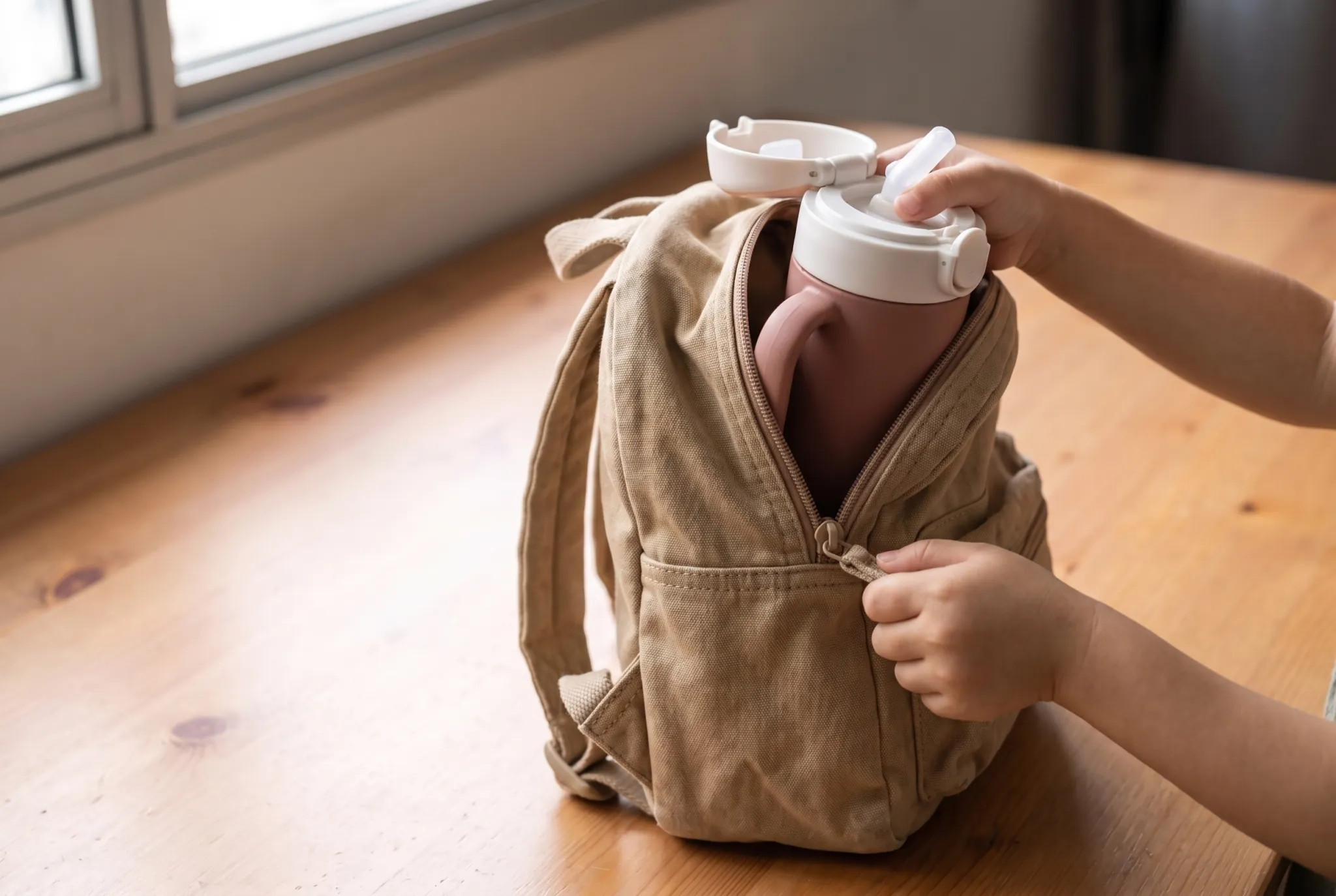
The test is not capacity. It is whether a three-year-old can work the zip and get the bottle out without help. A bag that needs an adult turns every arrival and every home time into a queue. Small enough to sit on a hook without dragging on the floor, light enough to carry up a flight of stairs, one main compartment rather than five.
Where a centre charges for its own bag, the Code makes that charge optional, and the paragraph that says so is further down. If you are choosing your own, our roundup of preschooler bags compares nine of them on size, straps, and how easily a small child gets into them.
Two or three sets of spare clothes
We would start with two, and go to three if your child is still potty training or the centre does water play. Full sets, tops and bottoms together, plus spare underwear and socks, in a labelled bag inside the bag so a teacher can find them without unpacking everything.
Lean towards three because clothes come home wet and unwashed on the evening you have no time, and the spare set is what stops you doing laundry at 11pm to make tomorrow work.
A towel and a washcloth
Check the handbook for these two. Where they are asked for, a hand-towel size is easier for a small child to handle and hang than a full bath towel, and a washcloth needs to be small enough to dry between uses. Our baby towels and washcloths roundup covers both, though it is written for babies and toddlers, so check the sizes against your own child before ordering.
Velcro, not laces. Ask whether the centre wants a separate indoor pair before you buy, so you are not buying twice. Pack socks, and a spare pair with the spare clothes.
Nap things for a full-day centre
A child care centre’s day sets aside time for rest, which the Code lists among its non-programme hours alongside arrival and departure. The Code also lets a centre of that class charge separately for the use of a mattress or a stack cot and for a mattress cover, so ask which of those your centre supplies, whether it charges, and whether it would rather you brought bedding.
One comfort item, if it is allowed
Ask first. If the answer is yes, send the second-favourite one rather than the irreplaceable one.
Why labelling is a rule, not a tip
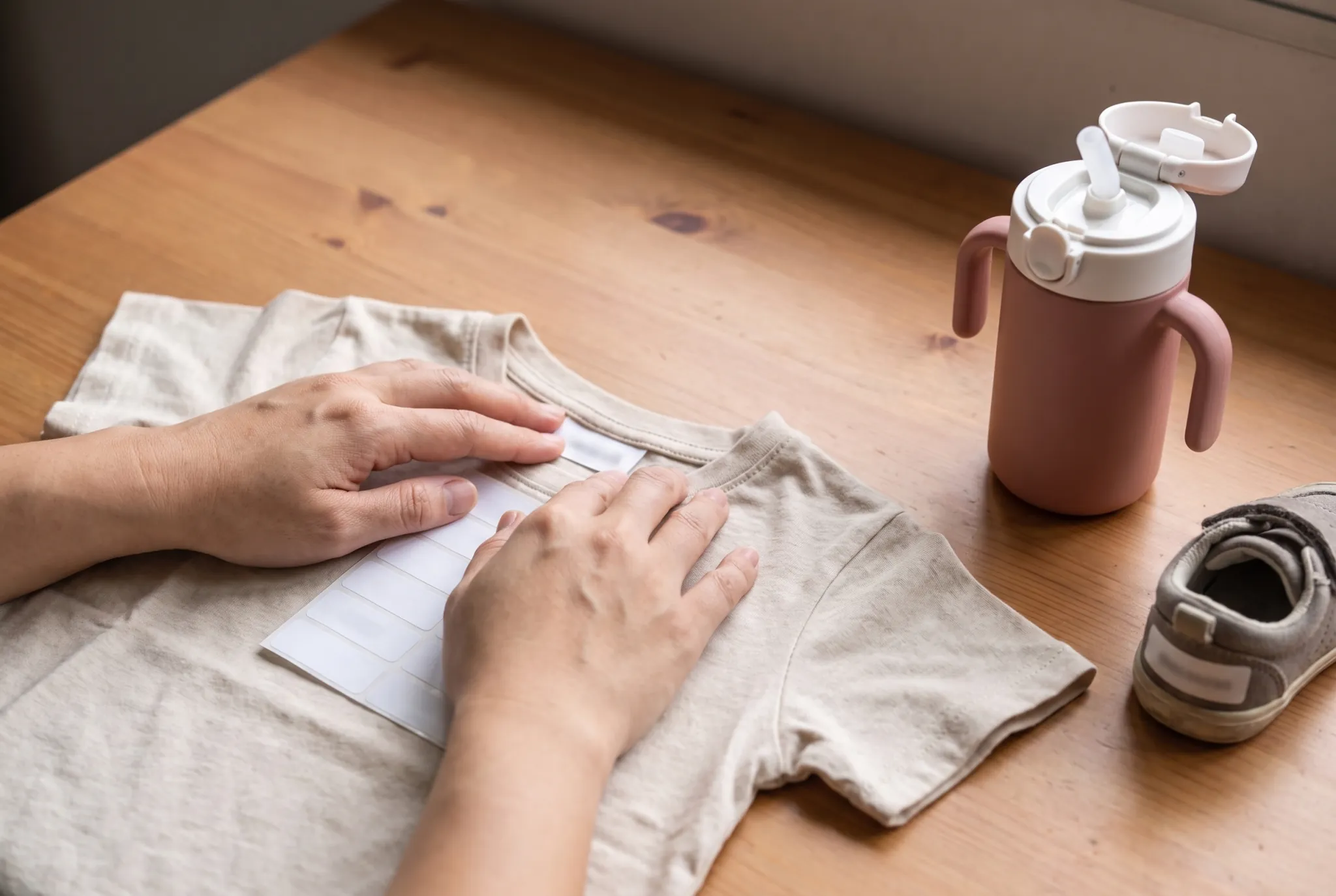
Label everything. The reason sits in paragraph 6.4.2 of the Code: “Children and infants’ personal effects must be maintained individually in a hygienic manner. This includes personal items such as toothbrushes, mugs, mattresses, mattress covers and combs.”
Individual maintenance is a licensing requirement, not a housekeeping preference. An unlabelled cup or towel is not only a lost-property problem, it is a thing the centre cannot keep separate the way it is required to. Name on the bag, on both shoes, on the bottle, on the towel, on the lid of the food container, and inside each set of spare clothes. Whatever you label with, check it is still readable after a few washes.
The extras are optional, and here is the paragraph that says so
Here is the part that changes the arithmetic. Paragraph 9.2.3 of the Code of Practice says, in full: “Incidental charges must be optional for parents.”
Incidental charges are the extras a centre may bill on top of programme fees, and the Code sets out the list, class by class. For every licensed centre it covers uniform and any other attire, insurance for the child, transport to and from home, field trips and excursions, concerts including graduation ceremonies, photographs and videos, online communication tools between the centre and you, enrichment programmes, and e-learning materials.
Two licence classes add charges of their own, and the class is simply what kind of service a centre is licensed to run:
Child care centres (Class B licence) take children from 18 months to below 7, typically on a full-day programme from 7am to 7pm, with half-day and flexible options possible. They may also charge for the use of a mattress or a stack cot, and for a mattress cover.
Kindergartens (Class C licence) take the same age range on a half-day programme, running during school terms according to the Ministry of Education (MOE)’s academic calendar unless they follow an international one. They may also charge for readers, academic materials, stationery, school bags and folders, art and musical materials, and meals.
Read those two lists again next to the invoice for a starter pack. The bag, the stationery, the mattress cover and the branded uniform are all on them. Optional does not mean a centre is doing anything wrong by offering a pack, and buying it is often the easiest choice, especially where a uniform has to match. It does mean the price of that pack is a decision you are allowed to make item by item.
The Code puts two dates in your calendar. Where incidental charges change, parents must be told the total estimated incidental charges by 31 January of that year. And an increase in registration fee, deposit or programme fees needs written notice no later than 1 September of the preceding year, before it takes effect the following year.
Five questions to ask before you spend anything
Can I have the parent handbook and your own item list? ECDA’s guidance to parents says administrative policies on enrolment, withdrawal and fees “are managed directly by preschools”, and points you to the handbook or the enrolment form’s terms and conditions. Every question below is really a part of this one.
What is the total estimated incidental charge for the year, and which parts are optional? Where those charges change you are entitled to the yearly estimate, and the Code says the charges are optional. You are entitled to ask for both in one email.
Is a uniform required, and how many sets do children get through? Where one is required, ask what happens on the days it is in the wash.
Do you supply the mattress and cover, or do we bring bedding? The answer decides whether you shop for this at all.
What is your policy on comfort items and on food from home? Both are cheaper to ask about than to guess.
The first week is not a shopping problem
Two rules are worth carrying into the first fortnight.
The first is that you may ask to stay. Paragraph 7.2.1: “The licensee must allow parents or guardians, or authorised personnel to accompany their children or infants who are newly enrolled in the Centre, if requested. This is to ease separation anxiety and to help the children or infants adjust to the new environment.” The Code does not say how a centre must arrange this, so ask yours. If the tears start after a good first week, our guide to preschool drop-off tears covers what is going on and what helps.
The second is that the Code sets no fixed exclusion period. It says infected children “must only return to the Centre upon expiry of their medical certificate and show no symptoms of illness”. Not five days, not a week: when the medical certificate, the MC, has run out and the symptoms have gone, whichever comes later. Our guides to the preschool sick-child policy and to hand, foot and mouth disease go through what to expect. Backup care is the thing to arrange in the first month, and it is worth more than anything on the shopping list.
No. Preschools licensed by the Early Childhood Development Agency (ECDA) , the government body that licenses and regulates preschools in Singapore, stay…