
Pregnancy
Pregnancy week by week: your baby, your body and the Singapore check-ups
Pregnancy is counted as 40 weeks from the first day of your last period, not from the day you conceived. So in…
Pregnancy
Yes, you can give birth in Singapore as a foreigner. But if neither parent is a Singapore citizen, your baby is not a citizen either, even though it is born here. If you are not a permanent resident (PR) either, the hospital also bills you with no government subsidy and asks for a deposit when…

Yes, you can give birth in Singapore as a foreigner. But if neither parent is a Singapore citizen, your baby is not a citizen either, even though it is born here. If you are not a permanent resident (PR) either, the hospital also bills you with no government subsidy and asks for a deposit when you are admitted.
The paperwork then runs on your baby’s clock. A newborn who is not a citizen is treated as holding a Special Pass, a short permit to stay, for 42 days from birth. Inside those 42 days you register the birth, get your baby a passport from your own embassy, and then get a longer pass.
For a family living here on an Employment Pass or S Pass, two of Singapore’s work passes, that longer pass is usually a Dependant’s Pass (DP) from the Ministry of Manpower (MOM). A visitor’s baby needs a visit pass from the Immigration & Checkpoints Authority (ICA), the agency that runs entry, passes and birth registration. Below is each step in order, with what it costs and when it is due.
No, not when neither parent is a citizen. Article 121 of Singapore’s Constitution makes a person born here a citizen by birth, but it lists exceptions. One is a birth where “neither of his parents was a citizen of Singapore” at the time.
The same article lets the Government grant citizenship to a person born here where it considers it “just and fair”. That is a decision the Government makes on an application, not something that happens at birth.
Your own country decides whether your baby takes your nationality. Ask your embassy or high commission early what it needs from you after a birth abroad. ICA asks a visitor who wants to deliver here for a letter from her embassy saying the newborn “will take your nationality” and will be given a travel document, which tells you how much rests on that answer.
Yes. If you already live here on an Employment Pass, S Pass or Dependant’s Pass, you book your antenatal care and delivery with the hospital directly, and the cost and pass rules below apply to you.
One hospital rule narrows the wards for some work-pass holders. National University Hospital (NUH) says an obstetrics patient on a work pass who is married to a citizen or PR, “without approval of the Ministry of Manpower”, can only be admitted to its Deluxe Suite or A1 class wards, two of the ward classes explained under costs below.
A visitor needs permission first. ICA’s page for visitors says a foreign woman who is not married to a Singapore citizen or PR must get a Long-Term Visit Pass (LTVP), a pass for a stay longer than a short visit, to give birth here. The application has to be approved before your expected delivery date.
What ICA asks for, as of October 2026:
ICA processes applications within 6 weeks when every document is in, and says some take longer. The doctor’s letter means a Singapore doctor needs to have seen you before you apply, so we’d book that appointment first and leave the 6 weeks plenty of room before your due date. Our pregnancy guides for every trimester walk through the months in between.
Going by what Singapore citizens paid in unsubsidised wards, budget roughly S$5,000 to S$10,000 in an A or B1 ward at KK Women’s and Children’s Hospital (KKH) or NUH, and S$13,000 to S$19,500 in a one-bed room at Mount Elizabeth Hospital, before insurance. KKH’s deposit page sizes the ward classes: an A ward is a room with one bed, B1 has four beds and B2 has six. If you are a PR, or hold a Long-Term Visit Pass-Plus and are married to a citizen, the Ministry of Health (MOH) says you can get subsidies in public hospitals instead; the section on a citizen husband below covers that.
Neither KKH’s nor NUH’s charges page lists a rate for non-residents. KKH lists its bed charges for Singapore citizens and says prices “may differ for Permanent Residents, Foreign Residents and Non Residents”, and NUH says the same of its charges. KKH’s online Bill Estimator does ask for your pass type, with the Employment Pass, S Pass, Dependant’s Pass and Social Visit Pass among its choices, and says its estimate includes the delivery charges and the doctor’s fee.
NUH adds a firm rule on its fees page. Non-residents are “not eligible for admission to subsidised wards” and can only be admitted to its Deluxe Suite, A1 or B1 class wards, not the B2 and C wards where residents get the most subsidy.
MOH’s bill data below shows what Singapore citizens actually paid in the ward classes MOH labels unsubsidised, before insurance. Use it to set a budget, then plan around the hospital’s own estimate for you.
| Hospital and ward | Assisted or breech vaginal delivery | Uncomplicated caesarean |
|---|---|---|
| KKH, Ward A | S$6,448 | S$9,814 |
| KKH, Ward B1 | S$4,948 | S$8,592 |
| NUH, Ward A | S$7,387 | S$10,017 |
| NUH, Ward B1 | S$5,552 | S$8,222 |
| Mount Elizabeth Hospital (private), 1-bedded room | S$13,143 | S$19,494 |
“Typical” here is MOH’s median: half of patients paid less, half paid more. MOH’s vaginal delivery code covers complicated births such as a breech or instrumental delivery, which is why that column says assisted or breech.
These are citizens’ bills, so treat them as a guide to the size of your bill and get your own quote from the hospital. NUH says residents in B1 get a subsidy, so a non-resident’s B1 bill there may run above these figures.
For every hospital and ward side by side, see our guide to the cost of giving birth in Singapore, hospital by hospital.
You get a firmer number before you go in. NUH says you receive financial counselling, a talk through the expected bill, before admission, and are told your estimated cost when you are admitted. Ask for that estimate in writing, say you are a non-resident, and ask which ward classes you may use.
If NUH is on your list, its own maternity tour is a quick look round before that conversation.
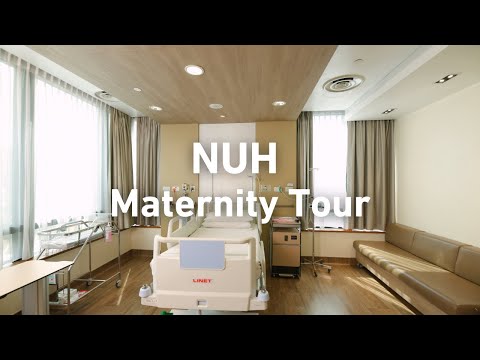
Watch on YouTube: NUH Maternity Tour, by National University Hospital (NUH) Singapore.
Seeing the hospital first makes it easier to weigh a ward class against its price when the estimate comes.
Expect to pay a deposit when you are admitted. At NUH it is “based on the entire estimated bill size”, paid in cash, by credit card or by NETS, and more can be asked if your stay runs longer.
KKH’s deposit page asks for a cash deposit in its A, B1 and B2 wards, and tells patients who cannot pay it to “reconsider their choice of ward”. It also says no one is denied care in an emergency. If the final bill comes in under your deposit, KKH refunds the balance within 21 working days of the final bill.
The way to shrink the deposit is a Letter of Guarantee, a letter from your employer or insurer promising to pay the hospital. KKH may lower or waive the deposit if you bring one from an employer or insurer in Singapore, at least seven working days before admission. Your employer or insurer must already have a direct billing arrangement with KKH, and KKH can still turn the letter down.
NUH also takes a Letter of Guarantee, or a Hospitalisation Identity Card from your insurer, for part or all of the deposit. So ask your HR team now what the company medical plan pays towards childbirth, and whether it bills the hospital directly.
If you have no cover yet, MOH says families with members on an LTVP or a Dependant’s Pass may buy Integrated Shield Plans, a kind of health insurance for hospital bills, and that some are covered by employer medical benefits. Read the policy’s maternity terms before you count on one.
The order matters, because each step needs the paper from the one before. The passport needs the birth certificate, and the pass is only issued once the passport is ready.

One date to know before you start. MOM’s newborn pass page asks you to register the birth with ICA within 14 calendar days, while ICA’s own deadline is 42 days. We’d aim for MOM’s 14 days, because the passport and the pass both wait on the birth certificate.
Your baby must not stay on without a valid pass. MOM puts it plainly: “Any delay beyond 42 days from your child’s birth is an offence under the Immigration Act.”
If the passport is running late, ask for more time before the deadline passes. With ICA’s advisory note, you can ask to extend the Special Pass if the passport is not ready by the end of 6 weeks, and MOM says to ask only when the note expires within 7 days.
If MOM itself issued your baby a newborn Special Pass, you do not need to ask. MOM extends it by 28 days if the Dependant’s Pass is not ready yet, and sends an SMS the day before it expires with the new date.
A refused Dependant’s Pass changes the plan. MOM will not extend the Special Pass then, so your baby must leave Singapore before it expires, or you ask ICA to extend the stay.
Registration has its own deadline and penalty. ICA says missing the 42 days to register the birth is an offence under the Registration of Births and Deaths Act, with a fine, prison or both.
Then most of this page does not apply to you. The Constitution’s exception only covers a birth where neither parent is a citizen, so your baby is normally a Singapore citizen at birth and has no Special Pass to beat. Check your baby’s status when you register the birth.
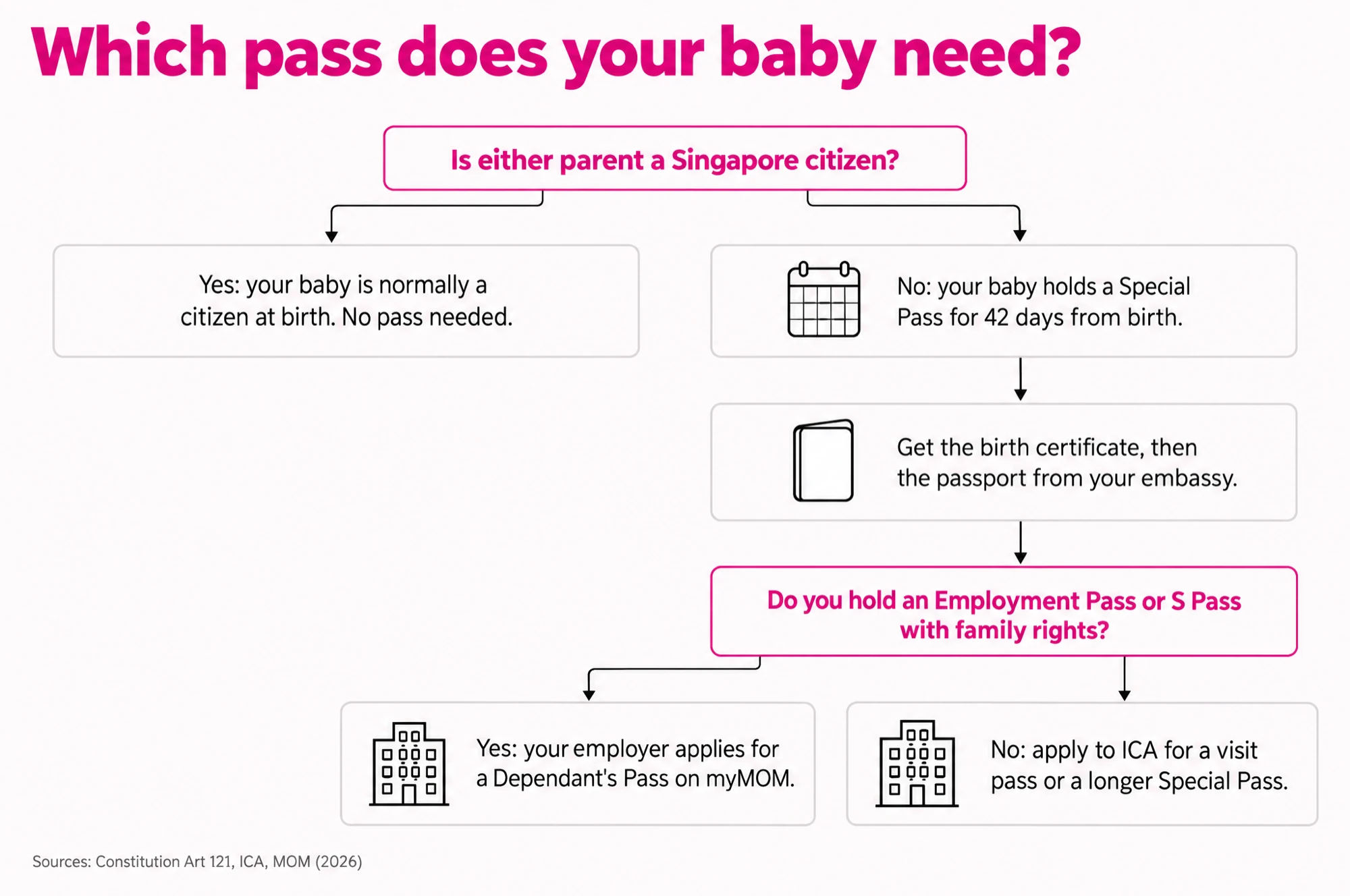
Which pass does your baby need?
Is either parent a Singapore citizen?
Sources: Constitution Art 121, ICA, MOM (2026)
Your bill can also be much smaller. MOH told Parliament in April 2025 that mothers who are PRs or hold a Long-Term Visit Pass-Plus (LTVP-Plus), a separate version of the long-term visit pass, and are married to Singapore citizens, get “the same level of subsidies as Singapore Citizens” for the whole delivery, from admission for childbirth to discharge.
That covers most foreign mothers of citizen babies. For citizens born here in 2023 and 2024 to foreign mothers, the Ministry of Home Affairs (MHA) counted a yearly average of 3,525 mothers (72%) who were PRs and 725 (15%) on an LTVP-Plus. Another 414 (8%) held an ordinary LTVP, and 245 (5%) held other passes, including Employment Passes.
MOH’s answer names PR and LTVP-Plus mothers only. On any other pass, ask the hospital’s financial counsellor which rate applies to you; MOH also says foreigners who struggle with a hospital bill may approach its medical social workers. Our guides to the cost of a birth and to paying for delivery without MediSave cover the subsidies and MediSave in detail.
Everything after the birth waits on one form. Register the birth on LifeSG within 14 days, the time MOM asks for, so the passport and pass steps start well inside the 42 days. Our step-by-step birth registration guide walks through the LifeSG form, the S$18 fee and the digital birth certificate.

Pregnancy
Pregnancy is counted as 40 weeks from the first day of your last period, not from the day you conceived. So in…
Pregnancy
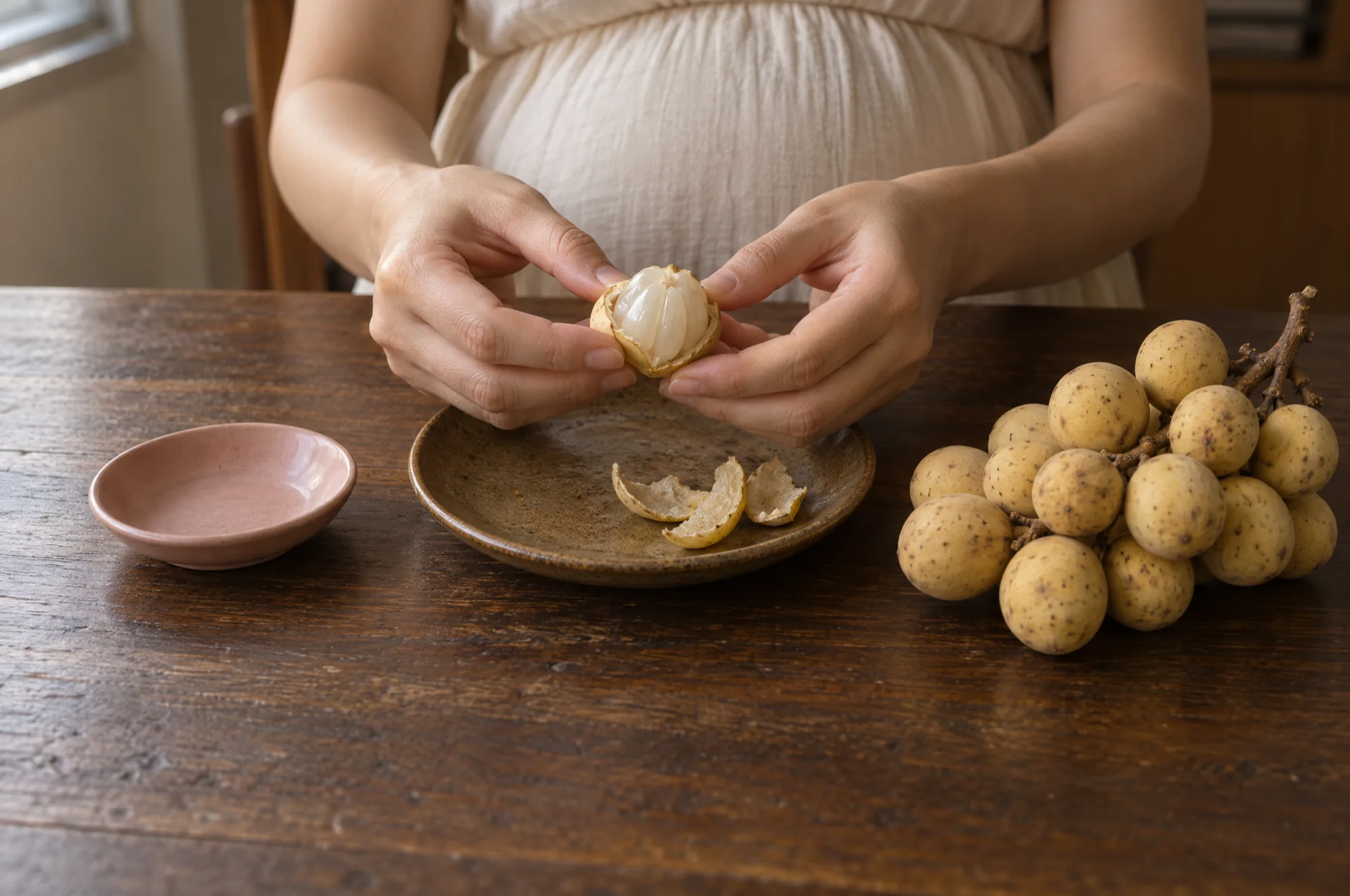
You can eat fresh lanzones in pregnancy, in a normal fruit portion. In Singapore, lanzones goes by other names: NParks, the National…

Pregnancy
Fresh longan fruit (Dimocarpus longan, to give it its botanical name) is counted as an ordinary fruit in Singapore's health guidance, so…