Singapore Screen Time Guidelines for Young Children
Singapore recommends zero screen time for babies under 18 months and less than one hour daily for preschoolers.
By Wei Chun
Updated 12 Apr 2025
6 min read
Singapore’s Ministry of Health and Ministry of Education have established clear screen time guidelines for children, recommending zero screen time for infants under 18 months and less than one hour daily for preschoolers aged 3-6 years outside of school. These research-backed guidelines aim to support healthy brain development, adequate sleep, and proper social skills during critical developmental periods. If you’re already managing screen time for specific content, our guide on managing your child’s screen time for cartoons offers additional practical strategies.
Age-Based Screen Time Recommendations
How much screen time should you allow your child
Infants (0-18 months): Zero Screen Exposure
For babies under 18 months, Singapore health authorities recommend no screen time at all. This aligns with research showing that early screen exposure can affect brain development in areas controlling focus and attention.
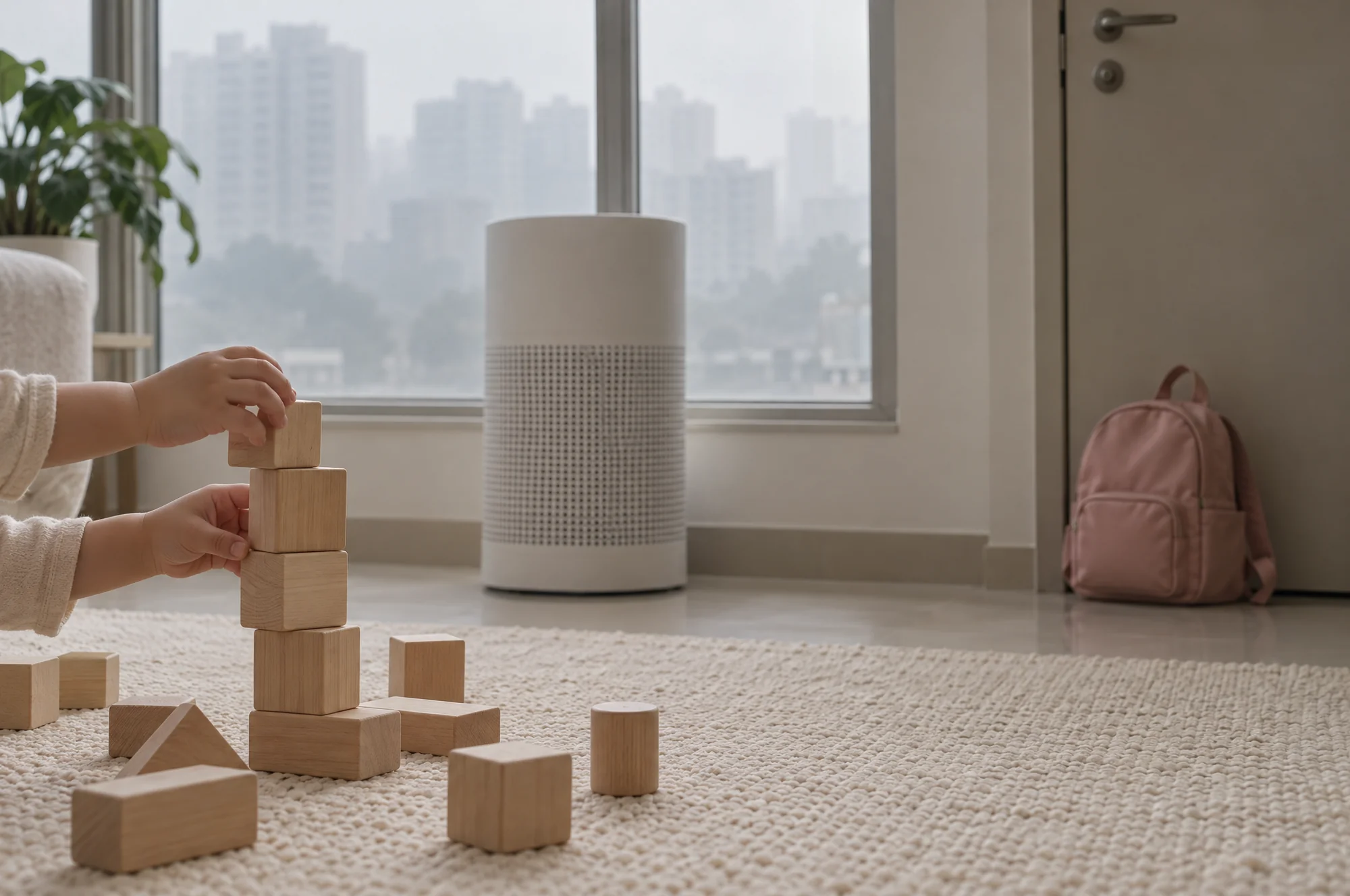
During this critical developmental period, babies learn through physical interaction, face-to-face communication, and tactile experiences. Screens cannot provide the sensory input needed for optimal brain development.
Toddlers (18 months-3 years): Minimal and Supervised
For toddlers between 18 months and 3 years, screen time should be minimal and always supervised by parents. Singapore studies have found that children in this age group average about 2.4 hours of screen time daily—more than double the recommended amount.
At this age, limited high-quality educational content watched together with parents can be appropriate, but should not replace physical play, reading physical books, or social interaction.
Preschoolers (3-6 years): Less Than One Hour Daily
MOH guidelines recommend that children between 3 and 6 years should have less than one hour of screen time per day outside of school hours. This limit helps ensure children have adequate time for physical activity, sleep, and social development.
For preschoolers, the quality of content matters as much as the quantity. Educational programs that encourage interaction can be beneficial when balanced with other activities.
Scientific Evidence Supporting These Guidelines
Unveiling Screen Time’s Multifaceted Impact on Children
Local Singapore Research
Singapore’s GUSTO (Growing Up in Singapore Towards healthy Outcomes) study has provided local evidence about screen time effects. Research found that excessive screen time in young children correlates with less mature development in brain areas controlling attention and focus.
The research shows that infant screen use may be an upstream environmental factor contributing to individual differences in the development of brain regions and later executive functions critical for academic performance.
Impact on Language Development
Studies have consistently shown that excessive screen time for infants and toddlers correlates with poorer language skills. Young children learn language primarily through back-and-forth interactions with caregivers—something that passive screen viewing cannot provide.
Sleep Quality and Duration
Screen use may interfere with sleep onset and displace time spent sleeping. Research from Singapore shows that preschool children average 8 hours 30 minutes sleep a night, which is less than the global average for this age group.
Evening exposure to bright light from screens may disturb the sleep-wake cycle and suppress melatonin production, affecting sleep quality and duration.
Preschool Implementation in Singapore
Early Childhood Development Agency Guidelines
The Early Childhood Development Agency (ECDA) in Singapore implements explicit guidelines on screen time in preschools. These guidelines remind educators that screen time should support teaching and learning, not serve as “time fillers” to occupy children.
ECDA can take regulatory action if preschools don’t comply with these guidelines, especially if children’s well-being is compromised.
Model Preschool Approaches
Many Singapore preschools have adopted strict screen policies, maintaining a “no screen time” policy for children 3 years and below, believing hands-on experiences provide the best learning environment for brain development.
For slightly older preschoolers, digital tools are used only for meaningful learning about complex topics, not for entertainment or distraction.
MOH’s Balanced Approach to Digital Learning
The “Goldilocks Approach”
Singapore’s Ministry of Health advocates a “goldilocks approach” where digital device use is calibrated appropriately based on age and purpose. This means finding the right balance—not too much, not too little—and ensuring technology use has clear educational goals.
Hands-On Learning Priority
For young children, curriculum design prioritizes non-digital learning experiences such as print-based reading, writing by hand, and working with physical objects. These tactile experiences are essential for early brain development.
Digital experiences are interspersed only where they add unique value to the learning process.
Defining Good Screen Time
Good screen time for young children involves:
Parent participation and discussion
Educational content appropriate for the child’s age
Limited duration
Clear purpose
No violence or inappropriate content
Family activities like watching an age-appropriate show together can be beneficial when balanced with plenty of screen-free activities.
Practical Implementation for Parents
Setting Consistent Boundaries
MOH emphasizes that consistency is crucial when implementing screen time limits. Parents should remain firm when children test boundaries, as they inevitably will.
Setting clear rules about when, where, and how long screens can be used helps children understand and eventually accept these limitations.
Screen Time as a Health Issue
Singapore health experts suggest parents think about screen time similarly to how they approach nutrition—allowing unlimited access to screens is comparable to offering unlimited sweets. Both require thoughtful limits for a child’s wellbeing.
This framing helps parents understand why limits are necessary, even when screens provide a convenient distraction.
Alternative Activities
The 2024 evidence update highlights the importance of providing alternative activities for children. Instead of using screens as “babysitters,” parents should encourage:
Outdoor play
Reading physical books
Creative arts and crafts
Physical activities
Social interactions with family members
Signs of Unhealthy Screen Use in Young Children
Behavioral Indicators
Parents should watch for signs that screen time is becoming problematic:
Tantrums when devices are taken away
Decreased interest in non-screen activities
Sleep problems
Reduced physical activity
Difficulties with face-to-face social interactions
When to Seek Support
If a child shows persistent problems with screen use or it interferes with daily activities, parents should consider seeking advice from healthcare providers or school counselors.
Early intervention is most effective for addressing unhealthy screen habits before they become entrenched behaviors.
Resources for Singapore Parents
The “Parenting for Wellness” resource jointly developed by MOH, MSF, and HPB provides comprehensive guidance for parents navigating digital parenting challenges.
Parents can also access support through Parent Support Groups (PSGs) and community partners that offer programs to equip parents with digital knowledge and skills as part of the Grow Well SG national health promotion strategy.
Summary
Singapore’s screen time guidelines provide a research-based framework to help parents and educators make informed decisions about young children’s technology use. By understanding these recommendations and the science behind them, parents can create healthy digital habits that support their children’s development while still incorporating the benefits of age-appropriate technology.
No. Preschools licensed by the Early Childhood Development Agency (ECDA) , the government body that licenses and regulates preschools in Singapore, stay…