Maria Montessori: The Education Pioneer Who Revolutionized Child Development
Maria Montessori revolutionized how we understand children's development through respect, independence and hands-on learning.
By Wei Chun
Updated 21 Aug 2026
7 min read
Maria Montessori (1870 to 1952) was the Italian physician who became one of the most influential educators in history. She qualified as one of Italy’s first female doctors in 1896 and opened her first Casa dei Bambini in a poor Rome neighbourhood in 1907, where she built the method now used in thousands of schools worldwide.
Early Life & Background
Born in 1870 in Chiaravalle, Italy, Maria Montessori showed remarkable determination from an early age. Despite the significant gender barriers of her time, she pursued scientific education and became Italy’s first female physician in 1896—a bit like being the first woman to climb Mount Everest in heels.
Her career path shifted dramatically when she began working with children with developmental disabilities. Through careful observation, she developed specialized teaching materials that helped these children achieve surprising academic success.
This experience led her to question conventional education. She wondered: if these methods worked so well for children with disabilities, could they benefit all children? It’s a bit like discovering a recipe that makes vegetables taste good to picky eaters—why not serve it to everyone?
In 1907, she opened her first Casa dei Bambini (“Children’s House”) in a poor Rome neighborhood. This school became her laboratory for developing what we now know as the Montessori Method. She was building on ground Friedrich Froebel had broken seventy years earlier, when he invented the kindergarten and the idea that young children learn by handling things.
Major Contributions
The Absorbent Mind
Montessori discovered that young children possess an extraordinary ability to effortlessly absorb information from their surroundings. This “absorbent mind” forms the foundation for language, culture, and social norms.
“The child has a mind able to absorb knowledge. He has the power to teach himself,” Montessori observed. Anyone who’s had a toddler repeat a curse word you accidentally muttered knows exactly how powerful this absorption can be!
Unlike traditional education that treats children as empty vessels to fill with knowledge, Montessori recognized children as active participants in their own learning.
Sensitive Periods
Through meticulous observation, Montessori identified specific windows in a child’s development when they naturally gravitate toward certain skills:
Order (ages 0-3): A desire for consistency and predictability
Language (ages 0-6): Effortless language acquisition
Movement (ages 1-4): Coordination and muscle control
Small objects (ages 1-4): Interest in tiny details
Social behavior (ages 2.5-6): Understanding social rules
By recognizing these periods, parents can provide timely support rather than forcing skills at inappropriate times. It’s like planting in the right season—you’ll get much better results than trying to grow tomatoes during monsoon season.
The Prepared Environment
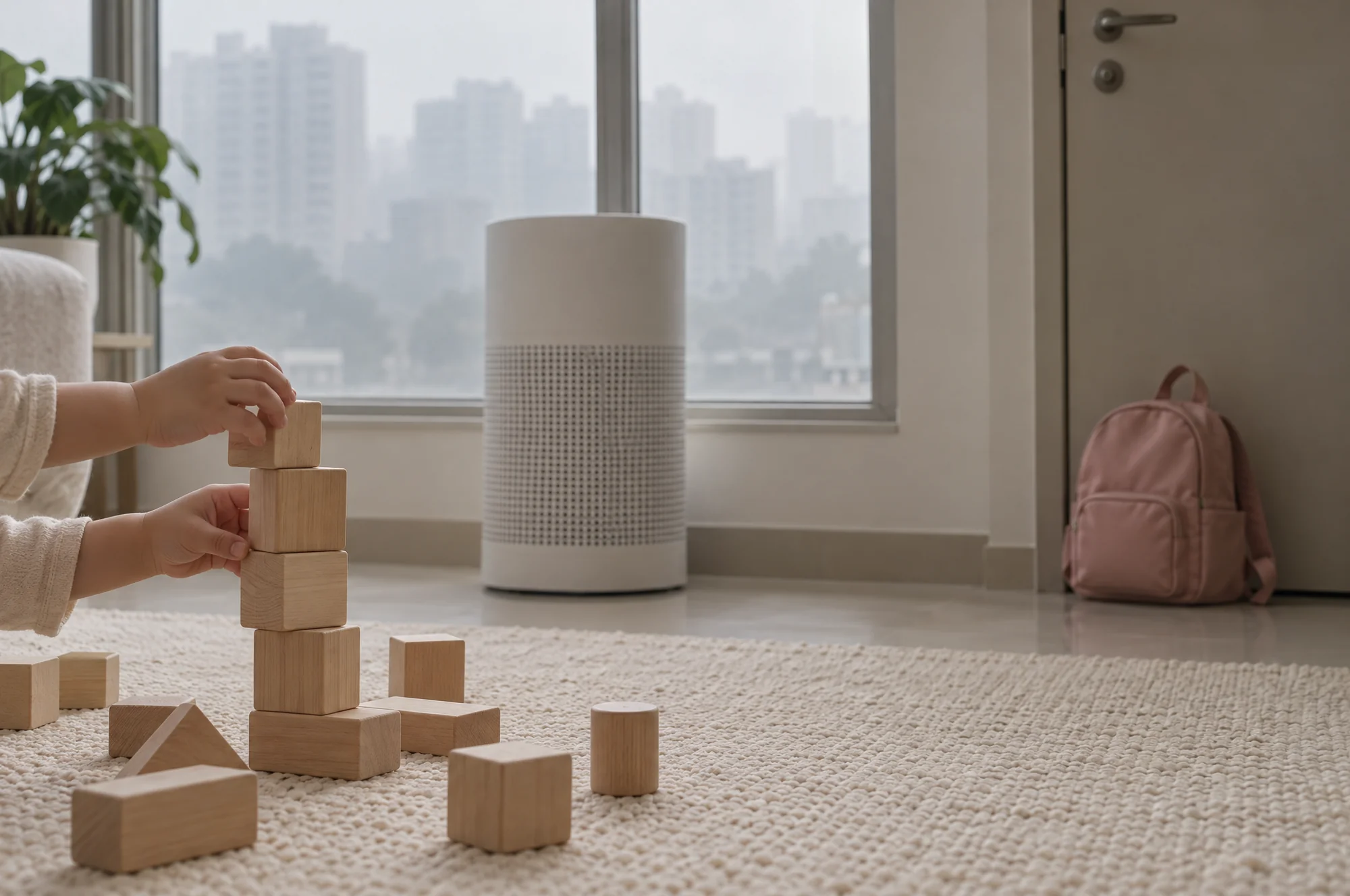
Montessori emphasized thoughtfully designed spaces with child-sized furniture, accessible materials organized on open shelves, and beauty that inspires exploration.
This carefully structured environment allows children to move freely, choose activities that interest them, and develop independence. Materials are designed to isolate specific skills and include built-in “control of error” so children can identify and correct their own mistakes.
Think of it as creating a child-friendly hawker center where everything is within reach, portions are right-sized, and spills are easy to clean up.
Freedom Within Limits
Contrary to misconceptions, Montessori education isn’t completely unstructured. Instead, it balances freedom with responsibility. Children have genuine choices but within clear boundaries that ensure safety and respect for others.
“To let the child do as he likes when he has not yet developed any powers of control is to betray the idea of freedom,” Montessori wrote.
This principle teaches self-discipline and decision-making rather than compliance through external control. It’s less “because I said so” and more “here’s why we do this.”
Practical Applications for Parents
Creating a Montessori-Inspired Home
You don’t need specialized materials or a complete home transformation to apply Montessori principles. Start with these practical steps:
Create low, open shelving with a limited selection of toys
Rotate materials based on your child’s interests and abilities
Use child-sized furniture that allows proper posture and independence
Set up a designated workspace with organized art supplies
Include natural materials that engage multiple senses
The goal is to create spaces where your child can function independently without constantly needing adult help. No need for fancy imported materials—your neighborhood IKEA and Daiso can supply most of what you need!
Supporting Independence
“Never help a child with a task at which he feels he can succeed,” Montessori advised.
This means resisting the urge to step in when your child struggles but isn’t frustrated—possibly the hardest part of parenting for many of us kiasu Singaporeans who just want to help!
Practical ways to foster independence include:
Providing step stools in bathrooms and kitchens
Using easy-to-open containers and child-sized utensils
Creating accessible storage for personal belongings
Allowing extra time for children to complete tasks themselves
Remember that independence develops gradually. A toddler who can put on shoes may still need help with laces, and that’s perfectly appropriate. Rome wasn’t built in a day, and your child won’t master pouring from a jug without a few puddles along the way.
Observation and Following the Child
Take time to observe your child without interrupting. What captures their interest? What frustrates them? When are they most focused?
This observation guides you to provide materials and experiences that match their developmental needs rather than following arbitrary age guidelines or your own agenda.
Following the child means paying attention to their pace, interests, and learning style—then adapting your approach accordingly. It’s like being a detective in your own home, gathering clues about who this little person is becoming.
Communication and Discipline
Montessori discipline focuses on developing inner control rather than enforcing obedience. This approach includes:
Speaking respectfully at the child’s eye level
Offering limited, meaningful choices
Setting clear, consistent boundaries
Explaining the reasons behind rules
Using natural consequences when possible
Focusing on problem-solving rather than punishment
The goal is to help children develop self-discipline and social awareness, not just compliance with adult demands. Think of it as training future citizens, not just obedient children.
Legacy and Ongoing Influence
Today, over 20,000 Montessori schools operate worldwide. The approach has influenced mainstream education through concepts like hands-on learning, child-centered teaching, and mixed-age classrooms. Loris Malaguzzi drew on the same tradition in post-war Italy when he built the Reggio Emilia approach.
Modern neuroscience continues to validate Montessori’s insights. Research shows that self-directed activity, hands-on learning, and collaborative environments—all hallmarks of Montessori education—promote optimal brain development.
Montessori’s impact extends beyond education into parenting, workplace design, elder care, and other fields concerned with human development. Not bad for a method developed over a century ago, before we had brain scans or child development degrees!
Singapore Connection
Montessori education has gained significant popularity in Singapore, offering an alternative to the country’s traditionally rigorous academic focus.
Singapore parents often appreciate how Montessori balances academic preparation with social-emotional development—fostering independence, problem-solving, and intrinsic motivation. In our achievement-oriented culture, this balance can be refreshing, like finding a quiet garden in the middle of Orchard Road.
Many local Montessori schools adapt the approach to include bilingual education, usually English and Mandarin, supporting Singapore’s emphasis on bilingualism.
Popular Montessori providers in Singapore include:
When considering a Montessori school, look for proper accreditation, trained teachers, appropriate child-to-teacher ratios, and authentic implementation of Montessori principles.
Conclusion
Maria Montessori’s revolution in education wasn’t just about new teaching techniques—it was a fundamental shift in how we view children. She saw them as capable, naturally curious learners deserving of respect and appropriate support.
Her approach offers parents a balanced framework for raising independent, confident, and compassionate children. By preparing the environment, observing carefully, respecting developmental stages, and supporting independence, you can apply Montessori wisdom in your own home.
The ultimate goal isn’t to follow Montessori methods perfectly, but to nurture your child’s natural love of learning and capacity for independence—a gift that lasts a lifetime, whether they end up at NUS or NAFA.
No. Preschools licensed by the Early Childhood Development Agency (ECDA) , the government body that licenses and regulates preschools in Singapore, stay…