

Newborn
How to hire a confinement nanny in Singapore: the MOM permit, dates and costs
To hire a confinement nanny from Malaysia, you apply to Singapore's Ministry of Manpower (MOM) for a Work Permit for confinement nanny….
Newborn
When your newborn baby first opens their eyes, they’re beginning a remarkable visual journey. Baby's vision undergoes significant changes throughout the first 12 months of age, with each stage marking important milestones in visual development. Newborn vision is quite limited compared to adult vision, but it develops rapidly during the first year of life. This…
When your newborn baby first opens their eyes, they’re beginning a remarkable visual journey. Baby’s vision undergoes significant changes throughout the first 12 months of age, with each stage marking important milestones in visual development. Newborn vision is quite limited compared to adult vision, but it develops rapidly during the first year of life. This article explains how your baby’s vision changes from birth to their first birthday, what to watch for, and how you can support healthy eye development.
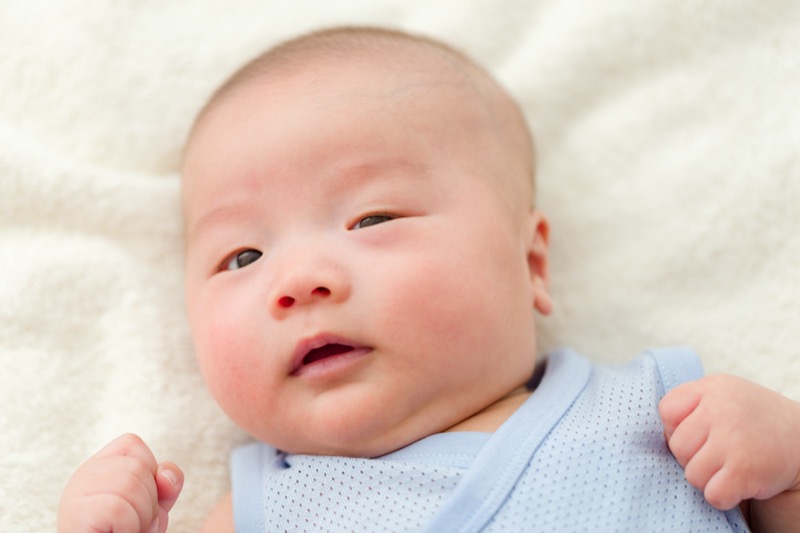
One month newborn baby with wide eyes
At birth, newborn babies’ visual abilities are just starting to form. Newborns can see light, basic shapes, and faces, but their vision is still quite blurry. They are only able to focus on objects directly in front of them, about 12-14 inches away from their face—conveniently the distance between a baby’s eyes and a parent’s face during feeding.
Your newborn is able to see:
Their vision is limited to these basics because the neural pathways between the eyes and brain are still developing. Think of it as a camera that’s still learning how to focus and process images.
Your baby’s vision changes quickly during their first year, marking significant stages in infant vision development. Vision development milestones are closely linked to your baby’s age and specific months of age. At each stage, infants should be able to perform certain visual tasks appropriate for their age. Here’s what to expect at each month of age:
During the first month, babies begin to focus briefly on nearby faces. They prefer looking at faces over other objects and can distinguish between light and dark. Their eye movements might seem uncoordinated at times—this is normal as the infant’s eyes are still gaining strength.
By around 8 weeks (2 months of age), most babies start following a moving object with their eyes. They may turn their head to follow something interesting that moves across their field of vision. At this stage, color vision begins to develop, and colour perception also begins to improve, with babies showing a preference for bright, bold colours.
At three months, as your baby’s vision continues to develop, face recognition becomes more apparent. Babies begin to show special interest in familiar faces and can maintain eye contact for longer periods. They are also able to notice specific shapes and patterns.
A major milestone occurs around 5 months when babies develop depth perception. This 3D vision allows them to judge distances fairly well. At this stage, babies should be able to reach for objects with improved accuracy, as they can now perceive how far away something is. You might notice your baby reaching for objects with better coordination as they can now perceive how far away something is.
By six months, a baby can see the differences between objects and start to identify them. It’s important to monitor your baby’s eyes for any signs of vision problems as they continue to develop. Their colour vision continues to improve, and they can now recognize familiar objects even when only partly visible. Hand-eye coordination also becomes more refined.
By twelve months of age, children are able to see almost as clearly as adults. At this stage, they can spot very small objects, recognize familiar people from across a room, and have good depth perception for crawling and walking.
How can you tell if your baby’s vision is developing properly? Parents should observe your baby’s eyes for these signs:
To help support healthy visual development, parents can engage your baby’s eyes with colorful toys, gentle movement, and regular interaction, and consult a doctor if they notice anything unusual.
While most babies develop normal vision, it’s important to know the signs that might indicate eye and vision problems in infants and children:
If you notice any of these signs, contact your pediatrician or a pediatric eye specialist. A pediatrician can perform an eye exam or refer your child for a comprehensive eye examination. Early detection of eye and vision problems in infants and children is crucial for effective treatment and healthy visual development. If you have any question or concern about your baby’s vision, or need more information, consult your healthcare provider for guidance.
You can help your baby’s visual system and eye health develop in several ways: These activities are designed to help your baby’s vision develop, supporting their ability to explore and understand the world around them.
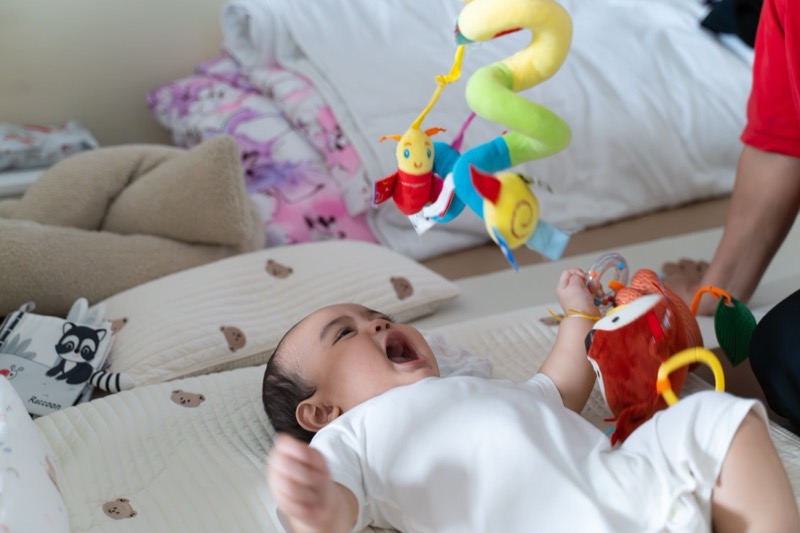
Baby enjoy playing with bright toys

Baby is happy to play peekaboo with mummy
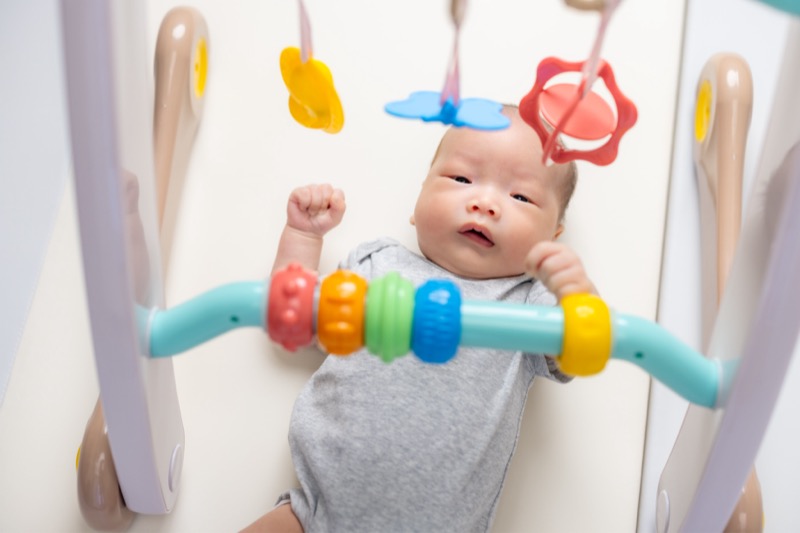
Newborn baby lying down and looking at the hanging toys
Remember that vision and brain development are closely linked. Visual stimulation doesn’t just help their eyes—it helps build neural connections that benefit overall development.
For more information on creating a visually stimulating environment for your baby, consult reliable sources or seek advice from a healthcare professional. The information provided here is for reference only and does not replace professional medical advice. Early detection of vision problems is important for your newborn’s healthy development.
Pediatricians screen infants for vision problems at regular checkups, and it is important that infants receive an eye exam and eye examination at specific months old as recommended by their pediatrician. These screenings typically occur at the following ages:
However, comprehensive eye assessments by specialists are recommended if:
Early detection of eye problems through regular eye exams and eye examinations can prevent or reduce their impact on a child’s development. Some conditions, if caught early enough, can be corrected completely.
Your baby’s vision journey from fuzzy newborn sight to clear, coordinated vision is fascinating to witness, marking significant stages in infant vision development. By understanding this process, you can better support their development and quickly identify any concerns.
Remember that while all babies follow the same general pattern of visual development, each child progresses at their own pace. What matters most is that they continue to show improvement over time.
By providing a visually stimulating environment and staying alert for any potential issues, you’re giving your baby the best chance for healthy vision throughout childhood and beyond.

Newborn
To hire a confinement nanny from Malaysia, you apply to Singapore's Ministry of Manpower (MOM) for a Work Permit for confinement nanny….

Newborn
The Baby Bonus Cash Gift is S$11,000 for a first or second child and S$13,000 for a third child onwards, for Singapore…
Newborn
Birth admin in Singapore starts with one legal deadline: register your baby's birth with the Immigration & Checkpoints Authority (ICA) within 42…