

Finding quality childcare that supports your child’s development while accommodating your work schedule is one of the most critical decisions working parents face in Singapore. With the city-state’s robust early childhood education framework and comprehensive government support, parents have access to a wide range of professional childcare services designed to nurture young minds during their most formative years. For additional insights and community support, explore parenting blogs and websites in Singapore.
Singapore’s childcare landscape offers structured, educational environments that go far beyond basic supervision. These ECDA-licensed centers provide holistic learning experiences that prepare children for academic success while fostering social, emotional, and cognitive development. Understanding your options, from program types to government subsidies, empowers you to make the best choice for your family’s needs.
This comprehensive guide explores everything parents need to know about childcare in Singapore, from distinguishing between different program types to navigating enrollment processes and maximizing government financial support.

What is Childcare and Who Does It Serve
Childcare in Singapore encompasses professional early childhood education and care services for children from infancy through the preschool years. Understanding the distinctions between different program types helps parents choose the most appropriate option for their child’s age and developmental stage.
Infant care serves the youngest children from 2 months to 18 months old. These programs maintain higher teacher-to-child ratios to ensure intensive supervision and personalized attention during this crucial early development period. Infant care centres focus on establishing routines, supporting physical development milestones, and providing a nurturing environment for babies and toddlers.
Childcare programmes accommodate children from 18 months to 6 years old, bridging the gap between infant care and formal schooling. These centers offer structured learning environments where children develop essential skills through play-based learning, social interaction, and age-appropriate educational activities. The curriculum emphasizes school readiness while allowing children to explore their creativity and natural curiosity.
Kindergarten programs specifically target children aged 5-6 years, providing intensive preparation for primary school. While some childcare centres offer kindergarten-level programming, dedicated kindergarten programs focus heavily on academic readiness, including literacy, numeracy, and structured learning habits.
Most childcare centres operate full-day programs from 7am to 7pm, specifically designed to support working parents who need reliable, extended care. These comprehensive schedules include structured meal times, supervised nap periods, learning activities, and free play, creating a balanced daily routine that promotes healthy development.
All licensed childcare services in Singapore operate under ECDA (Early Childhood Development Agency) oversight, ensuring quality standards, safety protocols, and qualified educator requirements. This regulatory framework provides parents with confidence that their children receive professional care in safe, educational environments.
Key Benefits of Professional Childcare Centers
Professional childcare centres offer structured learning environments that significantly impact a child’s developmental trajectory. Unlike informal care arrangements, these centers employ qualified educators specifically trained in early childhood development, ensuring children receive age-appropriate stimulation and guidance during critical learning years.
The structured learning environment provides children with consistent routines that support emotional security and behavioral development. Daily schedules incorporate learning activities, creative exploration, physical play, and rest periods, helping children develop time management skills and adapt to structured environments they’ll encounter in formal schooling.
Social development represents one of the most significant advantages of group childcare settings. Children interact with peers of similar age groups, learning essential social skills like sharing, cooperation, conflict resolution, and communication. These early peer relationships help children develop confidence in social situations and build the foundation for lifelong interpersonal skills.
Professional childcare centres excel at early preparation for primary school and kindergarten success. Educators introduce academic concepts through play-based learning, helping children develop pre-literacy and pre-numeracy skills without the pressure of formal instruction. Children become comfortable with learning environments, group activities, and following instructions from authority figures other than their parents.
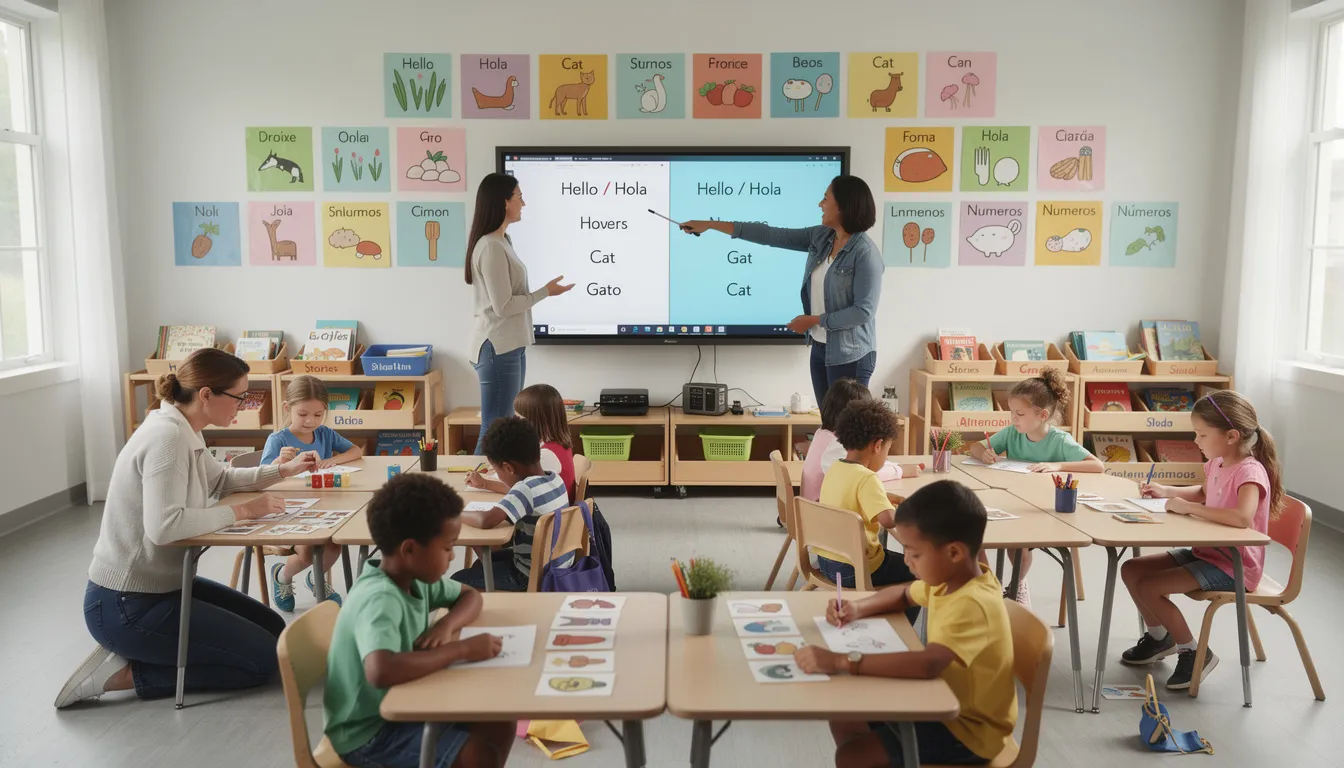
Bilingual language development in English and Mandarin is a hallmark of Singapore’s childcare system. Children are naturally exposed to both languages through daily conversations, songs, stories, and structured lessons. This early bilingual exposure helps children develop strong vocabulary and communication skills in both languages, setting them up for academic success in Singapore’s bilingual education system.
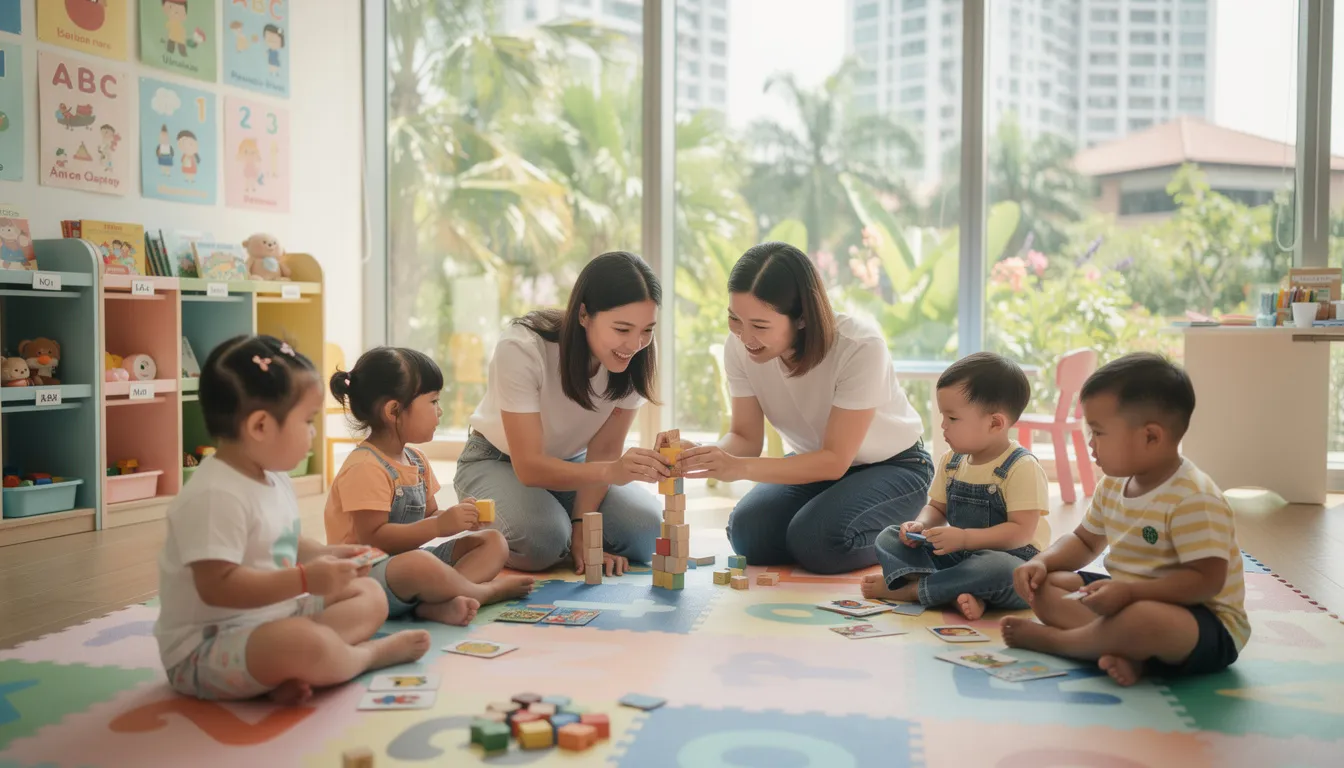
Professional centres focus on developing independence, creativity, and critical thinking skills through carefully designed activities and learning experiences. Children learn to make choices, solve problems, express themselves creatively, and think critically about their environment. These cognitive skills form the foundation for lifelong learning and academic achievement.
Many centers provide parent portals offering daily updates on children’s activities, meals, nap times, and developmental progress. This technology helps working parents stay connected to their child’s daily experiences and maintain open communication with educators about their child’s development and any concerns.
Types of Childcare Programs and Curricula
Singapore’s childcare centres offer diverse educational approaches and program structures to meet varying family needs and educational philosophies. Understanding these options helps parents select programs that align with their values and developmental goals for their children.
Educational Approaches
Montessori method emphasizes child-led learning and independence, allowing children to explore their environment through carefully prepared materials and activities. Montessori childcare centres create mixed-age classrooms where children learn at their own pace, developing self-direction, concentration, and intrinsic motivation. This approach cultivates independence and confidence as children make choices about their learning activities.
Reggio Emilia approach emphasizes creativity and inquiry-based learning, viewing children as capable researchers who learn through exploration and discovery. These programs focus on project-based learning where children investigate topics of interest through hands-on exploration, artistic expression, and collaborative investigation. The environment becomes the “third teacher,” carefully designed to provoke curiosity and support learning.
Play-based learning programs recognize play as children’s natural learning method, encouraging exploration and discovery through structured and unstructured play activities. These childcare centres integrate learning objectives into playful experiences, helping children develop skills while maintaining joy and enthusiasm for learning.
Literature-based curricula develop language and communication skills through rich exposure to books, stories, and language experiences. Children engage with vocabulary development, storytelling, and early literacy skills through daily reading, dramatic play, and language-rich environments that cultivate a lifelong love of learning and reading.
Bilingual immersion programs in English and Mandarin provide daily exposure to both languages through natural conversation, structured lessons, and cultural activities. Children develop fluency and cultural understanding in both languages, preparing them for Singapore’s bilingual education system while building strong foundations in communication and cultural awareness.
Program Options
Full-day childcare operates from 7am to 7pm, serving working parents who need comprehensive daily care. These programs include meals, snacks, supervised rest periods, structured learning activities, and free play time, providing complete daily support for children while parents work.
Half-day programs available at select centres accommodate families needing shorter care periods or wanting to supplement childcare with family time or other activities. These programs typically run for 4-5 hours and include core learning activities and either lunch or snack time.
Infant care programs maintain higher teacher-to-child ratios, typically 1:5 for infants compared to 1:15 for preschoolers. These specialized programs focus on developmental milestones, sensory exploration, and establishing secure relationships with caregivers during the critical early months and years of life.
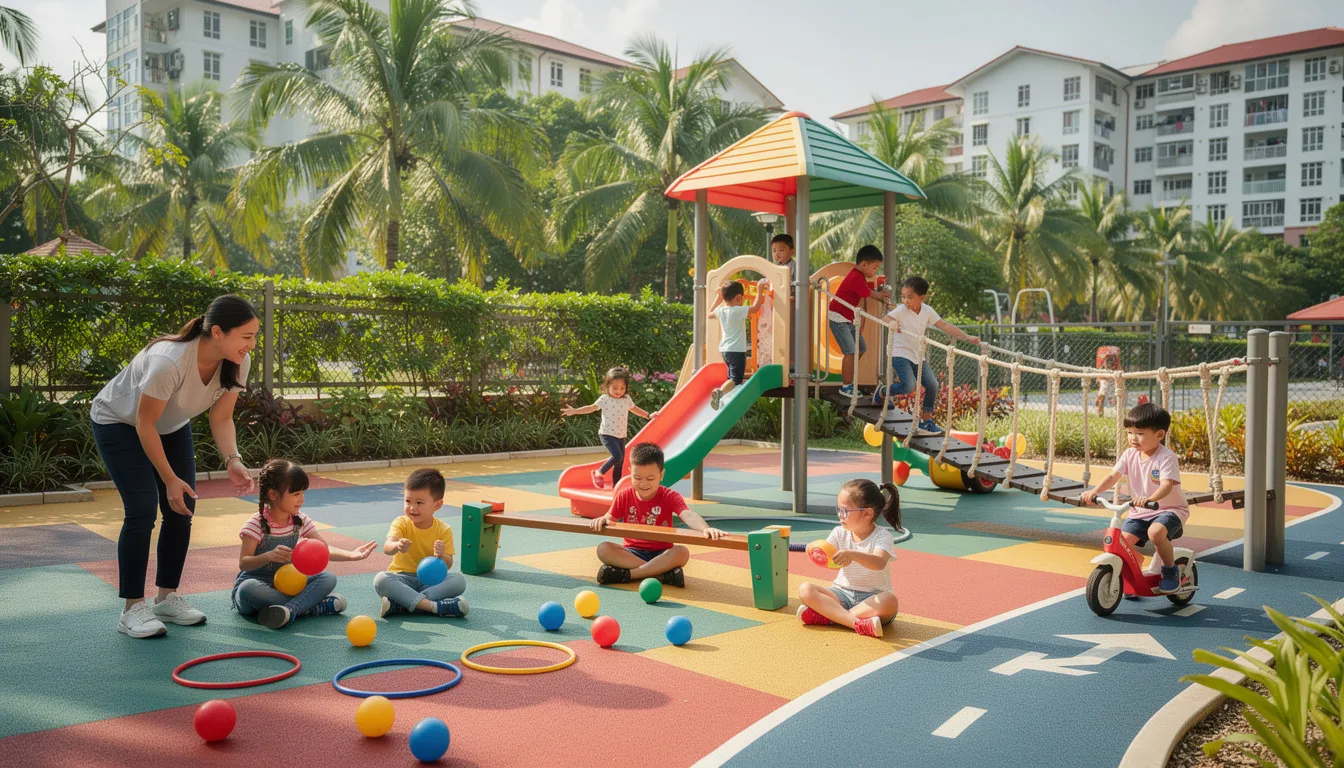
Enrichment activities including music, arts, and outdoor learning enhance the core curriculum by providing specialized instruction in creative and physical development. Many centres partner with external providers to offer programs like swimming, dance, music lessons, or language enrichment that supplement the daily curriculum.
Childcare Fees and Government Subsidies
Understanding the financial landscape of childcare in Singapore helps parents budget effectively and maximize available government support. Childcare costs vary significantly based on program type, center location, and additional services, but government subsidies make quality childcare accessible to working families across income levels.
Average Costs
Childcare fees range from $640 to $2,150 per month before subsidies, with significant variation based on center type, location, and program quality. Neighborhood centres typically charge lower fees, while premium centres with specialized curricula, enhanced facilities, or prestigious locations command higher rates.
Infant care fees range from $1,235 to $2,450 per month before subsidies, reflecting the higher staff-to-child ratios and specialized care required for babies and toddlers. The increased cost accounts for the intensive supervision, feeding support, and developmental attention infants require during their first 18 months.
Premium centres charging $2,000 or more monthly often offer specialized programs like authentic Montessori education, enhanced bilingual curricula, or unique educational approaches. These centres typically feature superior facilities, lower student-teacher ratios, and additional enrichment activities that justify the higher investment.
Additional costs include registration fees ranging from $100-$500, starter packs containing books and materials ($50-$200), and optional enrichment activities. Some centres charge separate fees for field trips, special events, or extended hours beyond standard operating times.
Government Subsidies and Financial Support
Basic Subsidies provide up to $300 monthly for childcare and up to $600 monthly for infant care, available to all singapore citizen children regardless of household income. These automatic subsidies significantly reduce the base cost of professional childcare services and make quality programs accessible to more families.
Additional Subsidies for eligible working parents are means-tested based on household income, providing extra support to families who need it most. Working mothers can receive additional subsidies ranging from $100-$710 monthly for childcare and $200-$1,420 monthly for infant care, depending on household income levels.
ECDA Anchor Operator centres offer enhanced subsidy support through partnerships with the government. My First Skool and other anchor operator centres provide additional fee support and prioritize access for families needing childcare services, making these centres particularly attractive options for working parents seeking affordable quality care.
The income assessment process requires submission of recent payslips, tax assessments, and household income documentation. Families must reapply for additional subsidies annually and notify ECDA of any income changes that might affect subsidy eligibility. The application process during enrollment involves completing subsidy forms alongside center registration.
How to Choose the Right Childcare Center
Selecting the right childcare centre requires careful evaluation of multiple factors that impact both daily convenience and long-term developmental outcomes. The decision involves balancing practical considerations like location and cost with educational factors like curriculum and teaching quality.
Location considerations significantly impact daily routines and family stress levels. Choose centres near home or work to minimize commuting time and enable easy drop-off and pick-up. Consider traffic patterns, parking availability, and proximity to your preferred centre locations when evaluating options. Emergency situations become more manageable when centres are conveniently located.
Educational philosophy alignment ensures the center’s approach matches your family’s values and expectations for child development. Visit centres to observe teaching methods, ask about learning objectives, and understand how educators support children’s growth. Some families prefer structured academic preparation, while others prioritize play-based exploration and creativity.
Teacher qualifications and student-to-teacher ratios directly impact the quality of care and attention your child receives. Inquire about educators’ training, certification, and experience levels. Lower ratios enable more individualized attention, better supervision, and stronger relationships between children and teachers.
Facilities should include age-appropriate indoor and outdoor spaces that support learning, play, and rest. Look for well-maintained classrooms, safe outdoor play areas, proper ventilation, and age-suitable equipment. High-quality facilities indicate the centre’s commitment to providing an optimal learning environment.

Language programs and bilingual development opportunities vary significantly between centres. Evaluate how centres integrate English and Mandarin instruction, the qualifications of bilingual teachers, and the natural use of both languages throughout daily activities. Strong bilingual programs support children’s academic success in Singapore’s education system.
Safety measures and hygiene standards ensure children’s health and security in the childcare environment. Observe cleanliness standards, security protocols, emergency procedures, and health policies. Licensed centres must meet ECDA safety requirements, but visit personally to confirm standards meet your expectations.
Parent reviews and center reputation provide insights into real family experiences and long-term satisfaction. Research online reviews, ask for references from current families, and connect with other parents in your community who have experience with specific centres. Word-of-mouth recommendations often reveal valuable insights about daily operations and communication quality.
Trial visits and center tours before enrollment allow you and your child to experience the environment firsthand. Schedule visits during active program times to observe regular operations, teacher-child interactions, and daily routines. Many centres offer trial days or short visits to help children and families assess comfort levels and fit.
Top Childcare Centers in Singapore
Singapore’s childcare landscape includes diverse operators ranging from premium boutique centres to large-scale networks, each offering unique approaches to early childhood education. Understanding the strengths and specializations of different providers helps parents identify centres that best match their priorities and values.
Premium Childcare Centers
MindChamps Child Care implements the innovative 3-Minds approach focusing on Learning Mind, Creative Mind, and Caring Mind development. Their S.M.I.L.E.S methodology (Sensory, Movement, Imagination, Language, Emotional, Social) creates comprehensive developmental experiences. MindChamps centres feature enhanced facilities, specialized curricula, and lower student-teacher ratios that justify their premium positioning in the market.
Mulberry Learning features the internationally-recognized Habits of Mind framework, teaching children thinking skills and problem-solving strategies that support lifelong learning. Their curriculum emphasizes critical thinking, creativity, and character development through engaging, hands-on activities designed to challenge and inspire young minds.
EtonHouse International maintains affiliation with the prestigious Reggio Children network, offering authentic Reggio Emilia education through Project-Based Learning and environmental design. Their programs emphasize creativity, inquiry, and collaborative learning in beautifully designed spaces that inspire exploration and discovery.
Raffles Kidz International offers Montessori-based bilingual programs combining authentic Montessori education with strong Chinese language development. Their mixed-age classrooms, prepared environments, and certified Montessori teachers provide children with independence-building experiences and academic foundation.
Large-Scale Operators
PCF Sparkletots operates over 360 centres across Singapore, making them the largest childcare network in the country. As a community-based operator, they focus on affordable quality care with government support, serving families across all neighborhoods with consistent programming and standards.
My First Skool functions as an ECDA anchor operator with 150+ locations throughout Singapore. Their extensive network provides convenient access for working parents while maintaining quality standards through centralized training, curriculum development, and operational oversight. As an anchor operator, they offer enhanced subsidy support and prioritized access for families needing childcare services.
E-Bridge Pre-School operates 28 centres islandwide, focusing on holistic child development through integrated curricula that balance academic preparation with creative expression and character building. Their consistent approach across locations provides families with reliable quality and programming.
Star Learners Child Care manages 44 centres featuring literature-based curriculum that cultivates language development and lifelong love of reading. Their approach emphasizes storytelling, vocabulary development, and early literacy skills through engaging, book-centered activities.
Specialized Approach Centers
Brighton Montessori by Busy Bees provides authentic Montessori education with certified teachers, prepared environments, and mixed-age classrooms. Their commitment to traditional Montessori principles creates independence-focused learning experiences that develop concentration, self-direction, and intrinsic motivation.
Little Green House features the proprietary Literacy SMART curriculum emphasizing early reading, writing, and communication skills. Their specialized approach to language development prepares children for academic success while maintaining engaging, play-based learning environments.
Adventure Tree Preschool offers small group sizes and outdoor-focused programming that emphasizes nature connection, physical development, and environmental awareness. Their unique approach appeals to families seeking alternatives to traditional classroom-based early childhood education.
Josiah Montessori combines authentic Montessori education with their Musical Arts Programme, integrating music education throughout the curriculum. This approach supports cognitive development, creativity, and cultural appreciation while maintaining Montessori principles of child-led learning.
Application and Enrollment Process
Successfully enrolling your child in your preferred centre requires understanding application timelines, documentation requirements, and transition planning. Early preparation and organization streamline the process and increase your chances of securing spots at popular centres.
Center visits and registration procedures should begin well before your desired start date. Schedule tours at multiple centres to compare facilities, meet teachers, and understand daily routines. Most centres require advance registration with waiting lists for popular programs, especially infant care and premium centres with limited capacity.
Required documents for enrollment typically include birth certificates, immunization records, parents’ identification documents, and recent photographs. For subsidy applications, prepare additional documentation including payslips, tax assessments, work letters, and household income verification. Complete documentation prevents delays in the enrollment and subsidy approval process.
Waiting lists and advance booking are common, particularly for infant care programs and highly-regarded centres. Register as early as possible, even before your child reaches the appropriate age, to secure priority positioning. Some centres accept registrations during pregnancy or shortly after birth for infant care programs.
Transition planning for infants and toddlers involves gradual introduction to the new environment and caregivers. Many centres offer shortened initial days, parent visits, and flexible schedules during the first weeks to help children adjust comfortably to their new routine and relationships.
Parent orientation programs introduce families to center policies, daily schedules, communication procedures, and expectations. These sessions provide opportunities to meet teachers, ask questions, and establish positive relationships that support your child’s successful transition and ongoing development.
Annual reviews and subsidy reassessment require updating income documentation and confirming continued eligibility for government support. Stay organized with required paperwork and submit renewals on time to maintain uninterrupted subsidy support and avoid fee increases.
Early application, thorough preparation, and clear communication with your preferred centres maximize your chances of securing quality childcare that meets your family’s needs and supports your child’s developmental journey during these crucial early years.
Conclusion
Choosing the right childcare centre sets the foundation for your child’s educational journey and supports your family’s daily routine as working parents. Singapore’s comprehensive childcare system, backed by government subsidies and strict quality standards, provides families with excellent options for professional early childhood care and education. As you consider your child’s daily needs, don’t overlook travel safety—discover child car seats that meet Singapore’s safety standards to ensure your little one is secure on every journey.
The key to making the best decision lies in understanding your family’s specific needs, evaluating centres against your priorities, and taking advantage of the substantial government financial support available. Whether you prioritize a specific educational approach like Montessori or Reggio Emilia, need convenient location access, or seek enhanced bilingual programming, Singapore’s diverse childcare landscape offers solutions for every family situation.
Start your search early, visit multiple centres to compare experiences, and don’t hesitate to ask detailed questions about programming, teacher qualifications, and daily routines. The investment in quality childcare pays dividends through your child’s developmental progress, school readiness, and your peace of mind as working parents.
Take action now to explore childcare options in your area, schedule centre visits, and begin the application process. Your child’s early childhood education foundation starts with finding the right childcare centre that nurtures their growth during these precious formative years.