
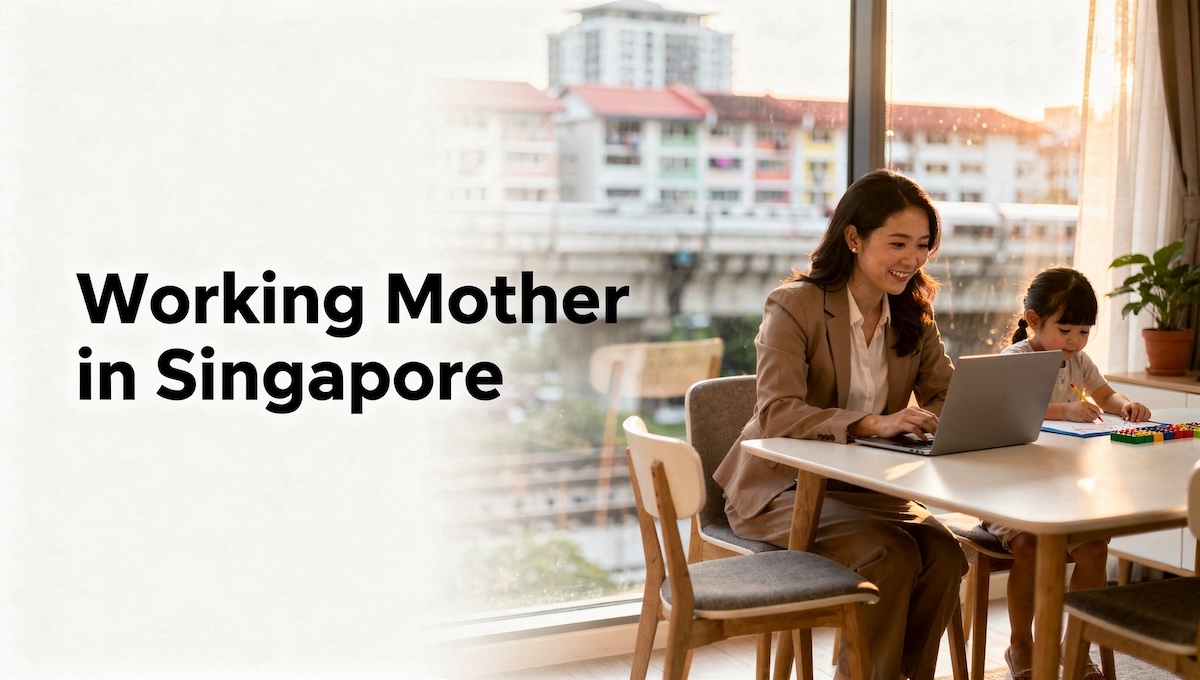
In Singapore’s fast-paced economy, being a working mother means navigating unique challenges while maximizing available support systems. As one of the world’s most expensive cities, Singapore requires many families to maintain dual incomes, making the role of working mothers increasingly vital to household financial stability.
Whether you’re planning to continue working after having children or seeking to optimize your tax benefits as a working woman, understanding Singapore’s comprehensive support framework can significantly impact your family’s financial wellbeing and work-life balance.

Understanding the Working Mother Landscape in Singapore
A working mother in Singapore’s context refers to a woman who maintains employment while raising children, often balancing corporate responsibilities with family duties. This demographic represents a significant portion of Singapore’s workforce, contributing to both economic growth and household income stability.
Singapore consistently ranks among the top 4 most expensive cities globally, making dual-income households increasingly necessary for middle-class families. The high cost of living drives many educated women to continue working even after having children, as single-income households often struggle to maintain comfortable living standards.
The Singapore government recognizes the importance of working mothers and has implemented various support systems, including tax reliefs, childcare subsidies, and family-friendly workplace policies. These initiatives aim to encourage married women to remain in the workforce while providing adequate support for child-rearing responsibilities.
Female workforce participation rates in Singapore remain strong, with many women choosing to balance career aspirations with family life. The economic pressures of housing costs, education expenses, and general living expenses make it financially prudent for both parents to continue working and contributing to household income.
Working Mother’s Child Relief (WMCR) and Tax Benefits
The Working Mother’s Child Relief (WMCR) serves as one of Singapore’s primary tax incentives for working mothers, allowing eligible women to claim relief of up to 25% of their earned income per child. This relief system recognizes the dual burden that working mothers face and provides tangible financial support through reduced tax obligations.
For the Year of Assessment 2025, significant changes affect how families can claim wmcr for children born before and after 1 January 2024. The personal income tax rebate system has been enhanced to provide more comprehensive support for working families.
Eligibility Requirements and Relief Amounts
To claim wmcr, mothers must meet specific eligibility criteria including being a singapore citizen or permanent resident, having earned income during the assessment year, and being responsible for the child’s care and maintenance. The relief amount is calculated as 25% of the mother’s earned income, subject to various caps and limitations.
The $80,000 personal income tax relief cap applies to individual reliefs, while families must consider the cumulative wmcr claimed across multiple children. This cap ensures that higher-earning families receive appropriate but limited benefits, while still providing meaningful support to working mothers at all income levels.
Child order determination plays a crucial role in relief calculations, with the first child, second child, and subsequent children potentially qualifying for different relief amounts based on birth dates and legal adoption documentation. Families must carefully track child order wmcr amount calculations to maximize their available tax benefits.
Claiming Multiple Reliefs for the Same Child
Singapore’s tax system allows families to combine wmcr with other personal reliefs for the same child, creating opportunities for significant tax savings when properly managed. The Qualifying Child Relief (QCR) of $4,000 can be claimed alongside wmcr, providing additional tax benefits for eligible families.
Handicapped Child Relief (HCR) offers up to $7,500 in additional relief for families with special needs children, and this can be shared between spouses to optimize overall family tax benefits. The $50,000 per child cap for combined reliefs ensures that families don’t exceed maximum allowable benefits while still providing substantial support.
The Parenthood Tax Rebate (PTR) presents unique opportunities for tax optimization, particularly for families with higher incomes. Consider Mrs Chen’s scenario: with $80,000 in earned income and eligibility for PTR, she can strategically allocate reliefs between herself and her husband to minimize their combined tax bill.
When both my husband and I work, we can share certain reliefs to optimize our overall tax situation. The key is understanding which reliefs can be transferred and which must be claimed by specific individuals based on their relationship to the child and their earned income levels.
Other Support Schemes for Working Mothers
Beyond wmcr, working mothers can access additional relief schemes that recognize the various support systems needed for successful work-life balance. The Foreign Domestic Worker Levy (FDWL) Relief acknowledges that many working families rely on domestic helpers to manage household chores and childcare responsibilities.
Grandparent Caregiver Relief (GCR) of $3,000 supports families where grandparents provide childcare for children aged 12 and below, recognizing the extended family support system that many singaporean families depend upon. This relief can be particularly valuable for families who prefer family-based childcare over commercial childcare centers.
The NSman Wife Relief of $750 provides additional support for wives of National Servicemen, acknowledging the extra responsibilities these women may face during their spouse’s military commitments. These targeted reliefs demonstrate Singapore’s comprehensive approach to supporting working mothers through various life circumstances.
To claim these reliefs, mothers must file their income tax return through the myTax Portal, ensuring all relevant information is accurately reported. The system allows for amendments through re file processes, giving families flexibility to optimize their relief claims even after initial submission.
Key Challenges Faced by Working Mothers in Singapore
Working mothers in Singapore face distinctive challenges that reflect the city-state’s unique economic pressures and social expectations. These challenges require creative solutions and strong support systems to navigate successfully while maintaining both career progression and family wellbeing.
Understanding these challenges helps working mothers develop strategies to address them proactively, rather than simply reacting to problems as they arise. The following four categories represent the most common struggles that working mothers encounter in their daily lives.
Finding Trusted Childcare Arrangements
One of the primary concerns for any working mother involves securing reliable, trustworthy childcare that aligns with work schedules and family values. Many families struggle with decisions about whether to hire foreign domestic workers, rely on extended family members, or utilize commercial childcare facilities.
Taking care of children requires consistent, reliable arrangements that can accommodate changing work demands and unexpected schedule changes. Infant care centers and childcare centers often have lengthy waitlists, forcing families to make childcare decisions well before children are even born.
The cost considerations for different childcare options can be substantial, with some families spending a significant portion of their income on quality childcare arrangements. Parents must balance cost, convenience, trust, and educational value when selecting childcare options that support their work commitments.
Building a support system that includes backup childcare options becomes essential for working mothers who need flexibility when primary arrangements fall through or during school holidays when regular childcare may not be available.
Work-Life Balance Pressures
The corporate world often operates with expectations that don’t fully account for the reality of working mothers’ dual responsibilities. Many working mothers find themselves managing what feels like being a “little boss” at home while simultaneously excelling in their professional roles.
Workplace stereotypes can create additional pressure, with some working mothers feeling they must work harder than colleagues to prove their commitment and competence. This pressure to excel in both areas can lead to exhaustion and stress that affects both job performance and family relationships.
Recognition and support from employers becomes crucial for working mothers to thrive in their careers while meeting family obligations. Companies that understand and accommodate the reality of working mothers’ lives often see better retention and productivity from their female employees.
The mental load of constantly juggling corporate deadlines with family schedules requires exceptional organizational skills and can be mentally exhausting even when everything appears to be running smoothly.

Taking Emergency Leave for Family Needs
Children get sick, caregivers have emergencies, and unexpected family situations arise that require immediate attention from working mothers. These situations often cannot be planned or scheduled around work commitments, creating stress for both mothers and their employers.
Managing urgent leave requirements while maintaining professional relationships and meeting work deadlines requires advance planning and clear communication with supervisors. Working mothers must often negotiate flexible arrangements that allow them to address family emergencies without jeopardizing their career advancement.
The fear of workplace judgment when taking emergency leave can cause working mothers to postpone addressing family needs or to work while managing family crises. This approach often leads to reduced effectiveness in both areas and increased stress levels.
Making up for lost work time while simultaneously managing family demands requires exceptional time management skills and often means working during personal time or finding creative ways to maintain productivity while addressing family responsibilities.
Being Physically Present but Mentally Unavailable
Modern technology creates challenges where working mothers may be physically present with their children but mentally engaged with work emails, calls, or ongoing projects. This divided attention can reduce the quality of family time and create guilt about not being fully present for either work or family.
The constant connectivity through smartphones and laptops means that many working mothers never truly disconnect from work, even during designated family time. This can lead to children feeling that their mothers are not fully engaged even when they’re physically present.
Fear of workplace judgment or missing important developments can keep mothers in “work mode” even during evenings, weekends, and family activities. This mental preoccupation can interfere with building strong family relationships and enjoying precious moments with children.
Missing important growing-up moments despite being physically present represents a particular challenge for working mothers who want to be engaged, attentive parents while maintaining successful careers.
Economic Realities Driving Mothers to Work
Singapore’s economic environment creates compelling financial reasons for mothers to continue working, even when they might prefer to focus solely on child-rearing. These economic pressures often make the decision to work less about personal preference and more about family financial necessity.
The high cost of living in Singapore affects everything from housing to education, making dual incomes essential for most middle-class families to maintain their desired quality of life. Rising retrenchment rates and economic uncertainty also make single-income households more vulnerable to financial instability.
Well-educated women often find that their earning potential is too valuable to abandon, particularly given the significant investment families make in education and career development. The opportunity cost of leaving the workforce can be substantial, affecting both immediate income and long-term career prospects.
Financial stability considerations extend beyond current expenses to include emergency savings, retirement planning, and children’s future education costs. Working mothers often view their income as essential insurance against economic uncertainty and a foundation for their family’s long-term financial security.
Career opportunities in Singapore’s dynamic economy can be highly competitive, making it risky for women to step away from promising positions with the hope of returning later. Many working mothers choose to continue working to maintain their professional networks and skills rather than risk career setbacks.
Personal Motivations for Continuing to Work
Beyond economic necessity, many mothers discover that they genuinely enjoy and benefit from maintaining their professional identities alongside their roles as parents. Not all mothers find full-time childcare and household management personally fulfilling or intellectually stimulating.
Mental stimulation and professional challenges provide working mothers with a sense of purpose and achievement that complements but differs from the satisfaction of raising children. Many women find that they are better mothers when they also have professional outlets for their skills and creativity.
The sense of authority and leadership that many women experience in their careers can be personally empowering and can also model positive behaviors for their children. Working mothers often report feeling more confident and capable in all areas of their lives when they maintain professional engagement.
Avoiding mundane daily routines and repetitive tasks that can characterize full-time childcare appeals to mothers who thrive on variety, challenge, and professional growth. The intellectual engagement of work can provide balance to the emotional demands of parenting.
Personal goals and identity development continue to be important for mothers who view their careers as integral to who they are rather than simply as sources of income. These women often find ways to pursue both family and professional aspirations rather than viewing them as mutually exclusive choices.

Practical Strategies for Singapore Working Mothers
Successful working mothers in Singapore develop systematic approaches to managing their dual responsibilities effectively. These strategies often involve careful planning, strong support systems, and realistic expectations about what can be accomplished in both professional and personal spheres.
Time management becomes crucial for working mothers who must maximize productivity during work hours while protecting family time for meaningful engagement with children. This often means learning to say no to non-essential activities and focusing on priorities in both work and family contexts.
Building reliable support networks with other working mothers provides practical assistance and emotional support during challenging periods. These relationships can include childcare sharing, emergency backup arrangements, and professional networking that understands the unique challenges facing working mothers.
Maximizing tax benefits through proper relief claims requires staying informed about available programs and ensuring accurate filing of income tax returns. Understanding how to optimize relief claims can result in significant tax savings that help offset the costs of childcare and other work-related expenses.
Setting clear boundaries between work time and family time helps ensure that both areas receive appropriate attention and energy. This might involve specific rules about checking emails during family meals or designating certain hours as unavailable for work calls.
Planning for school holidays and childcare coverage requires advance thinking and backup arrangements to ensure that work commitments can be maintained even when regular childcare is not available. Successful working mothers often plan these arrangements months in advance.
Making the Most of Limited Family Time
Quality becomes more important than quantity when working mothers have limited time with their children. Being fully present and engaged during available family time can be more valuable than simply spending more hours together without focused attention.
Active listening and wholehearted engagement during family activities help children feel valued and connected to their working mothers. This means putting away phones, focusing completely on children’s conversations, and participating meaningfully in family activities.
Creating meaningful traditions and special moments doesn’t require large amounts of time but rather intentional effort to make regular activities special. This might involve special bedtime routines, weekend adventures, or simple daily rituals that children associate with quality time with their mothers.
Remembering that no one is indispensable at work, but mothers are irreplaceable to their children, helps maintain perspective about priorities during busy periods. This understanding can guide decision-making about when to prioritize work demands versus family needs.
Balancing career passion with family presence requires honest evaluation of what matters most during different life stages and being willing to adjust priorities as children grow and family needs change. Working mothers often find that this balance evolves over time rather than remaining static.
The goal is not perfect balance but rather conscious choices about how to spend time and focus energy in ways that support both professional goals and family relationships. Understanding that some days will favor work and others will favor family helps reduce guilt and stress about not achieving perfect balance every day.
Working mothers in Singapore have access to comprehensive support systems and tax benefits that can significantly ease the financial burden of balancing career and family. By understanding and utilizing programs like wmcr, claiming appropriate tax reliefs, and developing practical strategies for time management, mothers can successfully navigate the challenges of working while raising children.
The key to success lies in recognizing that being a working mother requires different skills and strategies than being either a full-time professional or a full-time parent. With proper planning, support systems, and realistic expectations, working mothers can thrive in both their professional and personal roles while contributing meaningfully to their families’ financial security and their own personal fulfillment.
Take action today by reviewing your tax relief eligibility, building your support network, and implementing time management strategies that honor both your career ambitions and your family priorities. Remember that every working mother’s journey is unique, and finding the right balance for your family may take time and adjustment.